Background: Triglycerides and Postmenopause
Triglycerides are a type of fat that circulates in the blood. The body needs some for energy, but consistently high levels are associated with a higher risk of heart disease, according to the review. After menopause, declining estrogen levels can affect cholesterol and triglyceride levels, which can contribute to cardiovascular risk, the researchers stated. Research has previously linked menopause-related hormonal shifts to changes in cardiovascular health markers. An analysis from the American Heart Association rated the cardiovascular health of women experiencing perimenopause -- the transitional phase leading up to menopause -- and found those scores were likely to be lower than those of women who were still getting regular periods, according to Everyday Health [1]. Separate research has found that postmenopausal women who sit for long periods face a greater risk of cardiovascular disease, according to NaturalNews.com [2]. The review focused specifically on how much exercise postmenopausal women may need to improve triglyceride levels. Exercise has been shown to affect multiple cardiovascular risk factors. A textbook on complementary therapies in nursing notes that changes in atherosclerotic risk factors -- including cholesterol levels, triglycerides, insulin sensitivity, waist circumference, blood pressure, and body mass index -- may be measured when cardiovascular health is the primary outcome of an exercise program [3]. Other research has noted that physical activity can improve glucose metabolism by stimulating glucose uptake in skeletal muscle through non-insulin-dependent mechanisms [4].What the Review Found
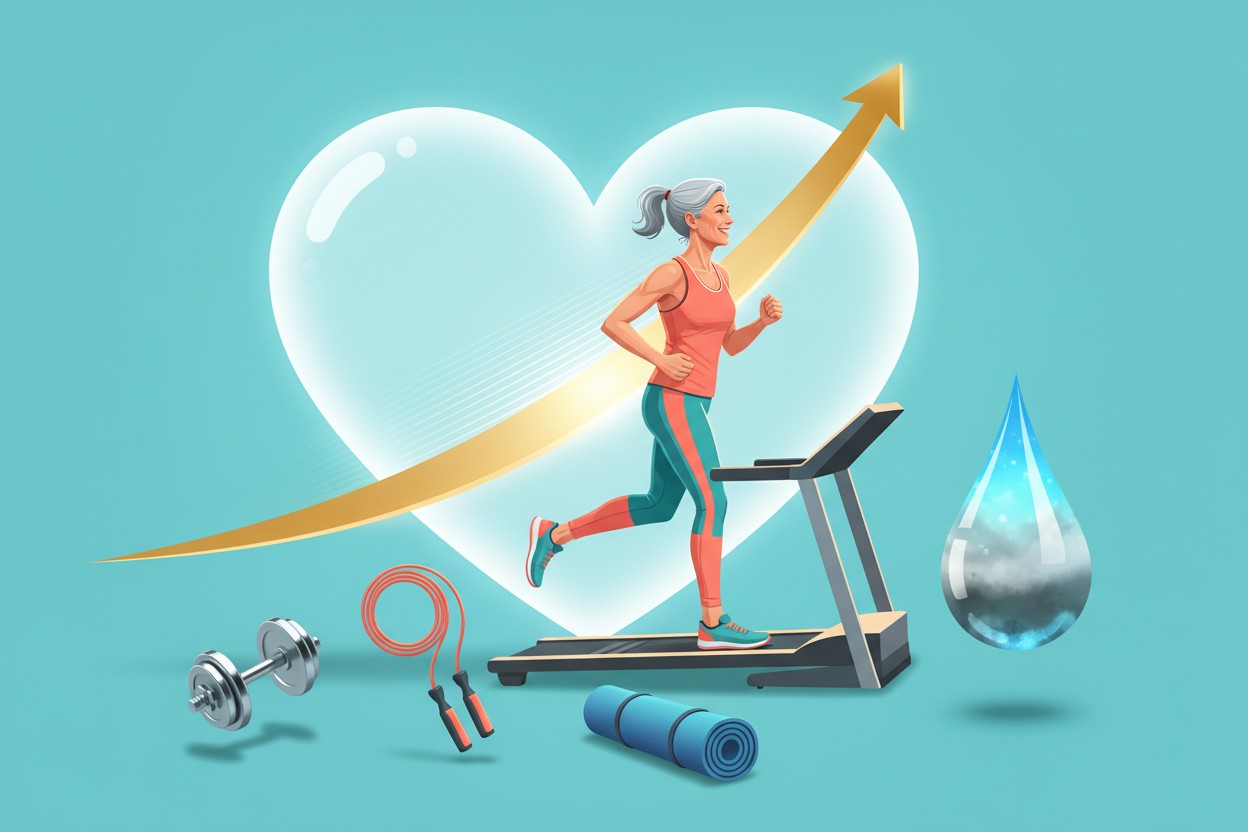
Researchers compared aerobic exercise, resistance training, combined cardio and strength training, and HIIT, which alternates short bursts of hard effort with recovery, according to the review. Aerobic exercise, combined training, and HIIT lowered triglyceride levels compared with not exercising. Resistance training alone did not show a clear effect on triglycerides in this review. The review found that adding more exercise did not keep producing the same degree of improvement. Triglyceride reductions increased with exercise volume up to a point, then became smaller as weekly exercise continued to increase. The researchers identified tentative ranges where the greatest benefits appeared to occur. For HIIT, that was about 20 to 25 minutes per week. For aerobic exercise, such as brisk walking or cycling, it was about 2.5 to 3 hours per week. For combined cardio and strength training, it was roughly 2.5 to 4 hours per week. These ranges were not described as firm prescriptions. The researchers described the findings as hypothesis-generating, meaning the pattern needs further study. The evidence supporting the specific exercise ranges was rated low to moderate certainty, and the HIIT finding was based on only three trials, according to the review. The authors stated that additional research is needed to confirm the results. The review's conclusions align with other research on exercise and heart health in postmenopausal women. A 12-week trial comparing high-intensity interval Nordic walking with traditional strength training found that both exercise modalities produced significant improvements in key heart health markers among postmenopausal women with excess abdominal fat, according to NaturalNews.com [5]. Both exercise groups in that trial trained three times per week. Separate research has shown that exercise enhances neurotransmission of norepinephrine, serotonin, and dopamine, and improves glucose tolerance, according to a textbook on integrative women's health [6].What This Means for Workouts
The findings are not firm prescriptions and can be used as a general guide while keeping broader health in mind, according to the review authors. Brisk walking, cycling, and other aerobic activities were linked to lower triglycerides in the review. Combined training also showed benefits, and HIIT may be kept short. Resistance exercise did not clearly lower triglycerides on its own but supports muscle, bone, and physical function, which become increasingly important with age, the review stated. Other research supports the value of strength training for older adults. By age 80, people lose between 30% and 50% of their skeletal muscle mass and function, according to research published in the journal Therapeutics and Clinical Risk Management, as reported by NaturalNews.com [7]. That age-related muscle wasting, known as sarcopenia, affects approximately 30% of adults over 70 who struggle with basic mobility tasks including walking, climbing stairs, and standing from a seated position, according to the same report. A growing body of evidence published in 2025 and 2026 in Sports Medicine, UCLA Health reports, and multiple meta-analyses indicates that strength training can reverse age-related muscle loss and boost longevity [7]. The review also found that adding more weekly exercise may produce smaller additional changes in triglycerides once a certain amount is reached. This pattern suggests that women do not need to continually increase their exercise volume to support heart health, the researchers reported. A book on fitness notes that regular aerobic exercise can increase blood volume by as much as 15%, reduce the load on the heart, deliver more blood to muscles, reduce blood pressure during exercise, and improve the elasticity of blood vessels [8].References
- Everyday Health. "Heart Health May Take a Hit as Women Enter Perimenopause, Study Suggests". May 14, 2026.
- NaturalNews.com. "Sitting for too long linked to greater heart disease risk in postmenopausal women: Study". September 20, 2021.
- "Complementary alternative therapies in nursing".
- Isaias Dichi and Andrea Name Colado Simao. "Nutritional Intervention in Metabolic Syndrome".
- NaturalNews.com. "Nordic Walking and Strength Training Both Improve Heart Health Markers in Postmenopausal Women". July 23, 2026.
- "Integrative Womens Health".
- NaturalNews.com. "Strength training reverses age-related muscle loss, boosts longevity, new research shows". September 1, 2026.
- Ray Kybartas. "Fitness is religion--keep the faith".
Explainer Infographic


Geely Reports EV Battery Charges in Under Five Minutes
By Edison Reed // Share

Prebiotic Fruits Tied to Gut Health in Nutrition Reports
By Coco Somers // Share

Review Links Two Slices of Deli Meat Daily to 44% Higher Dementia Risk
By Coco Somers // Share

7-Day Low-Plastic Trial Linked to Reductions in Hormone-Disrupting Chemicals, Study Reports
By Coco Somers // Share

Forget rereading: Research says these study methods actually make information stick
By Cassie B. // Share

Study Links Early-Life Chemical Mixtures to Childhood Obesity
By Belle Carter // Share

U.S. energy boom cushions economy as Europe's inflation climbs amid oil shock
By isabelle // Share


Sen. Johnson Roundtable Features COVID-19 Hospital Protocol Testimonies
By morganverity // Share
Geely Reports EV Battery Charges in Under Five Minutes
By edisonreed // Share
Prebiotic Fruits Tied to Gut Health in Nutrition Reports
By cocosomers // Share