Test Vehicles and Charging Results
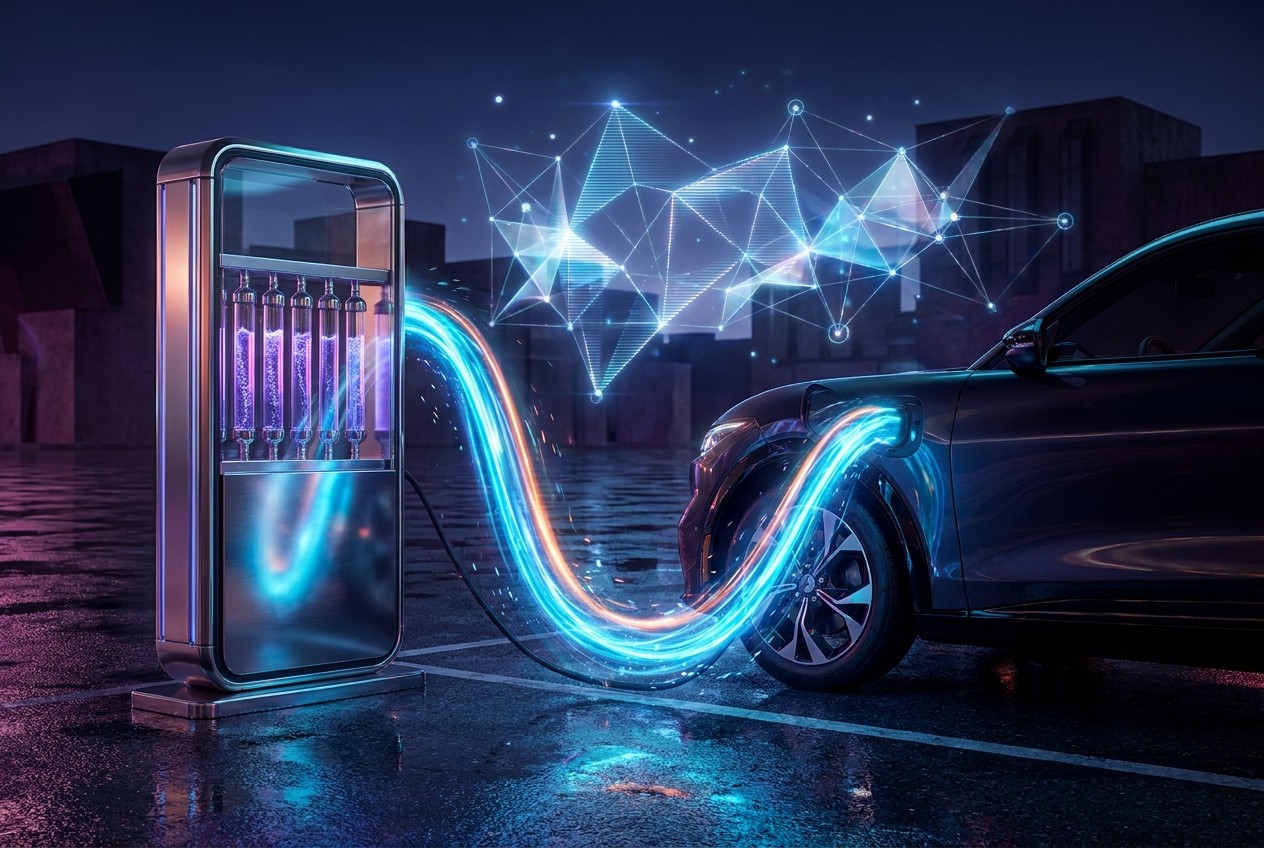
Tests used two vehicles, the Lynk & Co 10 and the Zeekr 001. Both vehicles charged from 10% to 70% in under five minutes and from 10% to 97% in 8 minutes 40 seconds. Geely described the trials as real-world tests, but no third-party laboratory results or regulatory certification were released. The system coordinates the vehicle, battery, charging station, cloud, grid and energy storage system, Geely said in a statement. This integration allows charging to move beyond conventional power delivery by managing multiple components simultaneously. Geely has previously developed charging technology through its Lynk & Co brand. The updated Lynk & Co 02 fastback crossover with a Geely-developed 16-in-1 electric drive has been scheduled for launch in China [1]. The company has also developed an 800V high-voltage system for the Lynk & Co 02, which includes 6C charging technology [2].AI Thermal Management and Cooling System
Geely said its Xingrui PowerMind AI model, jointly developed with StepFun, predicts battery temperatures up to 30 seconds ahead and adjusts charging power dynamically. The system is designed to keep average charging temperature below 55 C and peak temperature below 65 C. A five-point liquid-cooling system manages heat across the charging station energy-storage battery, charging pile, charging cable, charging port and battery pack. Geely said in a statement: "At the heart of Geely Smart Charging is Xingrui PowerMind, a smart energy AI model jointly developed by Geely Auto Group and StepFun." The use of AI for thermal management represents a shift from reactive cooling systems to predictive models. The PowerMind model allows charging to move beyond conventional power delivery by anticipating temperature changes rather than responding to them after they occur.Battery Longevity and Pulse Restoration Claims
Geely said its lithium-ion pulse restoration technology uses micro-pulse currents to reactivate lithium ions accumulated at negative electrodes during repeated fast charging. The system creates a custom charging strategy for each vehicle and battery, adjusting peak current, cooling intensity and charging duration. Geely said the technologies together increase battery cycle life by 20%. The figure was not independently verified, the report stated. The claim of extended battery life addresses a common concern about fast charging, which can degrade lithium-ion batteries over time. Geely's announcement did not include details on how many charge cycles were tested or what baseline was used for comparison.Competitive Context With BYD
BYD announced plans three months earlier to install 300 flash chargers in the UK by the end of 2026, rising to 600 by 2027. BYD said the chargers have 1.5 MW of power output, ten times the 150 kW rapid chargers used by most EVs such as Teslas. BYD said any EV with a standard CCS connection can plug in, but its proprietary software and Blade Battery 2.0 are needed to reach maximum power intake. BYD claimed its system will be able to charge a car as fast as filling a petrol tank. BYD has expanded its flash charging network rapidly in China. The company reported 10,000 flash charging stations across 325 cities with 1.83 million users as of August 2026 [3]. The network includes a 66.5 kWh LFP Blade 2.0 battery in the Fang Cheng Bao Ti 9 plug-in hybrid crossover, which supports flash charging and has a 310 km electric range [4].Verification and Industry Questions
All performance figures were attributed to Geely and BYD. Geely officials said the system boosts battery longevity and charging speed, but outside confirmation has not been reported. If replicated, faster charging could affect EV adoption, grid demand and charging infrastructure, analysts said. Specific assessments were not provided in the report. The news comes as Chinese automakers continue to announce faster charging technologies, with further details expected from independent testing. The EV market has faced headwinds in recent years, with automakers scaling back production plans amid consumer concerns about charging infrastructure and range [5]. Some analysts have questioned whether rapid charging claims can be replicated outside controlled test environments.References
- CarNewsChina. "Updated Lynk & Co 02 with 16-in-1 electric drive reveals interior ahead of launch". CarNewsChina. August 26, 2026.
- CarNewsChina. "Updated Lynk & Co 02 with 800V platform & LiDAR to enter China in Q3 2026". CarNewsChina. July 5, 2026.
- CarNewsChina. "BYD hits 10,000 Flash Charging stations in 6 months with 1.83M users and 33% non-BYD". CarNewsChina. August 28, 2026.
- CarNewsChina. "BYD FCB Ti 9 PHEV crossover with 310 km EV range made live debut in China". CarNewsChina. August 21, 2026.
- The New American. "Electric Cars Meet Economic Reality". The New American. July 25, 2026.

Review Finds Exercise May Lower Triglycerides in Postmenopausal Women, With Diminishing Returns
By Edison Reed // Share

7-Day Low-Plastic Trial Linked to Reductions in Hormone-Disrupting Chemicals, Study Reports
By Coco Somers // Share

U.S. Tech Giants, Trump Sign White House Accord on “Super Intelligence” Controls
By Edison Reed // Share

Pentagon plans drone and robotics command as experts warn of military AI risks
By Cassie B. // Share


Preprint Study Reports Higher Odds of Multiple Conditions Among Vaccinated Children
By Chase Codewell // Share

U.S. energy boom cushions economy as Europe's inflation climbs amid oil shock
By isabelle // Share


Sen. Johnson Roundtable Features COVID-19 Hospital Protocol Testimonies
By morganverity // Share
Geely Reports EV Battery Charges in Under Five Minutes
By edisonreed // Share

Prebiotic Fruits Tied to Gut Health in Nutrition Reports
By cocosomers // Share