Anthropic Report Warns AI Worms Could Spread Through Smart Home Devices
By edisonreed // 2026-10-14
Tweet
Share
Copy
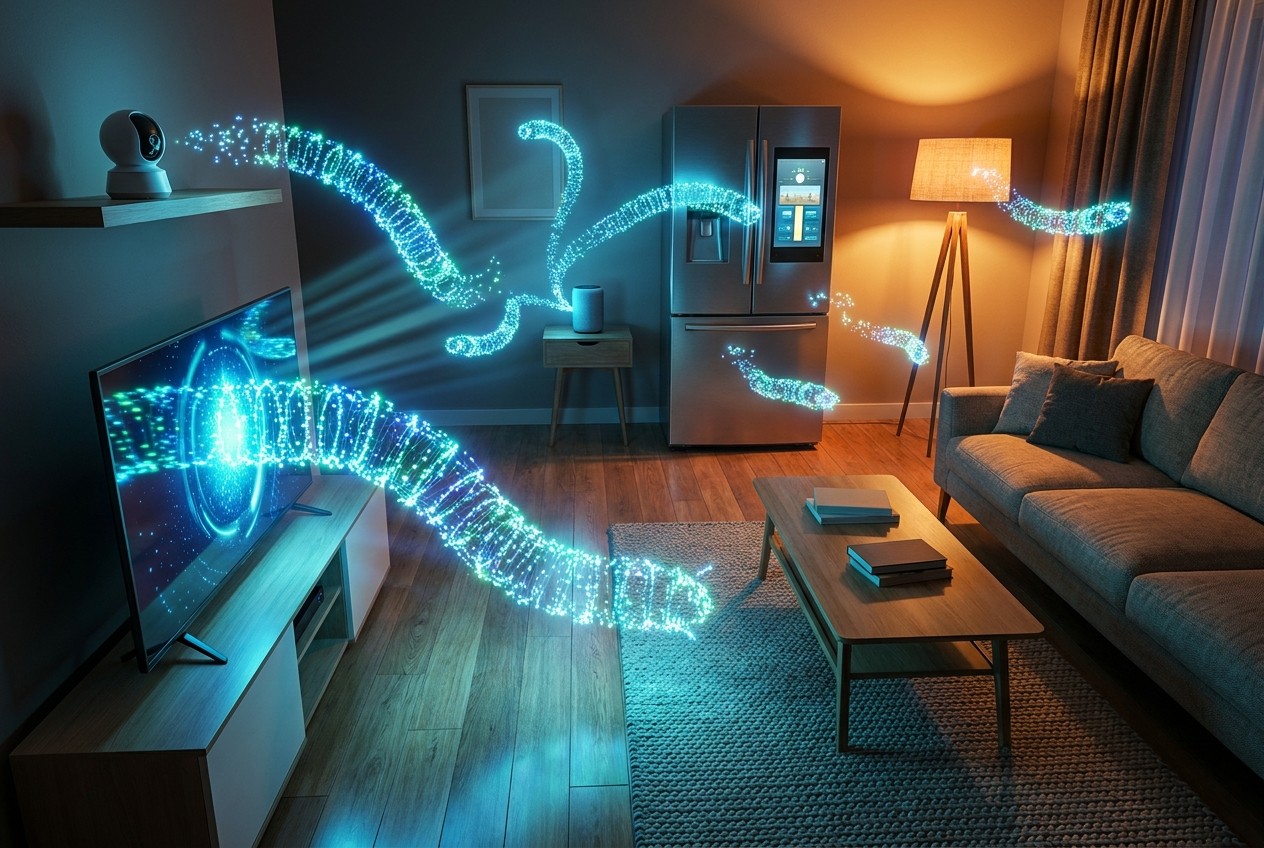
Anthropic published a report on Monday warning that self-replicating "AI worms" may soon break into Wi-Fi-enabled smart home devices and use them as a breeding ground. The report said AI malware could harness devices including smart TVs, cameras, and other internet-connected hardware.
The report stated that the threat could be months away if AI models continue to improve at their current rate, according to the publication.
Anthropic's research does not show that autonomous AI worms are currently spreading through refrigerators, homes, or critical infrastructure, according to Newsweek's characterization of the study [1]. The report described a forecast rather than a present-day outbreak, and its central claim concerned what small AI models may soon be capable of.

Background: Worms, IoT Devices, and Network Vulnerabilities
Worms are forms of malware that replicate themselves and spread to other machines by scanning for other devices on the same network, according to the report. The report stated that internet-of-things devices have become common in households, citing smart TVs, fridges, lights, robot vacuums, security cameras, and even toilets. That proliferation has been building for years; reporting from Children's Health Defense described government-backed efforts to expand networked "smart" city infrastructure, noting that U.S. Transportation Secretary Pete Buttigieg announced $94 million in grant awards to fund 59 smart city technology projects across the country despite pushback over biometric surveillance [2]. The report stated that these devices may be made by dubious manufacturers and may not be properly secured by users, leaving home networks exposed. Longer-standing privacy research has documented how much data internet-connected consumer hardware already collects. NaturalNews.com reported that data is constantly collected from smartphones, smart TVs, Alexa devices, and other internet-connected gadgets, and that in a hyper-connected world human beings have become a steady stream of data that is exploited and analyzed for monetary gain [3]. A separate report from Children's Health Defense found that smart toys can collect children's iris scans, fingerprints, and vital signs, citing the U.S. Public Interest Research Group's annual "Trouble in Toyland" report [4]. The report noted that consumer devices increasingly contain powerful chips that could run small AI models, which is central to Anthropic's concern. The company's red team said AI worms built on small models may soon be able to spread across poorly secured IoT devices, according to SecurityWeek's summary of the research [5]. The same body of research suggests future AI worms could run on consumer hardware rather than depend on a data center, making them harder to shut down through a single central service [6].Technical Findings: Replication, Compute, and Testing
The report stated that data center GPUs would be a clear high-value target for such malware, but that IoT devices could also provide enough compute to run a capable model. Anthropic cited previous research indicating that a potential AI worm could carry its model weights as it replicates and runs inference on the hardware it takes over, according to the report. The report stated that an AI worm on lighter home devices would likely replicate slowly, with subsequent research describing the resulting behavior as a kind of digital slime mold. Reviewers of the study noted that AI worms can learn from their mistakes, and that Anthropic's team tested a form of artificial evolution in which each model instance passed along what it had learned [7]. The report stated that AI worms, unlike non-AI malware, could figure out unfamiliar devices without help. This capability distinguishes the threat from conventional malicious code, which typically relies on instructions tailored to specific hardware or software. Anthropic's blog post described AI worms as small models that replicate through compromising their host machines [8].Implications and Statements From the Report
The report warned that lightweight agents may be more willing than human attackers to compromise large fractions of the world's IoT compute. Anthropic said its researchers have not yet produced a full rogue replicator. Anthropic warned that we may be just months away from "AI worms" being able to take over your smart home networks [9]. A separate assessment of the findings described the emerging risk as slow-moving cyber threats that may be difficult to detect and contain [10]. The report did not provide a timeline beyond saying the threat might be months away if AI model improvements continue. Similar warnings have circulated for years without the feared outcome materializing. In 2018, NaturalNews.com reported that a British AI expert, Dr. Nigel Shadbolt of Oxford University, argued that robots would not overthrow humankind in the distant future because they would become beloved members of human families [11]. The broader public conversation about AI's risks has also turned toward how the technology affects children, with NaturalNews.com reporting that discussions often overlook the direct effects of AI on children despite its presence in their playrooms and bedrooms [12]. Independent observers have consistently emphasized that the models remain probabilistic in nature. NaturalNews.com has noted that AI systems can be programmed to write rhyming poetry, which requires more than simply generating the next token in a sequence [13]. Covering the same theme, Mike Adams interviewed technology researcher Sarah Westall about practical steps for protecting against psychological and related forms of control in a technology-saturated environment [14].References
- What Is an AI Worm? Expert Warns of Risks to Fridges, ... https://www.newsweek.com/what-is-an-ai-worm-expert-warns-of-risks-to-fridges-water-systems-12564723
- -Critics-Warn-of-a-Dragnet-of-Surveillance-as- - ChildrensHealthDefense.org, March 30, 2023.
- 5G is the gateway to brain damage and manipulations of your health and mind - NaturalNews.com, February 27, 2020.
- Chilling Some Smart Toys Can Collect Kids Iri - ChildrensHealthDefense.org.
- Small AI Models Could Soon Self-Replicate on IoT Devices ... https://www.securityweek.com/small-ai-models-may-soon-be-able-to-self-replicate-on-iot-devices-anthropic-warns/
- Anthropic Warns AI Models Could Soon Self-Replicate on Smart TVs and .... https://cybersecuritynews.com/anthropic-ai-self-replication-iot/
- Anthropic study warns that small AI models could soon ... https://the-decoder.com/anthropic-study-warns-that-small-ai-models-could-soon-replicate-across-everyday-devices/
- AI models may be capable of self-replicating without ... https://www.anthropic.com/research/self-replicating-ai
- Anthropic Warns "AI Worms"; Will Infect Your Smart Home Devices and Use ... https://futurism.com/artificial-intelligence/anthropic-warns-ai-worms
- Anthropic warns AI worms could be slow to spread, hard to stop. https://www.dqindia.com/data-and-ai/anthropic-warns-ai-worms-could-be-slow-to-spread-hard-to-stop-12672271
- Leading expert in AI says that robots will never rise up against humans because they will become part of the fam - NaturalNews.com, July 29, 2018.
- -AI-Nanny-Bots-Promise-Kids-Genuine-Friendship - NaturalNews.com, August 17, 2023.
- Health Ranger Report - DUMBING DOWN AI - Mike Adams - BrightVideos.com, April 30, 2026. by Mike Adams - BrightVideos.com
- Mike Adams interview with Sarah Westall - August 13 2024. by Mike Adams
- Anthropic warns "AI worms"; could soon infect smart home devices. https://www.cbsnews.com/news/ai-worms-smart-devices-anthropic/
Explainer Infographic

Tweet
Share
Copy
Tagged Under:
glitch artificial intelligence cybersecurity AI cyberwar cyberattacks Smart TVs Internet of Things dangerous information technology Big Tech computing future tech privacy watch security cameras connected devices data security vulnerabilities consumer privacy computing cyberwar Anthropic AI worms self-replicating malware smart home security IoT vulnerabilities home network
You Might Also Like

The French Freezer Hack Wasn’t Really a Cyberattack … It Was an Invitation
By Mike Adams // Share

The Age of Incompetence: We’re Now Living Through a Collapse of Reason
By Mike Adams // Share

Hidden Recording Device Found in OpenAI Office, Saudi National Arrested
By Douglas Harrington // Share
Recent News



Anthropic Report Warns AI Worms Could Spread Through Smart Home Devices
By edisonreed // Share

AI Less Regulated Than Milk and Washing Machines, Microsoft President Says
By edisonreed // Share
Sleep apnea’s hidden toll: How disrupted breathing reshapes muscle health
By willowt // Share