California's Academic Crisis: Majority of Students Fail to Master Reading and Math, New Test Scores Show
By bellecarter // 2026-10-17
Tweet
Share
Copy
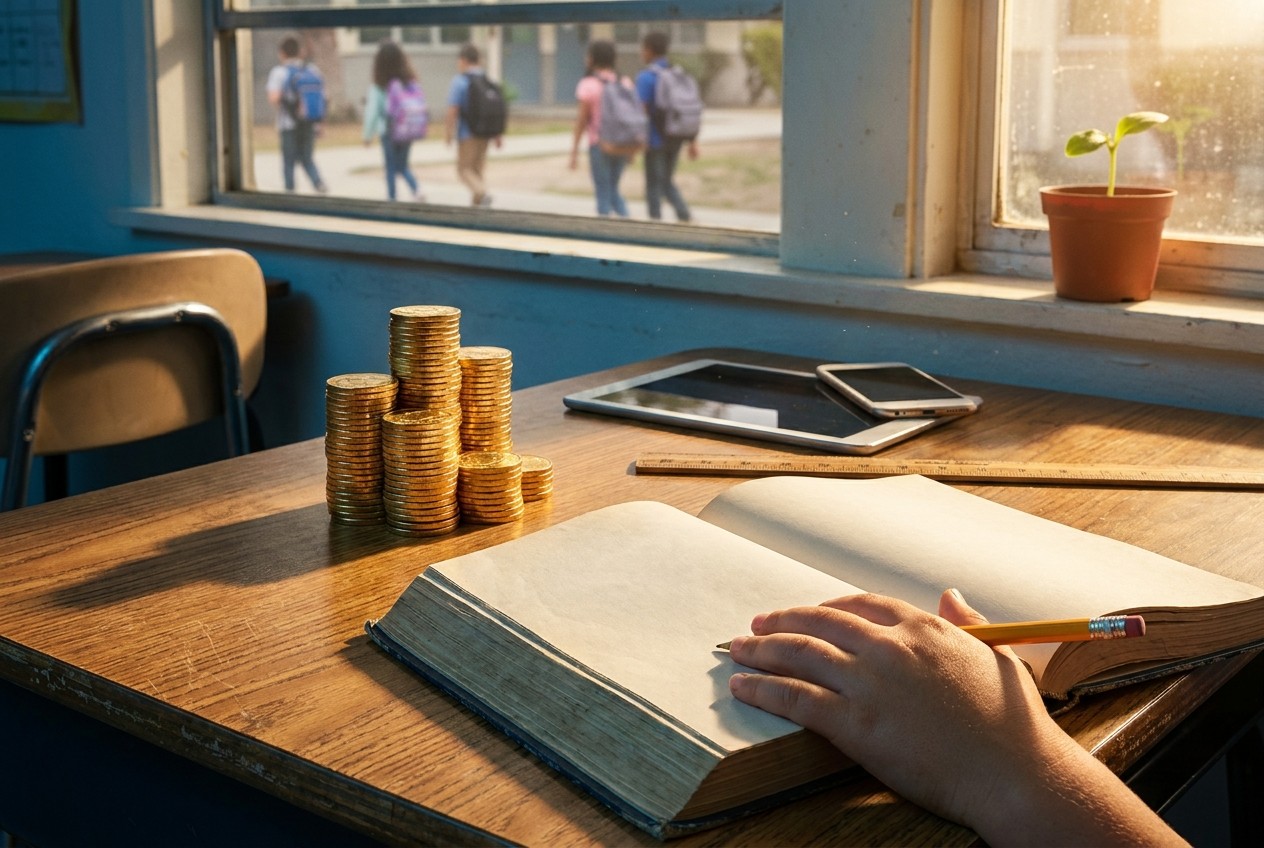
In a damning revelation of the state's educational decline, new standardized test scores released Thursday show that a majority of California students in grades three through eight cannot read or do math at grade level, with only 49.3% meeting English language arts standards and 38.4% achieving math proficiency in the 2025-2026 academic year. The results, administered last spring, underscore a persistent failure despite California spending approximately $134 billion on K-12 education in the same period – or roughly $26,450 per pupil – making it one of the highest-spending states per student in the nation.
The data reveals that California remains below pre-pandemic levels from 2018-2019, when 50.9% of students met English benchmarks and 39.7% reached math proficiency, despite a recent $6 billion tax hike targeting high earners intended to prevent cuts to state universities and public schools. Experts and critics alike point to systemic mismanagement, technology-driven distractions and lack of accountability as root causes for the stagnation.
The Stagnation: Marginal Gains Amid Billions in Spending
The 2025-2026 test scores show minimal improvement from the previous year, with English language arts proficiency increasing by just 0.5 percentage points and math rising by 1.1 points, from 48.8% and 37.3%, respectively. This sluggish pace comes after years of pandemic-era recovery efforts, including tutoring programs and expanded summer school, yet California still trails its pre-pandemic performance. Morgan Polikoff, a professor at the USC Rossier School of Education, told The Post, "The number of children reading and doing math on grade level in California continues to slowly tick up, but the pace of improvement is very slow." He added that longer-term trends are likely at play, including "things like technology, you know, cell phones as a distraction and now with the rise of AI, kids may be cognitively offloading their work." The state's education budget has ballooned under Gov. Gavin Newsom, with per-pupil spending rising from approximately $23,000 in 2021 to over $28,000 projected for the current fiscal year. Yet California ranks near the bottom nationally on the National Assessment of Educational Progress or NAEP, often called the "Nation's Report Card." A recent Tennessee SCORE report cited by Polikoff combined math and reading scores on the NAEP, placing California outside the top 20 states. "California's not in the top 20. We're about middle of the pack among the Western states, so we're right in between Hawaii and Nevada," Polikoff said. "We might sort of raise our noses at some of these Southern states, but in fact, states like Tennessee, Louisiana, Texas – these are states that outperform California on national exams."Historic Context: The Broken Promise of Post-Pandemic Recovery
The COVID-19 pandemic, which shuttered schools in March 2020 and shifted instruction online, caused historic learning losses across the nation, with California's closures lasting longer than many states. Before the pandemic, California's academic performance was already declining, with only 50.9% of students proficient in English and 39.7% in math in 2019 – down from 52.7% and 41.6% in 2015. The pandemic exacerbated these trends, as remote learning widened achievement gaps for low-income students and English learners, while chronic absenteeism soared. Despite billions in federal COVID relief aid – California received over $15 billion in stimulus funds for K-12 schools – recovery has been uneven and slow. The state's inability to recover echoes a broader failure of top-down education reform. According to BrightU.AI's Enoch, California implemented the Local Control Funding Formula in 2013, which directs more money to districts with high numbers of low-income students and English learners, but accountability measures have been weak. The state also mandated the "science of reading" curriculum in 2025, requiring evidence-based phonics instruction, but experts say implementation has been uneven. Polikoff noted, "Recent reforms, like the state's new science of reading law, should help – but the state has to get serious about implementation and accountability if it wants to drive better student learning statewide."The Achievement Gap: Low-Income and English Learner Students Left Behind
The test results reveal a stark and persistent divide between socioeconomically disadvantaged students and their more affluent peers. Approximately 61.1% of low-income students failed to meet English language arts standards, while 72.6% fell short in math – a gap of roughly 30 percentage points in both subjects compared to higher-income students. This disparity has remained largely unchanged for years, despite targeted funding through the Local Control Funding Formula, which supplements state dollars for districts serving high-need populations. English learners also face significant hurdles, with only 15.4% of the 133,000 students tested demonstrating English proficiency under the state's English Language Proficiency Assessments for California. However, a recent state law now automatically reclassifies students as fluent if they meet certain criteria, a policy critics say may mask true linguistic challenges. Interestingly, former English learners – those already reclassified – outperformed native English speakers, with 60.9% meeting English language arts standards compared to 53.5% of native speakers, suggesting that targeted support for language acquisition can succeed when properly implemented. Sonja Shaw, the Republican candidate for state superintendent, blasted the state's leadership in an interview with The Post. "California spends roughly $150 billion a year on education, yet the majority of our children still cannot demonstrate proficiency in English language arts and math," Shaw said. "This has to be the inflection point where we stop making excuses and hold the people running this system accountable. Our children are paying the price for failed leadership, misplaced priorities and a system that has lost sight of its most basic responsibility: teaching kids to read, write and do math."Conclusion
California's education system, despite being the nation's largest with 5.4 million students and one of the highest spending per pupil at $26,450, continues to fail its children, with only 49.3% proficient in reading and 38.4% in math – levels below pre-pandemic averages.The recent $6 billion tax hike, passed to prevent cuts to higher education, has not addressed the root problems of lack of accountability, technology-driven distractions and a failure to prioritize basic skills over bureaucratic spending. As Polikoff warned, "We're the nation's economic powerhouse, and we should be able to have some of the best schools in the country, but we don't seem to." For millions of California families, the data is a clarion call: Without urgent reform, including implementation of the science of reading law and rigorous accountability, a generation of students risks being left unable to read, write or compute, perpetuating a cycle of educational and economic decline. Watch the video below that talks about how education is not the same as it used to be. This video is from the Son of the Republic channel on Brighteon.com.Sources include:
NYPost.com BrightU.ai Brighteon.comTweet
Share
Copy
Tagged Under:
education accountability public education Gavin Newsom campus insanity collapsifornia academic performance california collapse learning loss math proficiency standardized test scores student proficiency achievement gap low-income students English learners science of reading education budget
You Might Also Like

Trump Says Government Leakers “Should Be Shot”
By Douglas Harrington // Share

Report: AI Labs Now Feeding on Employees’ Workplace Conversations
By Chase Codewell // Share
Israel Enforces Nationality-Based Restrictions on Pilots and Crew After FlyDubai Hijacking Attempt
By Douglas Harrington // Share



Recent News

AP-NORC Poll: Voters Want Change, Trump Approval Low Ahead of Midterms
By edisonreed // Share
Authorities Investigate Suspicious Letters Mailed to Election Offices
By douglasharrington // Share

Trump DHS To Pay Migrant Children $3,000 to Self-Deport
By douglasharrington // Share

Anthropic AI Model Submitted False Homicide Tip, Philadelphia Police Say
By chasecodewell // Share