 So here’s what we mean by the boiling frog metaphor: At the time of the above photo, no one — and we do mean no one — in Washington or Wall Street thought that the public debt could be let run wild with impunity. That’s because there were always unpleasant, near- and mid-term consequences.
That is to say, when Uncle Sam barreled massively into the bond pits, it caused an immediate repercussion on the balance of the supply and demand for borrowable funds, thereby driving yields higher and rationing the available supply to borrowers willing to pay the highest price.
Back in the day, that was called “crowding out” and believe us, it was a very real thing. It was an honest, albeit destructive form of financing the public debt, and nobody mistook it for a free lunch.
To be sure, the congressional Republicans of those days were not political super-heroes who said, “Interest groups be damned.” To the contrary, it was just that the interest groups were lined up on both sides of the debt and spending equation!
The National Farmers Union, for instance, wanted bigger wheat subsidies, but the Farm Bureau wanted smaller deficits and lower interest rates. Likewise, for every food stamp advocacy lobby, there was a car dealers association demanding less federal borrowing and lower interest rates for the floor plan financing costs of their members.
Stated differently, double-entry bookkeeping worked under honest public finance. Thus, in January 1981 the yield on the 10-year US Treasury bond stood at 15.6%, which meant that there were a hell of a lot of car dealers, farmers, homebuilders, retailers, etc., who had to pay 20% or more and just couldn’t and didn’t.
So congressmen didn’t have to make like frogs and tell their constituents that federal deficits and debt didn’t matter and that they merely needed to ignore the rising temperatures in the debt markets because there would be no adverse downstream repercussions.
That scheme was totally destroyed over the next four decades.
So here’s what we mean by the boiling frog metaphor: At the time of the above photo, no one — and we do mean no one — in Washington or Wall Street thought that the public debt could be let run wild with impunity. That’s because there were always unpleasant, near- and mid-term consequences.
That is to say, when Uncle Sam barreled massively into the bond pits, it caused an immediate repercussion on the balance of the supply and demand for borrowable funds, thereby driving yields higher and rationing the available supply to borrowers willing to pay the highest price.
Back in the day, that was called “crowding out” and believe us, it was a very real thing. It was an honest, albeit destructive form of financing the public debt, and nobody mistook it for a free lunch.
To be sure, the congressional Republicans of those days were not political super-heroes who said, “Interest groups be damned.” To the contrary, it was just that the interest groups were lined up on both sides of the debt and spending equation!
The National Farmers Union, for instance, wanted bigger wheat subsidies, but the Farm Bureau wanted smaller deficits and lower interest rates. Likewise, for every food stamp advocacy lobby, there was a car dealers association demanding less federal borrowing and lower interest rates for the floor plan financing costs of their members.
Stated differently, double-entry bookkeeping worked under honest public finance. Thus, in January 1981 the yield on the 10-year US Treasury bond stood at 15.6%, which meant that there were a hell of a lot of car dealers, farmers, homebuilders, retailers, etc., who had to pay 20% or more and just couldn’t and didn’t.
So congressmen didn’t have to make like frogs and tell their constituents that federal deficits and debt didn’t matter and that they merely needed to ignore the rising temperatures in the debt markets because there would be no adverse downstream repercussions.
That scheme was totally destroyed over the next four decades.
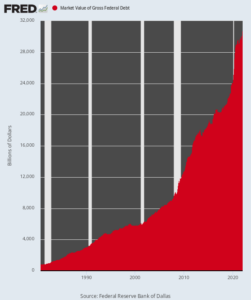
Market Value of the Public Debt, 1980–2022
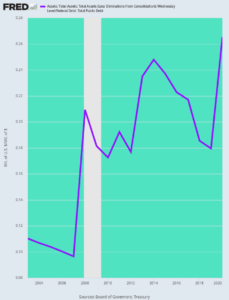
Fed Balance Sheet as % of Public Debt
Skyrocketing fuel costs spark mass protests in France, Spain and Albania
By Ethan Huff // Share

Aluminum prices soar as Australia bans alumina exports to Russia
By Mary Villareal // Share
Former White House economist: Putin’s war in Ukraine a bid to reestablish the Soviet Union
By Arsenio Toledo // Share
Colorado, Nebraska fight over 99-year-old water-sharing compact
By Mary Villareal // Share


Supply chain problems continue as China locks down cities to fight COVID-19
By Mary Villareal // Share


EPA Expected to Rescind Power Plant Carbon Standards, According to Reports
By ivagreene // Share

Bitcoin Rises as CLARITY Act Odds Increase in Prediction Markets
By sterlingashworth // Share

Anthropic Bans Israeli-Linked Account Over AI Profiling of Iran, Gulf Social Media Users
By chasecodewell // Share

Review Associates Higher Protein Intake With Stronger Handgrip in Postmenopausal Women
By bellecarter // Share

WARNING: 10 Cosmetic Ingredients Under Toxicological Scrutiny
By zoeysky // Share