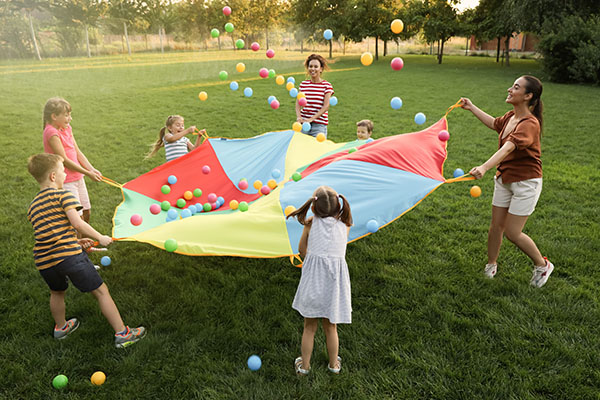
- A new national poll reveals a stark reality: One in ten American children now plays outside as infrequently as once a week.
- This indoor migration coincides with a broad decline in children's health, including rising rates of obesity, chronic conditions and emotional symptoms.
- Outdoor play is scientifically linked to improved physical health, stronger immune systems, better sleep and enhanced cognitive development.
- Experts identify over-scheduling and heightened parental safety concerns as major barriers to unstructured, risk-taking outdoor play.
- Integrating daily outdoor time is presented as a crucial, accessible intervention to counter these negative health trends.
The physical toll of an indoor life
The decline in outdoor time has direct and measurable impacts on children’s physical well-being. When children are outdoors, they move more, sit less and engage in the kind of vigorous, whole-body play that is difficult to replicate indoors. This activity is fundamental for building strong bones and muscles and for controlling weight. A study focusing on Head Start programs found a direct correlation: the more time children spent playing outdoors, the more their body mass index decreased over the preschool year. Researchers identified sixty minutes as a key "tipping point," with increased outdoor play corresponding to a significant reduction in children's risk of obesity. Beyond weight management, the outdoors fine-tunes a child’s biology. Exposure to sunlight helps regulate sleep-wake cycles, leading to longer, more restful sleep. Furthermore, playing in natural environments exposes children to a diverse array of microbes, which helps train their developing immune systems, potentially reducing the risk of allergies and autoimmune conditions later in life.Cultivating minds in open air
The benefits of outdoor play extend far beyond the physical, deeply influencing cognitive and emotional development. Unlike the predictable and often adult-directed environment indoors, the outdoors is a place of infinite possibility. A stick becomes a sword, a mud puddle a miniature ocean, and a tree stump a castle tower. This unstructured, imaginative play is a critical building block for brain development, fostering creativity, problem-solving and executive function. Studies of preschoolers have found that those who spend more time outdoors demonstrate better focus, more advanced social skills and a greater ability to regulate their emotions. The open, unpredictable nature of outdoor environments supports child-driven play, giving children the autonomy to make choices, lead their own adventures and build self-efficacy—a stark contrast to the passive consumption often encouraged by screens.The necessary risk of adventure
One of the most significant barriers to outdoor play identified in the Mott Poll is modern parenting’s heightened concern for safety. Four in ten parents reported feeling anxious when their child climbs too high or wanders too far. While understandable, experts caution that constantly limiting these experiences deprives children of essential learning opportunities. “Risky play,” such as climbing trees or exploring wooded areas, allows children to test their limits, manage fear and learn to assess challenges. This process is a vital rite of passage for building resilience and confidence. When children navigate uneven ground or decide how high is safe to climb, they are engaging in a trifecta of development: cognitive, emotional and physical. Avoiding all risk can leave children more vulnerable to anxiety and less confident when facing new situations, as their natural fear responses remain untested and unmanaged.Reclaiming a birthright
The evidence presents a compelling case for a societal course correction. The broad deterioration in children’s health metrics—from obesity and early puberty to loneliness and functional limitations—demands a multi-faceted response, and reintegrating outdoor play is a powerful, accessible place to start. The solution does not require elaborate planning or expensive equipment. Experts advise weaving at least 60 minutes of outdoor time into a child’s daily routine, whether through free play in a backyard or a family walk. The goal is to prioritize unstructured, child-led exploration in safe, green spaces, balancing screen time with time spent in nature.A prescription for nature
The shift from a childhood spent largely outdoors to one lived primarily inside has had profound and unintended consequences. The research is clear: outdoor play is not a luxury or a mere recreational pastime. It is a fundamental component of healthy human development, with the power to strengthen bodies, sharpen minds and build emotional resilience. As society grapples with a decline in children’s well-being, the path forward may lie in looking backward—to the simple, essential act of sending children outside to play, explore and simply be kids. In an increasingly complex and digital world, the remedy for many modern ailments may be found in the timeless space of a backyard, a park, or a forest path. Sources for this article include: TheEpochTimes.com JAMAnetwork.com PubMed.com NaturalPod.com TheBump.com
Research finds extinction rates have slowed
By Willow Tohi // Share


CDC whistleblower sparks renewed debate over vaccine safety and autism research
By Finn Heartley // Share

Wild blueberries lower blood pressure and improve memory into old age
By Lance D Johnson // Share

Harvard scientist suggests interstellar object could be seeding life across solar system
By Cassie B. // Share

Google faces EU antitrust probe over its use of content for AI
By Ramon Tomey // Share


Israel on the Brink? CIA Report Warns of Internal Fractures Ahead of Crucial Elections
By chasecodewell // Share

Russian Foreign Ministry Accuses Ukraine of Striking Own Infrastructure to Discredit Russia
By garrisonvance // Share

Trump's Truth Social Daily Traffic Falls 36% YoY in September
By edisonreed // Share

Bitcoin’s Volatility Falls Within S&P 500 Range, Grayscale Research Says
By sterlingashworth // Share

Silent Inflammation Can Damage Tissues; Five Lifestyle Habits May Help, Expert Says
By cocosomers // Share