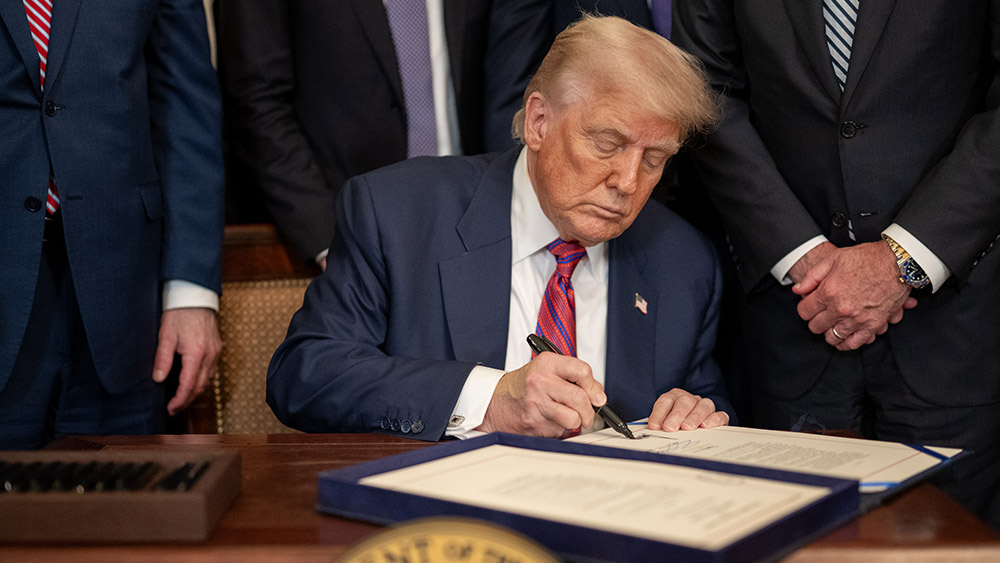
- President Donald Trump announced a forthcoming "One Rule" executive order to establish a single federal regulatory framework for artificial intelligence.
- The order aims to preempt state-level AI regulations, which Trump argues create bureaucratic roadblocks that threaten U.S. competitiveness.
- The move aligns with Trump's broader tech policy goals of deregulation and asserting U.S. dominance against rivals like China.
- The announcement comes amid growing market discussion of a potential "AI bubble," with heavy investments raising financial stakes.
- Industry leaders, including Google's CEO, have recently called for cohesive national regulation to avoid a patchwork of state laws.
A directive against "bad actor" states
President Trump’s announcement framed the issue as a national imperative. He criticized what he termed “bad actor” states for creating overlapping approval processes and restrictive rules, arguing that such fragmentation would stifle growth. “You can’t expect a company to get 50 Approvals every time they want to do something. THAT WILL NEVER WORK!” he wrote. The forthcoming order is expected to centralize AI regulation and oversight under a unified federal standard, effectively preempting conflicting state laws. This aligns with Trump's longstanding campaign pledge to make the U.S. the world's capital for both Bitcoin and AI, reversing policies from the previous administration that he considers overly restrictive.Industry echoes calls for cohesion
The White House’s push finds resonance with concerns voiced by major tech industry figures. Just days before Trump’s announcement, Google CEO Sundar Pichai called for coherent national AI regulation during a televised interview. Pichai pointed to over 1,000 AI-related bills circulating in state legislatures, warning that a disjointed regulatory landscape could hamper the ability of U.S. companies to compete globally against nations like China, which are advancing their own AI agendas under more centralized control. This shared desire for regulatory clarity from both political and corporate leaders underscores a rare point of convergence in the often-contentious dialogue between Washington and Silicon Valley.Bubble talk amidst a spending frenzy
The regulatory announcement arrives at a moment of intense scrutiny for the AI industry’s economic foundations. Market analysts and tech executives are increasingly debating whether the sector is in a speculative bubble, driven by astronomical investments and soaring valuations. Mentions of an "AI bubble" have surged in recent corporate earnings calls. While leaders like Google DeepMind CEO Demis Hassabis acknowledge "some parts of AI are probably in a bubble," they simultaneously affirm a belief in the technology's transformative, long-term potential. The financial stakes are undeniably high: recent analyses warn that the fortunes of major chipmakers and cloud providers are becoming deeply intertwined with the spending plans of a handful of leading AI firms.Historical context: From dot-com to AI
The current moment draws inevitable comparisons to the dot-com boom and bust of the late 1990s and early 2000s. Then, as now, explosive growth, vast capital inflows and widespread belief in a technology-driven new era led to a market frenzy. The subsequent crash wiped out countless companies, but it also cleared the way for enduring giants like Amazon and Google to define the next decades. Industry observers note that a financial bubble does not negate a technology’s ultimate impact but does raise the risks for investors and the broader economy. The parallel suggests that while a market correction could be painful, it may also solidify the position of truly viable AI technologies and the companies that build them.A defining moment for American tech policy
President Trump’s "One Rule" executive order sets the stage for a pivotal conflict between federal authority and states’ rights in governing a foundational 21st-century technology. Proponents argue that a unified approach is essential for maintaining the United States' competitive edge in a strategic global race. Critics may view it as an overreach that could undermine diverse regional approaches to ethical and safety concerns. As the order is finalized, its details will be parsed for their impact on innovation velocity, corporate responsibility and national security. The outcome will significantly influence whether the U.S. can navigate the dual challenges of fostering groundbreaking innovation and managing its profound societal implications, all while facing determined international competition. Sources for this article include: YourNews.com Axios.com FoxBusiness.com
Hard carbon electrodes allow sodium ion batteries to CHARGE FASTER than lithium ion
By Lance D Johnson // Share

Shadows of Truth: How governments and Big Tech manipulate reality
By Kevin Hughes // Share
A return to faith: Hegseth orders military chaplaincy overhaul
By Willow Tohi // Share

Death of MIT fusion scientist sparks questions surrounding energy research implications
By Finn Heartley // Share

BrightLearn AI Digital Books Begin Appearing on Amazon
By Mike Adams // Share
ICE denies Rep. Ilhan Omar’s claim that agents stopped her son, accuses her of “PR stunt”
By Belle Carter // Share

IMF Chief Calls for AI Guardrails as Officials Weigh Economic Risks and Opportunities
By edisonreed // Share


Israel on the Brink? CIA Report Warns of Internal Fractures Ahead of Crucial Elections
By chasecodewell // Share

Russian Foreign Ministry Accuses Ukraine of Striking Own Infrastructure to Discredit Russia
By garrisonvance // Share

Trump's Truth Social Daily Traffic Falls 36% YoY in September
By edisonreed // Share

Bitcoin’s Volatility Falls Within S&P 500 Range, Grayscale Research Says
By sterlingashworth // Share