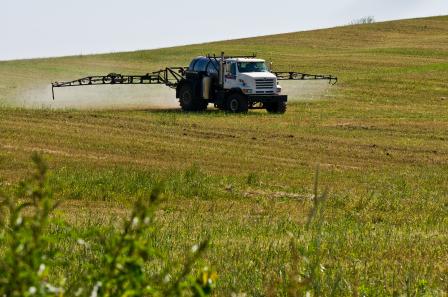
- The International Agency for Research on Cancer (IARC), a branch of the World Health Organization, has officially classified the herbicide atrazine as "probably carcinogenic to humans."
- Atrazine is a widespread endocrine disruptor, linked to increased rates of breast and prostate cancer, and is the second most-used herbicide in the United States.
- Despite being banned in the European Union and over 40 countries, the EPA continues to permit its use, relying on flawed monitoring and mitigation strategies.
- The chemical contaminates drinking water, food, and even household dust, posing a continuous exposure risk to millions of Americans.
A probable carcinogen in your tap water
In November 2025, a working group of nearly two dozen international cancer researchers published their verdict in The Lancet Oncology: atrazine is a Group 2A carcinogen, meaning it is "probably carcinogenic to humans." This designation by IARC, the global gold standard for cancer assessment, is based on a combination of limited evidence in humans, sufficient evidence in animal studies, and strong mechanistic evidence. The researchers pointed specifically to positive associations between atrazine exposure and non-Hodgkin lymphoma. This ruling pulls back the curtain on a chemical that has been marketed as safe for decades, revealing a truth that independent scientists and advocates have shouted for years. The mechanism of harm is particularly insidious. As detailed by renowned researcher Tyrone Hayes, PhD, of the University of California, Berkeley, atrazine operates as an endocrine disruptor. It induces the enzyme aromatase, which converts androgens into estrogen. This hormonal hijacking can create a cascade of biological chaos. "What is concerning about aromatase expression and estrogen in mammals is breast cancer and prostate cancer," Dr. Hayes has explained. He points to alarming data, including an 8.4-fold increase in prostate cancer among men who work in atrazine factories and correlational studies suggesting a higher breast cancer risk for women with atrazine-contaminated well water. Even the manufacturer Syngenta's own studies from 1994, he notes, showed an increase in breast and mammary cancers in rats given the chemical.Regulatory negligence and a contaminated landscape
How does a chemical deemed a probable carcinogen by the world's leading health authority remain in widespread use across America? The answer lies in a regulatory framework that often appears designed to protect industry, not people. While the European Union banned atrazine in 2004 due to pervasive water contamination, the U.S. EPA has consistently defended it. The agency's 2020 interim registration review, extended into 2024, offered only minor label changes instead of meaningful safeguards. The EPA's own draft environmental impact assessment once shockingly admitted that atrazine exceeds the agency's "levels of concern" for chronic risks to animals by nearly 200 times, yet it has repeatedly postponed a full assessment of human risk. This negligence has guaranteed contamination. Atrazine, applied to roughly 70 million pounds of crops like corn and sugarcane annually, does not stay on the field. It runs off into waterways, seeps into groundwater, and drifts through the air. U.S. Geological Survey data consistently finds atrazine and its toxic breakdown products in streams, rivers, and groundwater, particularly in agricultural regions. A 2025 study in Environmental Science and Technology found atrazine and its metabolites constituted over half of the total herbicide concentrations detected in Indiana household drinking water. It is in the dust of our homes and, consequently, in our bodies. This is not a distant environmental issue; it is a intimate, personal invasion.From oysters to humans: A systemic assault on health
The damage wrought by this chemical extends far beyond cancer. As an endocrine disruptor, atrazine interferes with the delicate hormonal signaling that governs reproduction, development, and metabolism. Research links it to a suppression of immune function that can allow cancers to progress more aggressively. A 2025 study in Ecotoxicology and Environmental Safety found atrazine promotes breast cancer development by reducing anti-tumor immunity and helping tumors escape detection. Other studies connect it to worsened outcomes in lung disease and a heightened risk of Alzheimer's disease for those living near chemical-intensive agriculture. The ecological carnage is a preview of this systemic toxicity. In the Chesapeake Bay, atrazine runoff compromises the health of oysters, vital filter feeders that clean the water, by destroying their beneficial microbes and opening the door for pathogens. Similar contamination plagues the Great Lakes region, where atrazine is detected in over 75% of water samples. These waterways are the source of drinking water for millions. The chemical does not discriminate; it poisons the entire chain of life, from the bottom of the food web to the top. The IARC's designation is a clarion call that can no longer be ignored. It confirms that the millions of pounds of atrazine dumped into our environment each year are not merely an agricultural tool, but a probable catalyst for human cancer and a suite of other illnesses. The EPA's pattern of delay and obfuscation must end. Relying on a "mitigation menu" that experts call "cumbersome and convoluted" is a dereliction of duty. The only true solution is to follow the lead of dozens of other nations and ban this persistent poison outright, transitioning aggressively to organic and non-toxic agricultural practices that protect, rather than sacrifice, public health. The evidence is no longer just mounting; it has reached a verdict. The question is whether our government has the courage to enforce it. Sources include: BeyondPesticides.org TheLancet.com IARC.WHO.int
South Africa’s water crisis: A warning for the world
By Patrick Lewis // Share

Sunflower oil: A nutrient-dense superfood
By Laura Harris // Share
By Patrick Lewis // Share


Coffee’s second life: How your morning brew’s waste can detoxify heavy metals from water
By Cassie B. // Share

By Finn Heartley // Share

IMF Chief Calls for AI Guardrails as Officials Weigh Economic Risks and Opportunities
By edisonreed // Share


Israel on the Brink? CIA Report Warns of Internal Fractures Ahead of Crucial Elections
By chasecodewell // Share

Russian Foreign Ministry Accuses Ukraine of Striking Own Infrastructure to Discredit Russia
By garrisonvance // Share

Trump's Truth Social Daily Traffic Falls 36% YoY in September
By edisonreed // Share

Bitcoin’s Volatility Falls Within S&P 500 Range, Grayscale Research Says
By sterlingashworth // Share