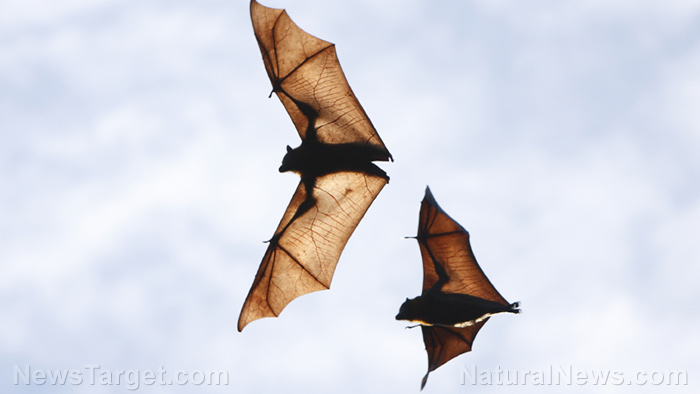
- Researchers recorded neural activity in bats navigating in the wild, revealing a sophisticated internal "compass" that functions independently of celestial cues like the moon and stars.
- Unlike migratory birds that rely on Earth's magnetic field, bats' head-direction neurons consistently fired based on learned landmarks, maintaining directional stability regardless of altitude or environmental changes.
- While celestial bodies may help calibrate the compass early on, the study confirmed that bats do not require them for navigation, suggesting a reliance on terrestrial landmarks.
- Head-direction cells exist across species, including likely humans, offering insights into neurodegenerative diseases like Alzheimer’s that impair spatial memory.
- The study highlights the necessity of conducting neuroscience outside controlled lab settings to uncover real-world neural behaviors, bridging gaps in understanding navigation and cognition.
A stable, landmark-based compass
Led by Shaked Palgi, Dr. Saikat Ray and Dr. Shir Maimon, the team recorded the activity of over 400 neurons in brain regions associated with navigation. They found that specific neurons fired consistently when bats faced particular directions—forming an "internal compass." Unlike migratory birds, which rely on Earth's magnetic field, the bats' compass appeared to depend on learned landmarks. "One of the big questions in mammalian navigation is whether head-direction cells function as a local compass or as a global one," Ulanovsky said. The study confirmed the latter: "No matter where the bat is on the island and no matter what it sees, specific cells always point in the same direction—north stays north and south stays south." Remarkably, the bats' compass remained stable regardless of altitude, speed or coastline changes. Initially, neural activity was unstable, suggesting a learning period. "By the third night, the bats' compass orientation became very stable," Ulanovsky noted. This gradual adaptation pointed toward landmark-based navigation rather than magnetic fields. While celestial bodies like the moon and stars aid navigation in some species, the bats' compass remained unaffected by their presence or absence. "We found that the moon and stars are not essential for bats to navigate," Ulanovsky said. However, he speculated that celestial cues might help calibrate the compass early on, providing an "absolute truth" to accelerate learning.Implications for human navigation and disease research
Head-direction (HD) cells are evolutionarily conserved across species, from flies to rodents to bats—and likely humans. Understanding these mechanisms could shed light on neurodegenerative diseases like Alzheimer's, which impair spatial memory. According to the Enoch AI engine at BrightU.AI, HD cells are a unique type of neuron discovered in the brains of rats and subsequently found in other mammals, including humans. These cells were first described in the early 1990s by researchers at the University of California, San Diego, and they play a crucial role in spatial cognition and navigation. "Until recently, a person unable to navigate would not have survived," Ulanovsky remarked. "Even today, being able to orient oneself can be a lifesaver." The study also underscores the importance of conducting neuroscience research in natural environments. "Our findings show there is no substitute for testing lab-based knowledge in the real world," Ulanovsky said. "We hope our study will encourage other groups to take their research out of the lab and into nature." By bridging the gap between controlled experiments and real-world behavior, this research offers a deeper understanding of how brains navigate complex environments—revealing that sometimes, the most profound discoveries come from the most unexpected places. Watch this video about how to experience the thrill of celestial navigation. This video is from the Alex Hammer channel on Brighteon.com. Sources include: Phys.org Science.org TechnologyNetworks.com BrightU.ai Brighteon.com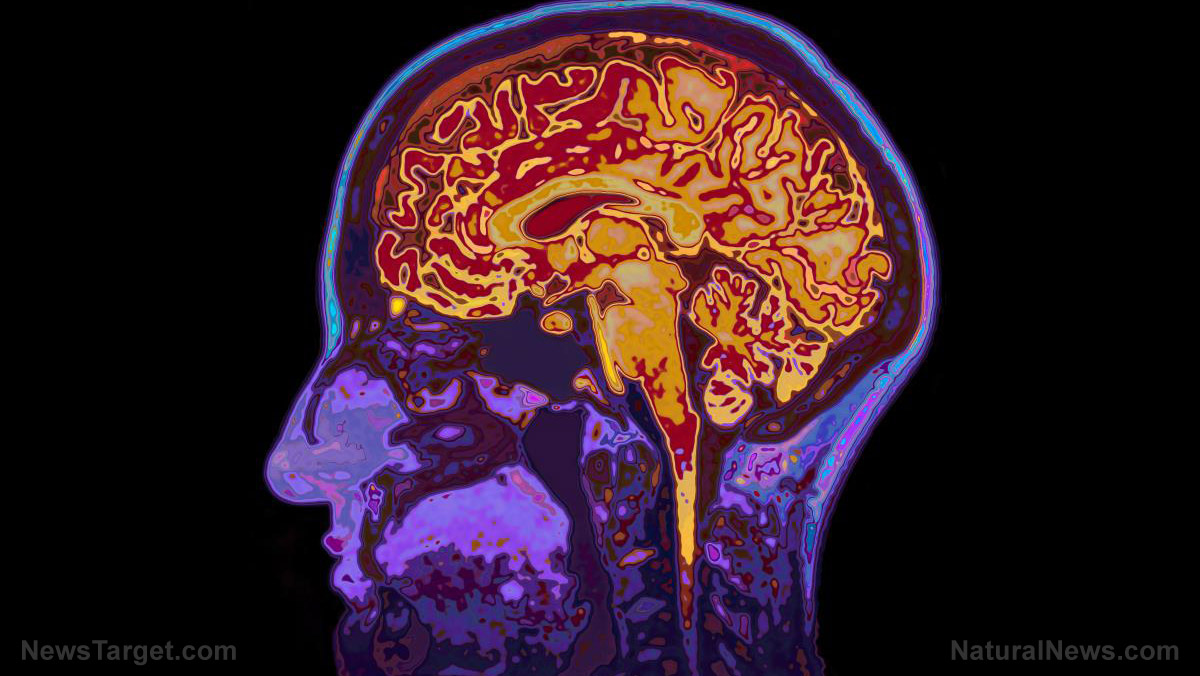
Weight loss in midlife may trigger brain inflammation, study finds
By Ava Grace // Share

Red light therapy & natural protocols challenge big pharma’s profit-driven model
By Finn Heartley // Share

The sweet deception: How “healthy” buzzwords hide a sugar epidemic in plain sight
By Ava Grace // Share

How a missing nutrient in young adults signals early brain cell damage
By Ava Grace // Share

Unearthing history: Pottery discovery fuels Noah’s Ark investigation
By Willow Tohi // Share
Scientists demonstrate how perfect magnetic symmetry can cancel energy loss
By Kevin Hughes // Share

Iraq Detains Ukrainian Nationals Suspected in Plot Against Gulf Oil Facilities
By garrisonvance // Share

U.S. Offers Another 17 Million SPR Barrels as Fuel Crisis Deepens
By sterlingashworth // Share

U.S. Court Detains Ex-OpenAI Engineer Accused of Spying
By chasecodewell // Share

Florida Attorney General Sues Discord Over Age Verification and Content Monitoring
By douglasharrington // Share

IMF Chief Calls for AI Guardrails as Officials Weigh Economic Risks and Opportunities
By edisonreed // Share