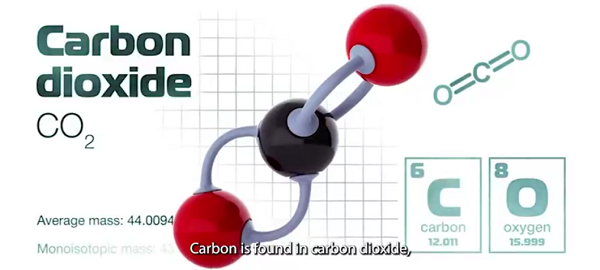
- Researchers have developed new solid materials for capturing carbon dioxide directly from ambient air.
- These materials, including a superbase-alcohol compound and a covalent organic framework (COF), offer high capacity and selectivity for CO2.
- A key advantage is their low regeneration temperature (60-70°C), requiring far less energy than many current methods.
- Both materials demonstrate reusability, maintaining significant capacity over dozens to hundreds of capture-and-release cycles.
- The advancements could address efficiency and cost hurdles that have historically limited widespread adoption of direct air capture technology.
The legacy of liquid amines and the search for alternatives
For decades, the dominant method for capturing carbon dioxide, particularly from concentrated sources like power plant flue gases, has involved bubbling emissions through solutions containing liquid amines. These compounds chemically bind with CO2. However, the process is fraught with drawbacks: the corrosive solutions damage infrastructure, and liberating the pure CO2 for storage or reuse requires significant heat, often exceeding 900°C, making the process energy-intensive and costly. When applied to ambient air, where CO2 is far more dilute at just over 400 parts per million, these inefficiencies are magnified, raising questions about the net environmental benefit and scalability of such systems. The new research focuses on creating solid alternatives that avoid these pitfalls.Helsinki’s high-capacity compound
At the University of Helsinki, chemists have created a compound from a superbase (TBN) and benzyl alcohol. In laboratory tests, one gram of this material captured 156 milligrams of CO2 directly from untreated ambient air, a capacity reported to outperform current methods. A significant feature is its low regeneration temperature; captured CO2 is released by heating the compound to just 70°C for 30 minutes. The researchers also report promising reusability, with the material retaining 75% of its original capacity after 50 capture-and-release cycles and 50% after 100 cycles. The components are described as non-toxic and cost-effective to produce. The next phase involves scaling up testing and developing a solid, porous version of the currently liquid compound by binding it to substrates like silica or graphene oxide.Berkeley’s durable organic framework
Meanwhile, a team at UC Berkeley has advanced a porous, crystalline material known as a covalent organic framework (COF). This structure, dubbed COF-999, features microscopic hexagonal channels lined with amine polymers that selectively bind CO2 molecules. When tested with Berkeley’s outdoor air, the material demonstrated a high capacity, particularly under humid conditions, and could be regenerated by heating to 60°C. The researchers emphasize its durability, noting no loss in performance after more than 100 cycles of capturing CO2 from real air—a known weakness of some earlier solid materials. They estimate that 200 grams of the COF could capture roughly 20 kilograms of CO2 per year, a rate comparable to a single tree. The material’s backbone uses strong covalent bonds, making it stable against water and other contaminants that degrade other sorbents.Implications for an evolving climate strategy
The development of these materials represents a technical stride in the field of direct air capture (DAC). Proponents argue that such technology could eventually play a role in reducing legacy CO2 in the atmosphere, a goal some international climate assessments mention for offsetting hard-to-abate emissions. The reported low energy requirements for regeneration and the reusability of these solids address two major economic and practical barriers. However, these are laboratory and early pilot-scale results. The path to industrial deployment at a climate-relevant scale involves overcoming substantial hurdles in manufacturing cost, material longevity over thousands of cycles, and the integration of these capture units with massive renewable energy sources to power the process, ensuring a net reduction in atmospheric CO2.Engineering meets a complex debate
While the chemistry marks an innovation, it enters a complex landscape. Skeptics of aggressive climate mitigation policy often point to the high costs and energy demands of carbon capture as reasons for caution, arguing that resources might be better directed elsewhere. These new materials appear designed to answer those specific criticisms directly. Their progress will be measured not only by scientific metrics but by eventual scalability and real-world economics. Whether they can transition from promising lab results to forming the backbone of a feasible carbon removal industry remains an open question, but they undoubtedly refine the tools available for a strategy that continues to generate significant debate about its ultimate place in environmental management. Sources for this article include: Phys.org TechXplore.com Nature.com
Citizen-led petition launched to trigger Alberta independence referendum
By Laura Harris // Share

New study links low LYCOPENE intake to higher risk of severe periodontitis in older adults
By Patrick Lewis // Share

Trump withdraws U.S. from UN climate framework, aligning with corporate exodus
By Belle Carter // Share

Ultra-processed foods loaded with preservatives linked to skyrocketing diabetes and cancer risk
By Patrick Lewis // Share

Beauty Without Poison: Reclaim your health from the hidden toxins in your daily life
By Ramon Tomey // Share
Common flame retardants tied to higher heart disease risk, major review finds
By Laura Harris // Share
Iraq Detains Ukrainian Nationals Suspected in Plot Against Gulf Oil Facilities
By garrisonvance // Share
U.S. Offers Another 17 Million SPR Barrels as Fuel Crisis Deepens
By sterlingashworth // Share

U.S. Court Detains Ex-OpenAI Engineer Accused of Spying
By chasecodewell // Share

Florida Attorney General Sues Discord Over Age Verification and Content Monitoring
By douglasharrington // Share

IMF Chief Calls for AI Guardrails as Officials Weigh Economic Risks and Opportunities
By edisonreed // Share