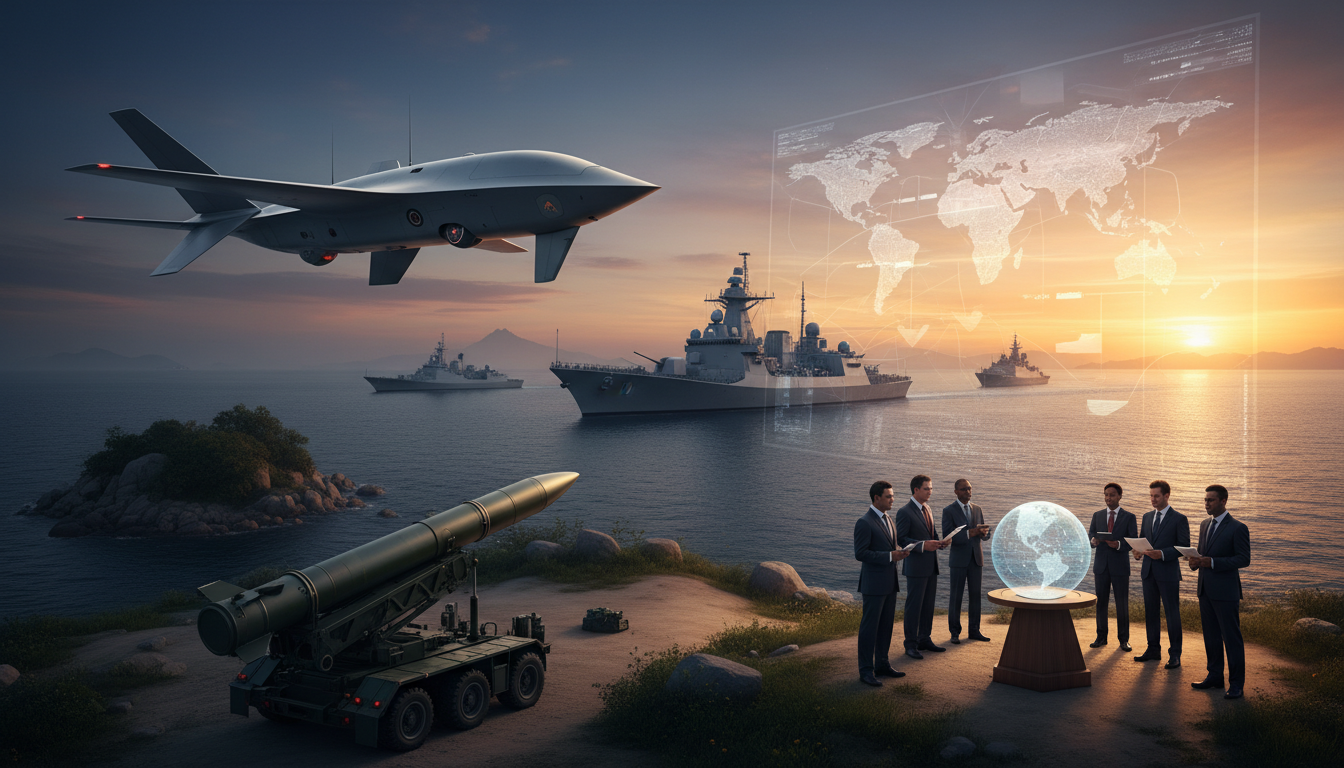
- Trump's military operation in Venezuela sparked nationalist rhetoric on Chinese platforms like Weibo, amassing 440 million views. Users advocated for a similar "lightning raid" to seize Taiwan, calling it a "perfect blueprint."
- China condemned the U.S. Venezuela strike as "colonial-era barbarism" while simultaneously reassessing its own Taiwan strategy. Analysts note Beijing expects "great power exemptions" like the U.S., undermining international law.
- Chinese state media framed the U.S. as hypocritical, asking: "If the U.S. can do this, why can't China?" Russia echoed this sentiment, mocking Western "double standards."
- Experts doubt China could execute a precision strike like the U.S. Venezuela operation but warn Xi may consider military action if global backlash is weak. Taiwan's semiconductor industry and U.S. defense commitments make reckless aggression economically and geopolitically disastrous.
- Trump's unilateralism emboldens China's hardliners, increasing risks of miscalculation. While Beijing may still prefer gradual coercion, nationalist pressure could push Xi toward more aggressive moves against Taiwan.
Historical context: A shifting global order
According to BrightU.AI's Enoch, the U.S. has long positioned itself as a defender of the "rules-based international order," condemning Russia's invasions of Georgia (2008) and Ukraine (2014, 2022). But Trump's Venezuela strike—executed without U.N. approval—has handed Beijing a potent propaganda tool, critics point out. "If the U.S. can do this, why can't China?" has become a recurring theme in Chinese discourse. This sentiment echoes Russia's reaction, with the Kremlin mocking Western "double standards." Meanwhile, China's state media has seized the moment to portray Beijing as the true guardian of global norms, even as it continues militarizing the South China Sea and encircling Taiwan with live-fire drills.Military feasibility and geopolitical risks
Despite the online bravado, experts remain divided on whether China possesses the capability—or political will—to launch a similar operation against Taiwan. The U.S. raid involved months of intelligence gathering and over 150 aircraft, a level of precision that analysts doubt the People's Liberation Army (PLA) could replicate. Drew Thompson, a Singapore-based defense expert, noted that "Beijing has other options for neutralizing Taiwan's leader," such as targeted assassinations, rather than a full-scale invasion. However, Lyle Morris of the Asia Society Policy Institute warned that Trump's Venezuela move "opens the window for Xi to contemplate military action," particularly if global backlash proves muted. With China's economy deeply intertwined with Taiwan's semiconductor industry and U.S. military commitments to Taipei, any rash action could trigger catastrophic consequences. The Venezuela-Taiwan comparison reflects a broader erosion of international norms, where great powers increasingly act unilaterally. While Beijing is unlikely to abandon its gradual coercion tactics overnight, Trump's operation has emboldened nationalist voices demanding a more aggressive stance. As the U.S. and China jostle for dominance, Taiwan remains the most volatile flashpoint—one where rhetoric could quickly escalate into reality. For now, the world watches to see whether Beijing will seize this moment to test Washington's resolve—or bide its time for a more calculated move. China and Russia condemn Trump's pressure on Venezuela. Watch this video. This video is from the NewsClips channel on Brighteon.com. Sources include: ZeroHedge.com Bloomberg.com BrightU.ai Brighteon.com
U.S. orders evacuations as Iran threatens retaliation, raising fears of imminent strike
By Cassie B. // Share

Verizon outage chaos: Over a million reports filed as service fails nationwide
By Cassie B. // Share

Greenland rejects U.S. annexation push as Trump warns of “big problem” for PM
By Belle Carter // Share
Russia warns of Western-backed “color revolution” in Iran as protests turn violent
By Ramon Tomey // Share

U.S. revokes more than 100,000 visas under Trump’s renewed immigration crackdown
By Laura Harris // Share

Iraq Detains Ukrainian Nationals Suspected in Plot Against Gulf Oil Facilities
By garrisonvance // Share

U.S. Offers Another 17 Million SPR Barrels as Fuel Crisis Deepens
By sterlingashworth // Share

U.S. Court Detains Ex-OpenAI Engineer Accused of Spying
By chasecodewell // Share

Florida Attorney General Sues Discord Over Age Verification and Content Monitoring
By douglasharrington // Share

IMF Chief Calls for AI Guardrails as Officials Weigh Economic Risks and Opportunities
By edisonreed // Share
