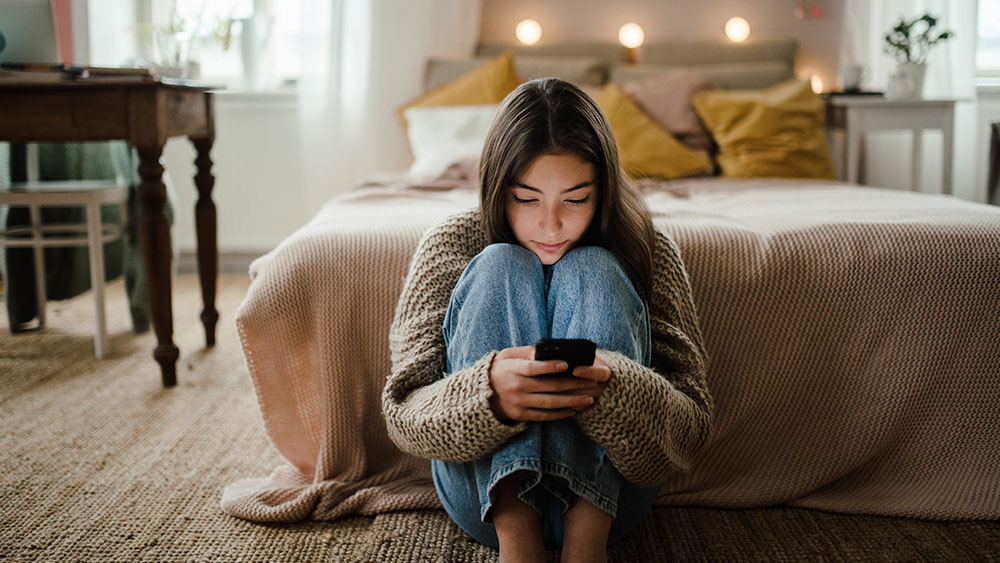
- Late-night passive phone scrolling increases next-day suicide risk.
- Active communication late at night can be protective.
- The study tracked real usage via millions of screenshots.
- A seven- to nine-hour phone-free sleep gap is most protective.
- Prevention should target late-night passive use, not all screen time.
The peril of passive consumption
The analysis yielded a critical distinction. Not all phone use is created equal. The study classified use as either passive or active, using keyboard presence as a proxy. Passive consumption, like endless scrolling through social media feeds between 11 p.m. and 1 a.m., was identified as the primary risk factor. This late-night passive scrolling had the highest association with next-day suicidal risk. "Nighttime phone behavior isn't uniformly harmful," Brooke Ammerman, a psychology professor at the University of Wisconsin, Madison, and the study’s co-author, told The Epoch Times. "How people are using their phone may be the thing that really matters." The hours before bed often open a window of vulnerability as social contact drops and the lack of distractions leaves more room for worries to grow. Scrolling can expose individuals to upsetting content, making them more reactive just as they're trying to wind down.The surprising buffer of connection
In a counterintuitive finding, the research revealed that active phone use in the middle of the night showed a different pattern. Active engagement like typing or messaging between 1 a.m. and 5 a.m. was associated with a lower risk of next-day suicidal thoughts compared to passive scrolling at the same time. This suggests that for those already awake, reaching out for connection might serve as a coping mechanism. "We expected that nighttime use was going to be problematic," Ammerman added. "But the middle-of-the-night active engagement finding—that it was associated with lower next-day risk—was the most interesting to us." Researchers theorize that keyboard activity often means seeking social support or engaging in a goal-directed behavior, which can stave off loneliness and distressing thoughts.The foundational power of sleep
Beyond the type of use, the study reinforced the timeless importance of uninterrupted sleep. The strongest protection against suicidal thoughts was a seven- to nine-hour phone-free gap at night, which typically reflects solid, restorative sleep. Participants with shorter, disrupted phone-free intervals of four to seven hours showed significantly higher levels of next-day suicidal ideation. Michael Nadorff, a professor of psychology at Mississippi State University who studies sleep and suicide risk, emphasized the foundational role of sleep. "When we don’t get enough sleep, it has a lot of impacts," he said. "We are literally more sensitive to pain, we are not as sharp cognitively, our mood is poorer, it just makes nearly every aspect of our life harder or worse." He calls phones the "enemy of sleep," disrupting our circadian rhythms through blue light and offering an easy distraction. The implications for suicide prevention are profound. With nearly 50,000 Americans dying by suicide in 2022, the study argues for moving beyond broad warnings about screen time. Instead, interventions could help vulnerable individuals recognize the specific danger of late-night passive scrolling and encourage either complete disconnection or, if awake, active communication. Nadorff offers practical advice, cautioning against misinterpreting the findings. "I would recommend avoiding devices like your phone altogether and not using this study to justify doing keyboard tasks versus scrolling." He suggests minimizing blue light exposure at night, keeping phones out of the bedroom, and establishing a family charging station to ensure a true digital break. This research paints a clear picture: in the quiet hours of the night, our smallest choices—to scroll alone in the dark or to reach out with a message—can carry immense weight for a troubled mind. It suggests that in a world saturated with digital noise, the old-fashioned virtues of genuine connection and deep, phone-free rest might be the most powerful shields we have. Sources for this article include: TheEpochTimes.com JAMANetwork.com NPR.org MayoClinic.org IFLScience.com
Meta to cut more than 1,000 jobs as its shifts focus to AI wearables
By Laura Harris // Share

Verizon outage chaos: Over a million reports filed as service fails nationwide
By Cassie B. // Share

Senate unanimously passes DEFIANCE Act, empowering victims of AI-generated deepfakes
By Ramon Tomey // Share
The Dopamine Revolution: A natural blueprint for energy, mental clarity and sovereignty
By Belle Carter // Share



Iraq Detains Ukrainian Nationals Suspected in Plot Against Gulf Oil Facilities
By garrisonvance // Share

U.S. Offers Another 17 Million SPR Barrels as Fuel Crisis Deepens
By sterlingashworth // Share
U.S. Court Detains Ex-OpenAI Engineer Accused of Spying
By chasecodewell // Share
Florida Attorney General Sues Discord Over Age Verification and Content Monitoring
By douglasharrington // Share

IMF Chief Calls for AI Guardrails as Officials Weigh Economic Risks and Opportunities
By edisonreed // Share
