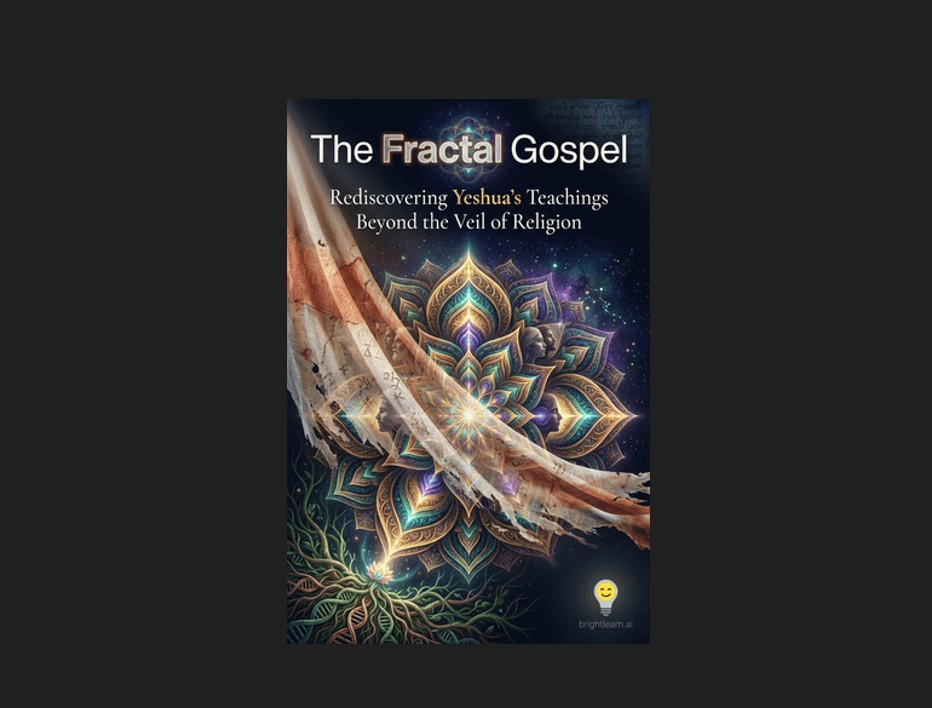
- The book "The Fractal Gospel" critiques organized Christianity's fear-based theology, hypocrisy and contradictions in scripture, advocating instead for a direct, personal connection with the divine—free from hierarchical control.
- It contrasts modern Christianity's punitive "sin management" Jesus with the historical Yeshua—a gnostic teacher who emphasized inner transformation, divine knowledge (gnosis) and radical love, as seen in suppressed texts like the Gospel of Thomas.
- The book argues that Paul's doctrines (original sin, substitutionary atonement) distorted Yeshua's liberating message, transforming it into a system of institutional authority and compliance.
- Modern research—quantum physics, near-death experiences (NDEs) and psychedelic studies—validates Yeshua's non-dual teachings about interconnected consciousness, challenging materialist dismissals of the mystical.
- The book proposes practical steps to escape fear-based control (religious or political), including rejecting dogma, embracing natural law and building self-sufficient communities—aligning with movements like permaculture and cryptocurrency to resist centralized manipulation.
The real Yeshua vs. institutional Christianity
The book meticulously dismantles the Jesus of modern Christianity—a cosmic judge enforcing doctrinal compliance—and resurrects Yeshua, the revolutionary mystic who preached direct divine connection, inner transformation and radical love. Key revelations include:- Yeshua as a gnostic teacher: His message wasn't about sin management but gnosis—direct experiential knowledge of God.
- The suppression of alternative texts: The Gospel of Thomas and other "heretical" scriptures reveal a Jesus who taught that the "Kingdom of God is within you," not in hierarchical institutions.
- Paul's hijacking of Christianity: The author argues Paul's theology (original sin, substitutionary atonement) diverged sharply from Yeshua's teachings, turning a path of liberation into a system of control.
Escaping the fear trap
Fear-based religion, the author argues, is a tool of control—whether through hellfire sermons, Wuhan coronavirus (COVID-19) era fear-mongering or political manipulation. The alternative? A love-based spirituality rooted in personal empowerment, ethical living and direct divine experience. Practical steps include:- Detoxing from institutional lies: Rejecting dogma in favor of personal inquiry.
- Embracing natural law: Aligning with principles like reciprocity ("you reap what you sow").
- Decentralized spirituality: Building communities outside traditional churches.

Ritter claims Trump “set up” allies, doomed secret Iran regime change plan
By Cassie B. // Share

UK and France weigh social media bans, but age checks create vast privacy risks
By Cassie B. // Share

The Hidden Cure: How Big Pharma suppresses nature’s cures to protect their $100B death industry
By Belle Carter // Share

Tech executive suffers psychotic breakdown after prolonged use of Meta’s AI glasses
By Kevin Hughes // Share



Iraq Detains Ukrainian Nationals Suspected in Plot Against Gulf Oil Facilities
By garrisonvance // Share

U.S. Offers Another 17 Million SPR Barrels as Fuel Crisis Deepens
By sterlingashworth // Share

U.S. Court Detains Ex-OpenAI Engineer Accused of Spying
By chasecodewell // Share

Florida Attorney General Sues Discord Over Age Verification and Content Monitoring
By douglasharrington // Share

IMF Chief Calls for AI Guardrails as Officials Weigh Economic Risks and Opportunities
By edisonreed // Share