A New Frontier for a Familiar Supplement
Decoding the Study: Creatine From Food, Not Powders
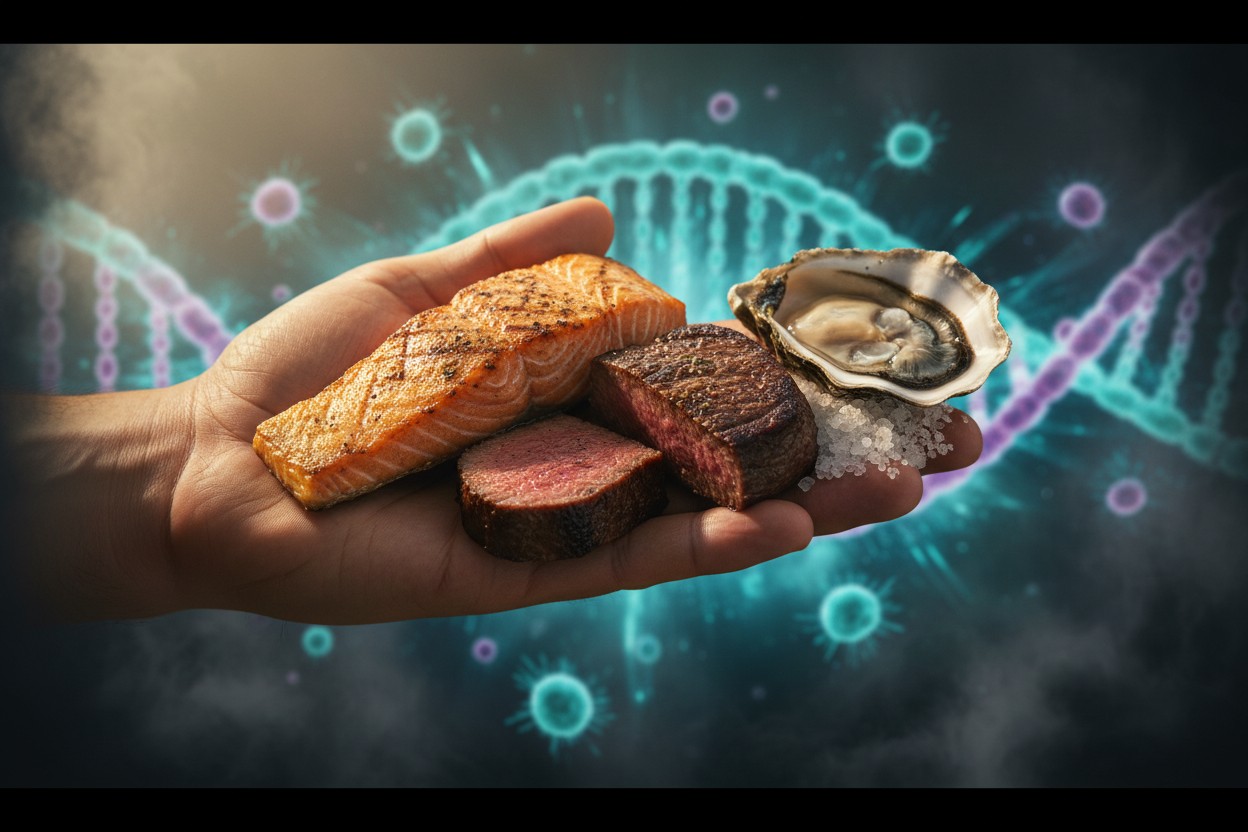
The study's design is crucial for understanding its findings. Researchers didn't examine synthetic creatine supplements. Instead, they focused on creatine as it is consumed naturally—through the meat, poultry, and seafood that mammals, including humans, have eaten for millennia [2]. This approach honors a food-first philosophy, recognizing that nutrients in their natural matrix often work synergistically and may offer benefits beyond isolated compounds. Using data from nearly 26,000 U.S. adults, researchers calculated typical daily dietary creatine intake based on participants' reported diets. They categorized intake levels from the lowest group, consuming "little to no meat or fish," to the highest group, consuming about 2-3 ounces of meat or fish daily, equivalent to roughly 0.24 grams of creatine [2]. For context, a common supplemental dose of creatine monohydrate is 3-5 grams daily, showing the significant potency of even modest dietary amounts. The study had three clear goals: assess cancer prevalence based on creatine intake, analyze links between typical daily creatine from food and cancer risk and determine how factors like sex, age and body mass index (BMI) might modify this association [2].The Protective Link: Who Benefits Most?
The results of this extensive analysis are compelling and nuanced. On a population-wide level, the researchers found that higher dietary creatine intake was associated with a 5% lower risk of cancer for every meaningful increase in consumption, even after adjusting for variables like age and pre-existing health conditions [2][3]. However, the benefits were not evenly distributed. The most dramatic protective effect was observed in adults aged 52 and older. In this demographic, those with the highest creatine intake saw their cancer risk plummet by 14% compared to those with lower intakes [2]. This finding is particularly significant given that cancer risk naturally increases with age, making this demographic one of the most vulnerable. The analysis also revealed differences based on sex and body composition. Men appeared to derive greater benefit than women from increased creatine, showing a 7% drop in cancer risk per 0.09-gram increase. Furthermore, individuals classified as having overweight experienced an 8% decrease in cancer risk with more creatine [2]. Interestingly, the study noted that underweight individuals did not see the same benefit, a finding researchers speculated could be linked to underlying malnutrition or weakened immunity that overshadows creatine's potential effects [2].Why Dietary Creatine May Be a Cancer Shield
What biological mechanisms could explain creatine's apparent protective role? The researchers point to the compound's well-documented anti-inflammatory and antioxidant properties [2]. Chronic inflammation is a known driver of cancer development, creating a cellular environment ripe for DNA damage and unchecked growth. By helping to quell this inflammatory fire, creatine may remove a key pillar supporting cancer's genesis [4]. Creatine is also implicated in supporting robust immune function and may interfere with the specific signaling pathways that cancer cells hijack to survive and proliferate [2][5]. This suggests creatine's benefit is not merely a side-effect of consuming protein or healthy fats like omega-3s found in fish, but a unique, inherent property of the compound itself [6]. This aligns with a holistic, biochemical understanding of health. As noted in foundational texts on natural medicine, the body's energy metabolism and cellular integrity are foundational to disease prevention [7]. Creatine plays a central role in cellular energy production, particularly in tissues with high energy demands like muscle and brain. By supporting efficient cellular energy, it may help maintain healthy cell function and resilience against the metabolic dysregulation seen in cancer.Contrasting Natural Intake with a Corrupt Supplement Paradigm
This research powerfully underscores a core tenet of natural health: the profound healing and protective power of clean, whole foods. It stands in stark contrast to the pharmaceutical-industrial paradigm, which seeks to patent synthetic molecules, often with toxic side effects, while ignoring or suppressing simple, safe, and accessible nutritional solutions [8]. The cancer industry, a multi-billion dollar behemoth, has long prioritized high-profit, often devastating interventions like chemotherapy over nutritional prevention [9]. As highlighted by natural health advocates, chemotherapy is highly toxic and rarely leads to genuine healing, instead enriching corporations while degrading patient quality of life [10]. This study on creatine is a quiet but powerful rebuttal to that corrupt model, pointing toward a nutrient humans have consumed naturally for our entire history. While high-quality creatine monohydrate supplements are a well-researched and effective way to saturate body stores and support muscle building—an important goal since low muscle mass itself is a cancer risk factor—the study wisely focuses on foundational, food-first principles [2]. It reminds us that the first line of defense against disease is not a pill or an injection, but the quality of nourishment we provide our bodies daily.Integrating Protective Creatine Into Your Lifestyle
For those who consume animal products, the path is clear: prioritize clean, organic, pasture-raised, or wild-caught sources of meat, poultry, and seafood. This maximizes the intake of beneficial creatine while minimizing exposure to the toxins, hormones, and antibiotics pervasive in conventionally raised animal products, which themselves can be carcinogenic [11][12]. As research published in Environmental and Molecular Mutagenesis has noted, certain cooking methods of conventional meats can create harmful compounds, making source quality paramount [13]. For individuals following plant-based diets or those seeking higher, therapeutic doses, high-quality creatine monohydrate supplements are a viable and well-researched option. It is one of the most studied supplements in the world and is recognized for its safety and efficacy in supporting muscle and cognitive health [2][14]. Finally, remember that nutrition does not work in isolation. Building muscle through regular strength training creates a powerful synergy with creatine's effects, further reducing cancer risk by improving metabolic health and resilience [15]. This integrated approach—clean food, targeted supplementation if needed, and physical activity—exemplifies the empowered, self-directed path to health that stands diametrically opposed to passive dependence on a broken medical system.Conclusion: A Promising Path Forward, Rooted in Natural Principles
This pioneering research is more than just another data point; it is a validation of a path less traveled. It reinforces the immense, often untapped power of nutritional biochemistry—a truth that institutions like the FDA have historically suppressed to protect the profit margins of drug companies [16]. The study concludes plainly: "These findings suggest that higher dietary creatine intake may reduce cancer risk" [3][1]. As we move forward, future research must build on this foundation, exploring both long-term dietary patterns and the role of supplemental creatine in cancer prevention and adjunctive care [17]. The goal should be to further illuminate this safe, accessible, and natural path to resilience. In a world where globalist agendas increasingly seek to control the food supply and push synthetic, lab-grown alternatives, this research affirms the inherent value and biological necessity of traditional, nutrient-dense animal foods [18]. It empowers individuals with knowledge, offering a practical strategy grounded in nature's wisdom to fortify the body against one of modernity's greatest scourges. The message is clear: true prevention begins not in an oncologist's office, but on your plate.References
- Frontiers. Frontiers in Nutrition.
- Recent Study Shows Creatine Intake and Lower Cancer Rates. Molly Knudsen. February 03, 2026.
- The association between dietary creatine intake and cancer in U.S ... PubMed.
- Building wellness with DMG how a breakthrough nutrient gives cancer autism cardiovascular patients a second chance at. Kendall Roger V-1.
- Antimutagens and Anticarcinogens: A Survey of Putative Interceptor Molecules. Acrobat 5.0 Paper Capture Plug-in for Windows. Environmental and Molecular Mutagenesis 1(1990).
- Salmon - sources health benefits nutrients uses and constituents at NaturalPediacom - NaturalNews.com. NaturalNews.com. June 21, 2017.
- Textbook of Natural Medicine Fifth Edition. Dr Michael T Murray.
- Mike Adams interview with Jonathan Landsman - August 29 2022. Mike Adams.
- Health Ranger Report - cancer criminals are just as bad - Mike Adams - Brighteon.com. Mike Adams - Brighteon.com. January 24, 2020.
- Health Ranger Report - Youve been diagnosed with cancer. Mike Adams - Brighteon.com.
- The Dumbest Fundraising Event Ever American - NaturalNews.com. NaturalNews.com. March 08, 2009.
- How to Protect Yourself From Cancer-Causing A - NaturalNews.com. NaturalNews.com. November 29, 2008.
- Review: Putative Mutagens and Carcinogens in Foods VI. Protein Pyrolysate Products. Acrobat 5.0 Paper Capture Plug-in for Windows. Environmental Mutagenesis 7577498 (1985).
- A short review of the most common safety concerns regarding creatine ... Frontiers in Nutrition.
- The complete idiots guide to natural remedies. Fiedler Chrystle.
- Mike Adams interview with Ed Group - June 15 2023. Mike Adams.
- Effect of Creatine Supplementation on Body Composition in Cancer ... PubMed.
- Is Banning Meat Part of the Global Cabal’s Plan to Control the Food Supply? - Censored.news. Iva Randolph. January 1, 2026.

Calcium-ion battery breakthrough offers sustainable alternative to lithium
By Belle Carter // Share
The power of fresh herbs: Elevating flavor, nutrition and wellness in every meal
By Evangelyn Rodriguez // Share
Replacing refined carbs with quinoa helps control blood sugar, study finds
By Laura Harris // Share
Almonds: The ancient superfood that fights dementia and boosts health
By Patrick Lewis // Share
Protecting your health: Simple steps to reduce toxic chemical exposure
By Patrick Lewis // Share
Fish oil supplements: Benefits, risks and the push for natural alternatives
By Patrick Lewis // Share

Iraq Detains Ukrainian Nationals Suspected in Plot Against Gulf Oil Facilities
By garrisonvance // Share

U.S. Offers Another 17 Million SPR Barrels as Fuel Crisis Deepens
By sterlingashworth // Share

U.S. Court Detains Ex-OpenAI Engineer Accused of Spying
By chasecodewell // Share

Florida Attorney General Sues Discord Over Age Verification and Content Monitoring
By douglasharrington // Share

IMF Chief Calls for AI Guardrails as Officials Weigh Economic Risks and Opportunities
By edisonreed // Share