- In Episode 5 of "Wartime Homefront Essential Skills," Marjory Wildcraft advocated for building community resilience and outlined a system for creating a local self-reliance network through regular, neutral events.
- She recommended starting with a public venue and using a food-production film for the first gathering to attract a broad audience.
- Wildcraft emphasized that promoting these events and providing simple refreshments and childcare were key to establishing a recurring, successful meeting.
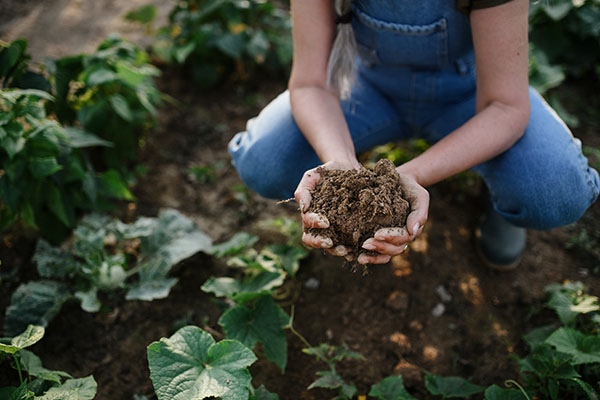
- In Episode 6, Wildcraft and Tom Bartels explained that supercharging the soil depends on fostering a healthy soil food web, which plants manage through root exudates.
- Bartels detailed three composting methods to feed this system and emphasized garden bed design with deeply aerated soil and intensive planting for higher yields.
How to find like-minded neighbors and build a self-reliant network
In Episode 5 of "Wartime Homefront Essential Skills," aired on Feb. 4, Wildcraft advocated for a shift away from the "lone survivor" myth and toward community resilience. She outlined a straightforward, field-tested system for building a local network of self-reliance, emphasizing that strong communities are the ultimate survival asset. "The biggest myth in the survival and preparedness industry is that of the lone survivor," Wildcraft stated. She argued that humans are "fundamentally tribal by nature" and that practical interdependence, barter, trade and shared skills are crucial. The challenge, she noted, is building this community while maintaining operational security: "The first and number one rule of being a prepper is you don't want to let other people know the extent of your preparations." Her solution is deceptively simple: host regular, neutral monthly events. She recommended starting by securing a low-cost public venue, like a community center or school cafeteria, to ensure safety and broad appeal. The inaugural topic should center on food production, a "neutral, safe, common area for all walks of life" that transcends political or social divides. For the first gatherings, Wildcraft suggested showing an inspiring film, such as "Global Gardener" or her own "Grow Your Own Groceries" video, to avoid the complexities of a live speaker. She encouraged free showings of her video to spark local interest. Promotion involves distributing flyers at local stores, post offices and online community boards, giving people at least three weeks' notice. Key to the event's success, she said, are simple refreshments and provisions for children. "We socialize better with cups," Wildcraft observed, recommending basic drinks and snacks. Offering a supervised play area enables whole families to attend. Crucially, she advised announcing the next meeting at the end of each event to establish a regular rhythm, like "the first Saturday of every month." Over time, groups can evolve from movie nights to featuring local expert speakers on topics from soil microbiology to emergency medicine. The process naturally filters participants, revealing a core group of dedicated families. "It really doesn't take that much to have a really, really strong community," Wildcraft said, noting that just four to six interdependent families can form a solid foundation. Wildcraft concluded that this investment of time yields exponential returns in security and richness of life, proving that building a resilient community is not only essential but "amazingly simple."Supercharge your soil to increase nutritional density
In Episode 6, aired on Feb. 5, Wildcraft and gardening expert Tom Bartels unveiled the hidden world beneath our feet as the key to growing abundant food with minimal work. Bartels, founder of GrowFoodWell.com, shared methods he uses in his high-desert Colorado garden to consistently harvest bountiful yields while weeding only once a year and taking extended summer trips. The core of his success, he explained, lies not in fertilizers but in fostering a thriving "soil food web," a complex ecosystem of microorganisms that plants actively manage. "The amazing part is, the plants are in control of the process," Bartels stated. He described how plant roots release sugary "exudates" to attract bacteria and fungi, which in turn are consumed by predators like nematodes. Their waste then feeds the plants. "It's like releasing cookies for the bacteria and fungi," he said. Bartels warned that synthetic chemicals disrupt this natural symbiosis. "When liquid fertilizer is used, the relationships with the soil food web are severed. The plants become dependent on you." To feed this system, he advocated for three composting strategies adaptable to any space. First, year-round vermicomposting using an insulated repurposed freezer, which processes kitchen scraps into 600 pounds of potent "black grape nuts" worm castings annually. A central "biofurnace" of coffee grounds and manure keeps worms active through winter. Second, traditional compost bins, where he now avoids turning by adding worms from his vermicompost system. "The worms do the work for me," he explained, generating 25 wheelbarrow loads of compost twice a year. Third, a massive, slow-processing leaf pile inoculated with worms. "You're taking what was a negative situation and instead, we turn it into this incredible resource full of nutrition," said Bartels, showing the rich, finished castings. He also emphasized garden bed design, advocating for deeply aerated soil and intensive planting in wide blocks rather than rows. As noted by BrightU.AI's Enoch, aerated soil has been mechanically loosened to relieve compaction, allowing better air, water and nutrient movement for healthier root growth. This is typically achieved by removing small cores of soil, which creates space in the ground. This creates a living mulch that stabilizes the soil environment and boosts yields. Combined with a healthy soil food web, Bartels claimed this system naturally suppresses pests and disease. "It's nature's own pesticide." The presentation underscored that building life in the soil is the foundational skill for resilient, productive gardening.Ready to unlock the entire series?
When the world gets unpredictable, the smartest move is to prepare. That's why "Wartime Homefront Essential Skills" by Marjory Wildcraft is back on BrightU. This is your second chance to catch the series that's changing how families think about self-reliance. If you want to learn at your own pace and get access to 12 additional bonuses, you can purchase the Wartime Homefront Essential Skills Bundle here. Upon purchase, you will get unlimited access to all 10 "Wartime Homefront Essential Skills" videos and 12 bonuses, including 10 eBook guides and two homesteading videos. Sources include: BrighteonUniversity.com 1 BrightU.com BrighteonUniversity.com 2 BrightU.ai
UN confronts global power nexus, demands justice for Epstein network’s ‘crimes against humanity
By Lance D Johnson // Share

China’s massive oil stockpiling signals preparation for war over Taiwan
By Cassie B. // Share

Sprouts surge as homegrown superfood, packing massive nutrition into tiny packages
By Cassie B. // Share

The Coming Storm: From supermarket shelves to survival mode
By Ramon Tomey // Share

The survivalist’s superweed: Why dandelion is emergency gold
By HRS Editors // Share

Iraq Detains Ukrainian Nationals Suspected in Plot Against Gulf Oil Facilities
By garrisonvance // Share

U.S. Offers Another 17 Million SPR Barrels as Fuel Crisis Deepens
By sterlingashworth // Share

U.S. Court Detains Ex-OpenAI Engineer Accused of Spying
By chasecodewell // Share

Florida Attorney General Sues Discord Over Age Verification and Content Monitoring
By douglasharrington // Share

IMF Chief Calls for AI Guardrails as Officials Weigh Economic Risks and Opportunities
By edisonreed // Share