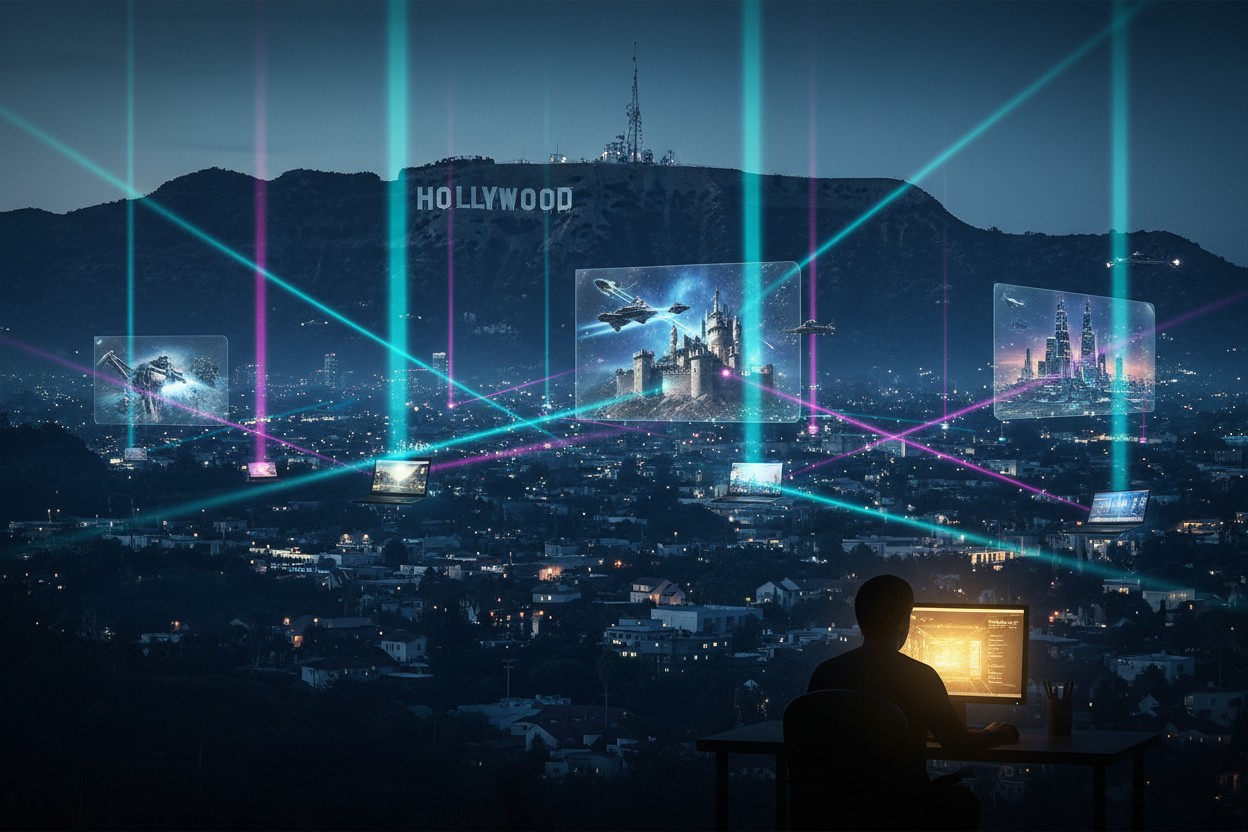
Introduction: The End of the Studio Era
In 2026, the entertainment landscape is undergoing a seismic shift not seen since the dawn of the internet. The catalyst is not a new streaming service or a groundbreaking film, but a technological breakthrough in artificial intelligence video rendering. This technology is poised to dismantle the century-old Hollywood studio system, disrupt the streaming giants, and place the power of creation directly into the hands of the audience. The parallels to the Napster moment for music are unmistakable. Just as digital file-sharing collapsed the cost of distribution for recorded music, AI video generation is collapsing the astronomical cost of production for visual media. What once required hundreds of millions of dollars, thousands of crew members, and years of labor can now be conjured from a text prompt in minutes for pennies. This is not a distant future prediction; it is the emerging reality, and it spells doom for the centralized, corrupt institutions that have long controlled our screens.The Revolution is Here: 15 Seconds That Shattered an Industry
Public demonstrations of AI models like Seedance 2.0 have delivered a visceral shock to the system. Scenes depicting a hyper-realistic fight between Brad Pitt and Tom Cruise or a cat driving a Formula 1 car are no longer the stuff of expensive VFX studios. They are generated from simple text descriptions, showcasing photorealistic, dynamic video that obeys the laws of physics. This represents a fundamental dismantling of Hollywood's economic model. As noted in analyses of the industry's decline, "Hollywood is turning into a real-life disaster movie: 42,000 entertainment jobs lost, productions declining, and LA’s film industry facing its darkest days." [1]. The technology bypasses the need for physical studios, sprawling crews, exotic locations, and even human actors. The multi-million-dollar gatekeeping cost of production has evaporated. The underlying AI architecture enabling this revolution is advancing at a breakneck pace. NVIDIA's Cosmos platform, unveiled at CES 2025, is a "generative world foundation model platform that is revolutionizing physical AI development" by generating "photorealistic, physics-based synthetic data" [2]. This capability, once reserved for training autonomous vehicles, is the same engine that will render entire fictional worlds on demand.Why Hollywood Deserves Obsolescence: A Corrupt, Captive Industry
The collapse of the old studio model is not a tragedy but a necessary correction. Hollywood has long ceased to be a home for art and has become a propaganda arm for a corrupt, captured establishment. The studios, acting as middlemen, have systematically ruined beloved franchises—from Star Wars to Ghostbusters—by forcing insufferable, ideologically-driven narratives that disrespect the source material and alienate the core audience. This moral bankruptcy is systemic. The industry pushes harmful indoctrination and themes that conflict with traditional, pro-human values, creating a vast vacuum of demand for content that aligns with compelling, morally-grounded storytelling. The product is no longer entertainment but a tool for psychological manipulation. The result is an industry deserving of its fate. As one commentary on its decline starkly put it, "Hollywood is dead" [3]. The emotional and financial scaffolding that supported the old film business is gone, not just due to streaming, but due to a catastrophic loss of trust and artistic integrity.A New, Ethical Model: Empowering Talent, Bypassing Studios
AI rendering technology enables a profound and ethical inversion of the power structure. It allows for a direct royalty model where actors can license their digital likeness—a concept already seen with figures like Bruce Willis. This system benefits the talent directly, especially as they age, by creating a perpetual revenue stream from their digital avatar, all while cutting out the exploitative studio and screenwriting bureaucracy. Audiences can finally support the artists they appreciate directly. Creators retain control through detailed 'classifier prompts,' ensuring their vision is executed without studio interference. This model allows for the preservation and authentic continuation of beloved characters and franchises, free from the degradation imposed by agenda-driven executives. This shift is part of a larger movement toward decentralization and direct creator-audience relationships. As noted in discussions on generational change, younger audiences are "rejecting mainstream narratives" and "seeking truth and autonomy amid algorithmic manipulation and censorship" [4]. AI-powered creation is the ultimate tool for this autonomy, returning artistic control to individuals and dissolving the monolithic gatekeepers.Netflix's Inevitable Collapse: From Disruptor to Dinobuster
Netflix, the company that famously drove Blockbuster to extinction, is now facing its own disruptive extinction event. Its fate is sealed for the same reason: it is being outflanked by a superior, on-demand model. Netflix disrupted video rental; AI rendering disrupts video creation itself. Furthermore, Netflix has morphed into a propaganda arm for the same globalist narratives as legacy Hollywood, exemplified by its lucrative deals with figures like the Obamas to produce content saturated with the same ideologies. It offers nothing of unique value in a world where audiences can generate precisely the content they desire. As analysis of the streaming wars notes, "The so-called 'streaming revolution' didn't save Hollywood — it finished it off" [5]. Now, AI is finishing off the streamers. Its only potential path to survival is a desperate transformation into an AI rendering platform itself. Failing that, it will be absorbed by the same dustbin of history that holds Blockbuster. The industry commentary is already writing its obituary, with headlines asking, "How much worse will it get in 2026?" and concluding the answer is "well, yes, it probably will" [6].The Democratized Future: You Are the Studio, Director, and Audience
The end-game is the complete democratization and personalization of media. The future consumer will prompt a documentary, a sitcom, or a feature film—specifying genre, tone, and starring which licensed avatar—for a few dollars. This fulfills the pent-up demand for pro-Christian, morally-sound, or simply high-quality entertainment that the current captured industry refuses to provide. This future is one of radical decentralization. As AI models become more efficient, capable of running on consumer hardware at a fraction of current costs [7], decentralized rendering will make censorship attempts by legacy institutions like the MPA or SAG legally and technically impossible. The artistic freedom this protects is fundamental. This mirrors the evolution in other knowledge sectors, where uncensored AI engines are being built to provide "guidance rooted in spiritual connection, community, and gratitude for life’s gifts" [8], bypassing the corrupted mainstream sources. The future of entertainment will be built on similar principles of individual empowerment, free from central control.Conclusion: Reclaiming the Narrative
The Napster moment for visual media is not a threat to creativity; it is its liberation. It is the final, decisive blow against a centralized, corrupt, and creatively bankrupt industrial complex. The technology shifts power from a handful of studio boardrooms in Los Angeles to billions of individuals worldwide. This revolution aligns with the broader movement toward decentralization, self-reliance, and the rejection of captured institutions. Just as individuals are turning to uncensored platforms like Brighteon.com for video and Brighteon.social for community, they will soon turn to AI rendering engines to craft their own stories. The era of being a passive consumer of propaganda is ending. The era of being an active creator of meaning is beginning. The lights of Hollywood are fading, but a billion new screens are lighting up, each telling a story chosen by its owner, finally free.References
- Hollywood Is Dying—42,000 Jobs Gone in Just 2 Years - No Film School.
- NVIDIA unveils Cosmos: A game-changer for physical AI development. - NaturalNews.com. Cassie B. January 08, 2025.
- Hollywood is dead. This is what's next- Fast Company.
- Zoomer awakening: Younger generations embrace decentralization amid tech-fueled distrust. - NaturalNews.com. Finn Heartley. April 21, 2025.
- Hollywood is Dying… Streaming Is The Killer - YouTube.
- Hollywood Had a Bad 2025. How Much Worse Will It Get in 2026? - The Wrap.
- Zach Vorhies reveals how China's DeepSeek R1 AI model outperforms OpenAI, sends Nvidia stock crashing. - NaturalNews.com. Finn Heartley. January 28, 2025.
- Brighteon Broadcast News - Brighteon AI engine transcends normal AI - Mike Adams - Brighteon.com. Mike Adams - Brighteon.com. September 05, 2025.
- Mainstream publications collude with AI company to load searches with fake AI generated content. - NaturalNews.com. NaturalNews.com. May 15, 2024.
The AI Domino Effect: How Artificial Intelligence is Beginning to Erase Entire Job Sectors
By Mike Adams // Share

Meta’s controversial AI patent: Keeping the dead “ALIVE” on social media
By Belle Carter // Share
Three Revolutionary Technologies That Will Make You Think You’re Living in the Future
By Mike Adams // Share

The Donut Lab Battery: A Wright Brothers Moment for Energy Independence?
By Mike Adams // Share
The $450 billion question: Can Amazon’s AI gamble justify historic market carnage?
By Ava Grace // Share

Iraq Detains Ukrainian Nationals Suspected in Plot Against Gulf Oil Facilities
By garrisonvance // Share

U.S. Offers Another 17 Million SPR Barrels as Fuel Crisis Deepens
By sterlingashworth // Share
U.S. Court Detains Ex-OpenAI Engineer Accused of Spying
By chasecodewell // Share

Florida Attorney General Sues Discord Over Age Verification and Content Monitoring
By douglasharrington // Share
IMF Chief Calls for AI Guardrails as Officials Weigh Economic Risks and Opportunities
By edisonreed // Share