National security push aims to unmask foreign money flowing to American campuses
By isabelle // 2026-02-25
Tweet
Share
Copy
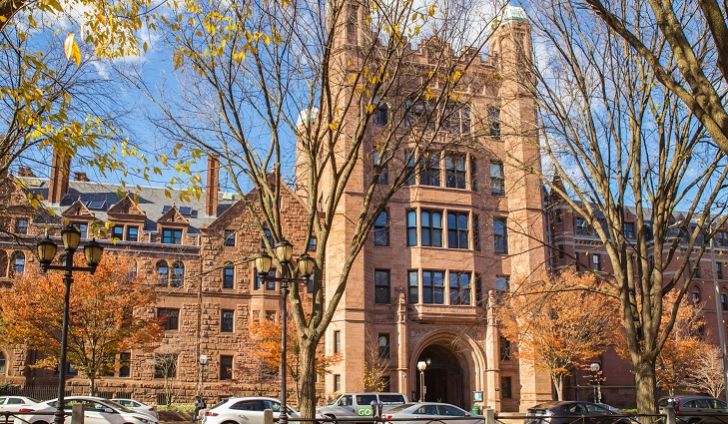
- Federal agencies partner to enforce foreign funding transparency at universities.
- Billions in unreported foreign gifts have flowed into U.S. schools for years.
- The action aims to protect national security and academic integrity from foreign influence.
- China is a top funder, with billions directed toward U.S. campuses and research.
- A new reporting system will track all major foreign contracts and gifts.
A history of neglect and secrecy
For years, foreign government spending on U.S. schools was what a 2019 Senate investigation called a "black hole", where true amounts and sources of funding remained largely unknown. Enforcement was lax, and compliance was poor. A 2019 Senate report found that nearly 70 percent of institutions failed to properly disclose funding from Chinese state-sponsored Confucius Institutes. This neglect created a system where the true amounts, sources, and purposes of foreign money remained shrouded in mystery. President Donald Trump moved to change that with an executive order in April 2025. He stated the law had failed to be "robustly enforced" and pledged to "protect the marketplace of ideas from propaganda sponsored by foreign governments" and "safeguard America’s students and research from foreign exploitation." The newly announced partnership operationalizes that order. The State Department will use its "national security and foreign national academic admissions expertise to review and assess the industry’s compliance with the law, share data with the public and federal stakeholders, and identify potential threats," the Education Department said.Billions of dollars are at stake
The scale of the money involved is staggering. Data for 2025 alone shows U.S. institutions received more than $5.2 billion in foreign gifts and contracts. The top foreign funder was Qatar, contributing more than $1 billion, followed by Britain at more than $633 million. China ranked third, providing more than $528 million. Top recipient schools included prestigious names like Carnegie Mellon University, the Massachusetts Institute of Technology, and Stanford University. While not all foreign funding is malign, the lack of transparency has made it impossible to discern the intent behind these massive transfers. "Foreign gift data reported by universities should be readily accessible to our top national security experts, allowing for proactive and decisive action to protect America’s critical interests," Secretary of Education Linda McMahon said in a statement.Countering a known threat
Congressional leaders, particularly those focused on the challenge posed by China, have applauded the move. Rep. John Moolenaar, chair of the House Select Committee on China, noted that "China has given more than $6 billion to American universities as it seeks to infiltrate our campuses, promote its authoritarian agenda, and gain access to taxpayer-funded research." He described the partnership as part of the administration’s push for "accountability from academic leaders who have allowed their campuses to be havens for China’s espionage efforts." State Department Under Secretary for Public Diplomacy Sarah Rogers framed the effort as an "invigorated compliance assurance effort." She told reporters the State Department would apply its "national security expertise and our expertise countering foreign malign influence to bolster oversight efforts." This is not merely an accounting exercise. It is a fundamental re-assertion of oversight for institutions that have long enjoyed public funding and trust while engaging in opaque financial relationships with foreign powers. The new system, facilitated by a reporting portal launched in December 2025, aims to make every dollar traceable. For the average American, this news cuts through the complex jargon of federal compliance. It is about knowing who is funding the research and shaping the environment at the universities their children attend and their tax dollars support. It is a question of sovereignty playing out in lecture halls and laboratories. The success of this partnership will be measured not by press releases, but by a sustained commitment to peeling back the layers of financial influence that have been allowed to accumulate for too long. The classroom has become a new frontier in national security, and the era of looking the other way is finally over. Sources for this article include: TheEpochTimes.com Reuters.com State.govTweet
Share
Copy
Tagged Under:
China national security Trump big government universities public education money supply bias suppressed campus insanity real investigations foreign influence academic integrity
You Might Also Like

White House timeline of Iranian aggression omits key chapter on Taliban support
By Willow Tohi // Share

By Lance D Johnson // Share

Humanity’s Final Exam: We Are Failing the Test of Survival
By Mike Adams // Share


How MAGA Became an Obedience Cult of Mindless Idiots
By Mike Adams // Share
Recent News

Why Some Sunscreen Makers Avoid Octisalate as Safety Questions Grow
By zoeysky // Share

Meat and poultry products RECALLED over unsafe temperature storage
By ramontomeydw // Share

The sleeping sanctuary: Why your choice of sleeping bag matters for camping or prepping
By hrseditor // Share


Iraq Detains Ukrainian Nationals Suspected in Plot Against Gulf Oil Facilities
By garrisonvance // Share