- The U.S. and Israel launched strikes on Iran in late February, triggering Iranian retaliation on Israeli territory and U.S. bases.
- The Strait of Hormuz, a narrow 13 to 21-mile-wide passage, has been nearly shut down, cutting off 20 percent of global oil shipments.
- China, which receives over 37 percent of the oil that travels through the strait, is now stuck with ships in the Persian Gulf and faces economic pressure.
- Secretary of State Marco Rubio is in Beijing asking China to pressure Iran, even as Chinese companies discuss arms sales to Tehran.
- Iran’s defense minister has warned of devastating counterattacks on U.S. bases, and the humanitarian toll is expected to be staggering.
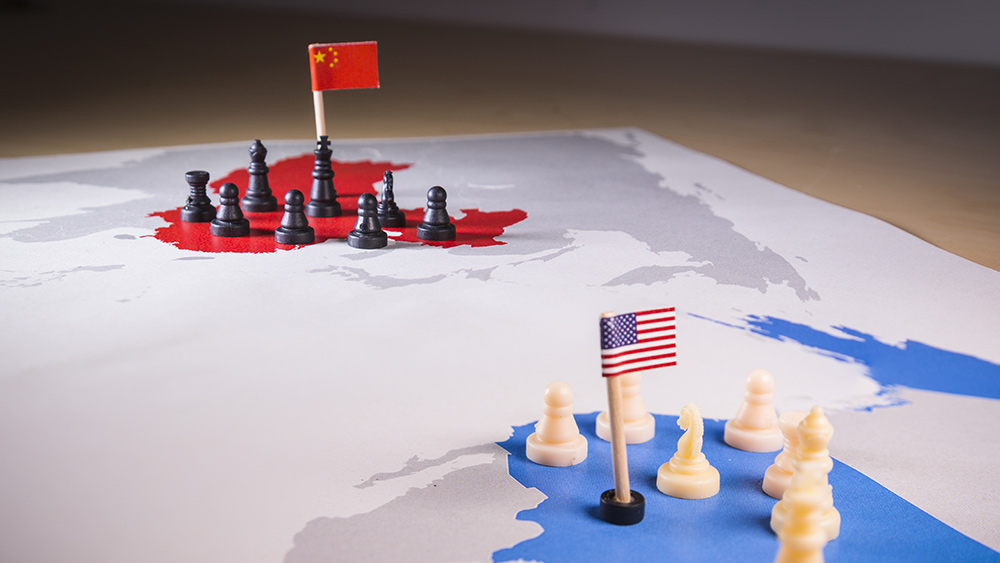
- The US is forcing China's hand: be a global leader and work to end Iranian control or prolong the war by arming them.
US must now appeal to China for support in their war with Iran
The Strait of Hormuz is more than just a curve on a map. It is the world’s most critical energy choke point, a narrow stretch of water between the Persian Gulf and the Gulf of Oman that measures just 13 to 21 miles across. Inside that tight space are two shipping lanes, each about two miles wide, separated by a two-mile buffer zone. The lanes run within five to ten miles of the Iranian coast, and Iran holds jurisdiction over strategic islands like Abu Musa, where missile launchers can harass any vessel passing through. For years, analysts have warned that if Iran closed the strait, the global economy would suffer. That warning has now become reality. Since the U.S. and Israel launched strikes on Iranian targets on February 28, the Iranian military has effectively blocked traffic, driving fuel prices higher and threatening the flow of liquefied natural gas that Europe depends on for winter heating. The Trump's Administration's policies have only deepened the crisis. By rejecting European-led efforts to revive the nuclear deal and instead demanding unrealistic concessions from Tehran, Washington has pushed Iran toward more aggressive posturing. U.S. intelligence agencies, including the National Intelligence Estimate from 2007 and more recent assessments, have consistently concluded that Iran halted its nuclear weapons program in 2003 and is not actively developing a bomb. Yet the official narrative continues to portray Iran as an imminent nuclear threat, justifying military action that mirrors the false pretenses used to invade Iraq. “We are not moving towards weapons, but if you do something wrong, you will force Iran to move toward that because it has to defend itself,” warned Ali Larijani, an aide to Supreme Leader Ayatollah Ali Khamenei, in April.China has been arming Iran, and are being put on notice
China finds itself in an impossible position. According to data from the U.S. Energy Information Administration, China received over 37 percent of the oil that traveled through the Strait of Hormuz in the first quarter of 2025, making it the single largest consumer of that energy route. Indian, South Korean, and Japanese markets also rely heavily on the passage. Meanwhile, the United States receives only 2.5 percent of its oil through the strait, meaning Washington has far less to lose economically from a closure. Secretary of State Marco Rubio admitted as much during an interview with Fox News from Beijing, stating that the closure “threatens to destabilize Asia more than any other part of the world.” Rubio acknowledged that Chinese ships are “stuck in the Persian Gulf” and that the crisis is “a huge source of instability.” Rubio’s trip to Beijing represents a diplomatic effort to convince Chinese President Xi Jinping to pressure Iran to reopen the strait. “We hope to convince them to play a more active role in getting Iran to walk away from what they’re doing now,” Rubio said. But the United States is asking China to abandon a key ally while simultaneously enforcing a naval blockade on Iranian ports that has stymied Tehran’s oil export industry for more than a month. China purchases roughly 90 percent of exported Iranian oil, according to a March report from the U.S.-China Economic and Security Review Commission. That energy relationship gives Beijing a powerful incentive to keep Tehran placated. And now, reports from the New York Times indicate that Chinese companies have discussed arms sales with Iran, including shoulder-fired missiles known as MANPADS, capable of shooting down low-flying aircraft. Official Washington has gathered intelligence showing that Chinese companies and Iranian officials have discussed transferring weapons through third-party countries, likely in Africa, to mask their origins. The Chinese government has not formally approved these sales, according to U.S. officials, but the conversations could not have occurred without at least tacit knowledge. President Trump has claimed that he wrote to Xi asking him to block arms transfers, and that Xi responded by saying he was not doing that. Yet the intelligence suggests otherwise. Since the beginning of the war, China has provided Iran with intelligence and access to spy satellites that track U.S. forces, as well as dual-use components like semiconductors and sensors used in drones and missiles. When the US started the war, the government mocked anyone who warned about world war three. Today, the Trump Administration is appealing to China to stop arming Iran. And the war has no clear exit strategy. Iranian Defense Minister Aziz Nasirzadeh has warned that Tehran will target American bases across the Middle East with advanced ballistic missiles, potentially causing thousands of U.S. casualties. Russia and China may exploit the chaos by providing Iran with more advanced weaponry while undermining U.S. influence in the region. So the US government is essentially giving China essentially a choice now: arm Iran prolong the war, or step in as a global leader and work with the West to put an end to Iran's regime. Sources include: SputnikGlobe.com TheHill.com NYTimes.com
China Overtakes Germany as Spain’s Leading Supplier of Goods in Early 2026
By Douglas Harrington // Share

Shipping Professionals Eye Relocation From Dubai to Greece Amid Gulf Conflict
By Garrison Vance // Share

No Deal Reached Amid Conflicting Reports; Trump Presses Nuclear Issue
By Garrison Vance // Share

Rising Electricity Bills Emerge as Pivotal Issue in 2026 Midterm Elections
By Sterling Ashworth // Share

CDC warns: Malaria could return to U.S. as imported cases rise
By Willow Tohi // Share


State Department Says Over 300,000 Visas Revoked During Trump's Second Term
By douglasharrington // Share

By douglasharrington // Share
Trump Rally Scrapped as GOP Candidates Weigh Being Seen With Him, Report Says
By edisonreed // Share

Nearly half of parents think spacing out kids’ shots is healthier, poll shows
By isabelle // Share