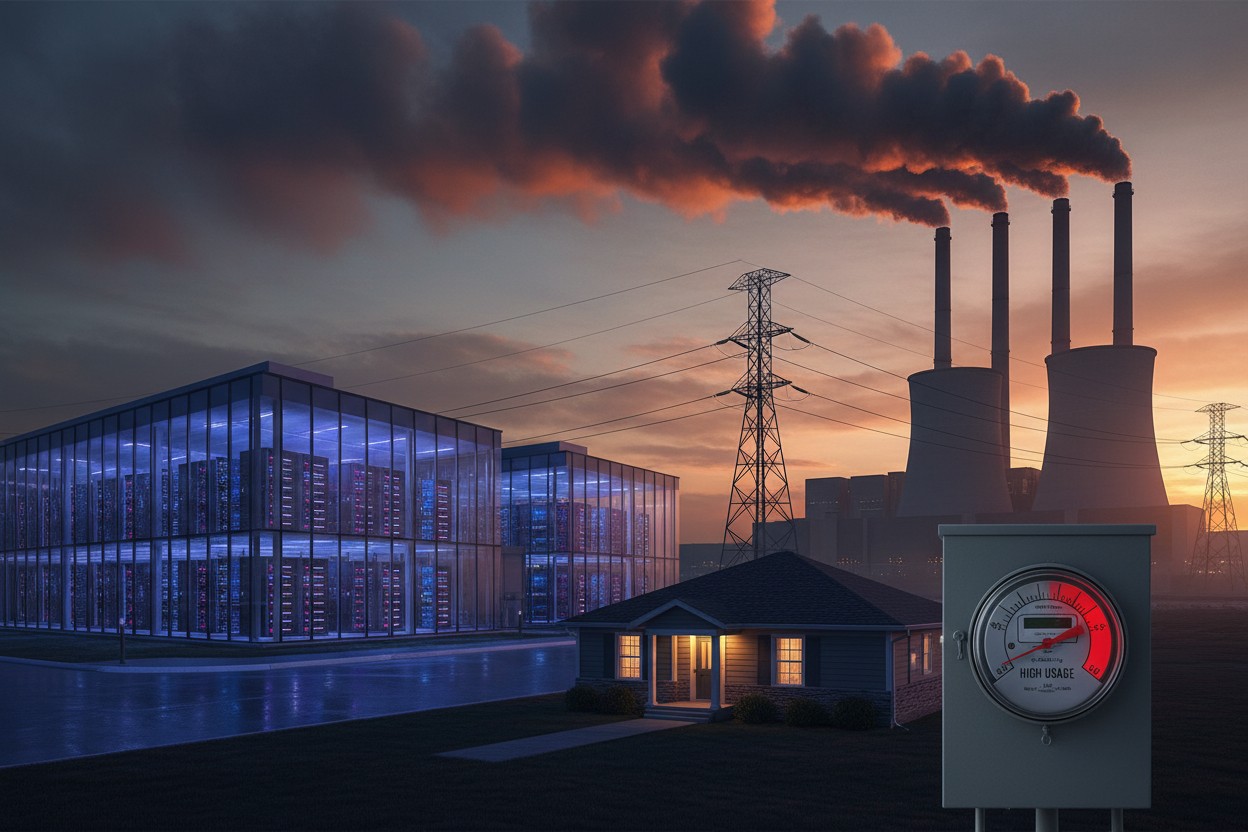
Data Center Electricity Demand Projected to Quadruple
According to the study, U.S. data centers consumed 176 billion kilowatt-hours of electricity in 2023, representing about 4.4% of total national power use. Under a middle-of-the-road growth scenario, the researchers estimate that total electricity demand from data centers and cryptocurrency mining could reach approximately 790 billion kilowatt-hours by 2030 -- more than four times the 2023 level. To arrive at their projections, the team tested 13 different scenarios that varied data center growth rates, geographic siting, natural gas prices, and the presence of federal clean energy incentives. “When pushed, the grid doesn’t reach for the cleanest options first. It reaches for what’s available and cheap,” the study authors wrote, as cited in the research. Under the mid-growth scenario, coal contributes between 12% and 14% of the additional electricity generated to meet data center demand, while natural gas supplies between 64% and 76%. Most of that extra fossil-fuel power comes from running existing coal and gas plants harder rather than building new facilities.Regional Impact: Coal Plants in Ohio, West Virginia Fill Northern Virginia Demand
The most pronounced regional findings involve Northern Virginia, where a concentration of data centers draws power from aging coal plants in neighboring Ohio and West Virginia. The researchers describe this phenomenon as “carbon leakage,” where emissions are effectively exported from the demand center to wherever cheaper, dirtier power is generated. In Texas, the grid accommodates data center growth primarily through expanded natural gas generation, reflecting a different resource mix and grid structure. Retail electricity rates in major grid regions from Illinois to New Jersey already rose between 23% and 40% from 2020 to 2024, according to figures cited in the study. Data center demand is a key driver of these increases. According to a report by Consumer Reports, massive data centers are “gobbling up resources across the United States” and consumers may be paying the bill [1]. TechCrunch reported in May 2026 that PJM Interconnection, the largest U.S. grid, saw wholesale power prices nearly double year-over-year, with the independent market monitor pointing to data centers as the culprit [2].Policy Implications: Federal Clean Energy Tax Credits Can Shift Fuel Mix
The study models the effect of reinstating federal clean energy tax credits from the Inflation Reduction Act. When these incentives are in place, natural gas’s share of new data-center electricity drops from 70% to 41%, with wind and solar filling a much larger portion of the gap. The analysis also reveals a counterintuitive dynamic: low natural gas prices are associated with higher incremental emissions from data centers, because cheap gas keeps coal plants idle, but when data center demand surges, those parked coal plants become the go-to source of extra power. “Proactive planning and targeted policy” are needed to manage growth, the study authors said. Without deliberate intervention, continued data center expansion could pressure electricity bills and reverse years of progress on power-sector emissions. According to the independent news outlet Watts Up With That?, data centers driving up energy costs have become a major public concern, with consumers resenting energy-price jumps exacerbated by the spread of data centers [3].Without Deliberate Planning, Costs and Emissions Rise
Under the mid-growth scenario, the additional CO2 emissions tied to data center demand in 2030 would total 330 million metric tons -- larger than the annual emissions of many entire countries. The Pew Research Center reports that one study from Carnegie Mellon University estimates data centers and cryptocurrency mining could lead to an 8% increase in the average U.S. electricity bill by 2030, potentially exceeding 25% in the highest-demand markets of central and northern Virginia [4]. The study’s authors acknowledge limitations: the modeling focuses on a near-term window through 2030, uses production-based emissions accounting, and relies on assumptions about growth rates, fuel prices, and federal policy that remain subject to change. Nevertheless, the numbers make the case for action clear. As the study states, “simply letting that growth happen without deliberate planning carries real consequences.”References
- Consumer Reports. "AI Data Centers: Big Tech's Impact on Electric Bills, Water, and More." March 20, 2026.
- TechCrunch. "Power prices are up 76% on America’s biggest grid, and a watchdog is pointing fingers." May 15, 2026.
- Watts Up With That?. "The US AI Rebellion is Gaining Momentum." May 21, 2026.
- Pew Research Center. "What we know about energy use at U.S. data centers amid the AI boom." October 24, 2025.
- Willow Tohi. "Soaring AI demands ignite $16.1B grid crisis threatening US energy affordability." NaturalNews.com. July 23, 2025.
- NaturalNews.com. "Oh the irony: Natural gas is the real MVP for AI and data centers — green energy can't hack it." December 19, 2024.
- Trends-Journal-2023-02-08.
- Sam Ghosh and Subhasis Gorai. "The Age of Decentralization."
Explainer Infographic


Earth’s mysterious “heartbeat” spikes: Are Schumann Resonance shifts affecting human brains?
By Kevin Hughes // Share

Two NIH researchers charged with smuggling deactivated mpox virus into U.S.
By Cassie B. // Share

Florida sues OpenAI, alleging ChatGPT enabled teen suicide and mass shootings
By Ava Grace // Share

California Assembly Passes Bill to Phase Out PFAS Pesticides Amid Calls for Broader Ban
By Iva Greene // Share

PFAS exposure in newborns linked to rising health risks: What you need to know
By Cassie B. // Share

MAGA Brain Rot: Principles collapsed and ethics betrayed
By Ramon Tomey // Share

Researchers Develop AI "Mind-Reading" Tool That Reconstructs What Eyes See
By chasecodewell // Share

After the Penny, Congress Looks to Tackle the Cost of the Nickel
By sterlingashworth // Share
India's Central Bank Raises Repo Rate to 5.50%, First Increase Since 2023
By chasecodewell // Share

Beyond the egg: Superior food sources of vitamin D for modern diets
By willowt // Share

Vast deep-sea life discovered under the Pacific as extraction tests leave lasting scars
By jacobthomas // Share