Introduction
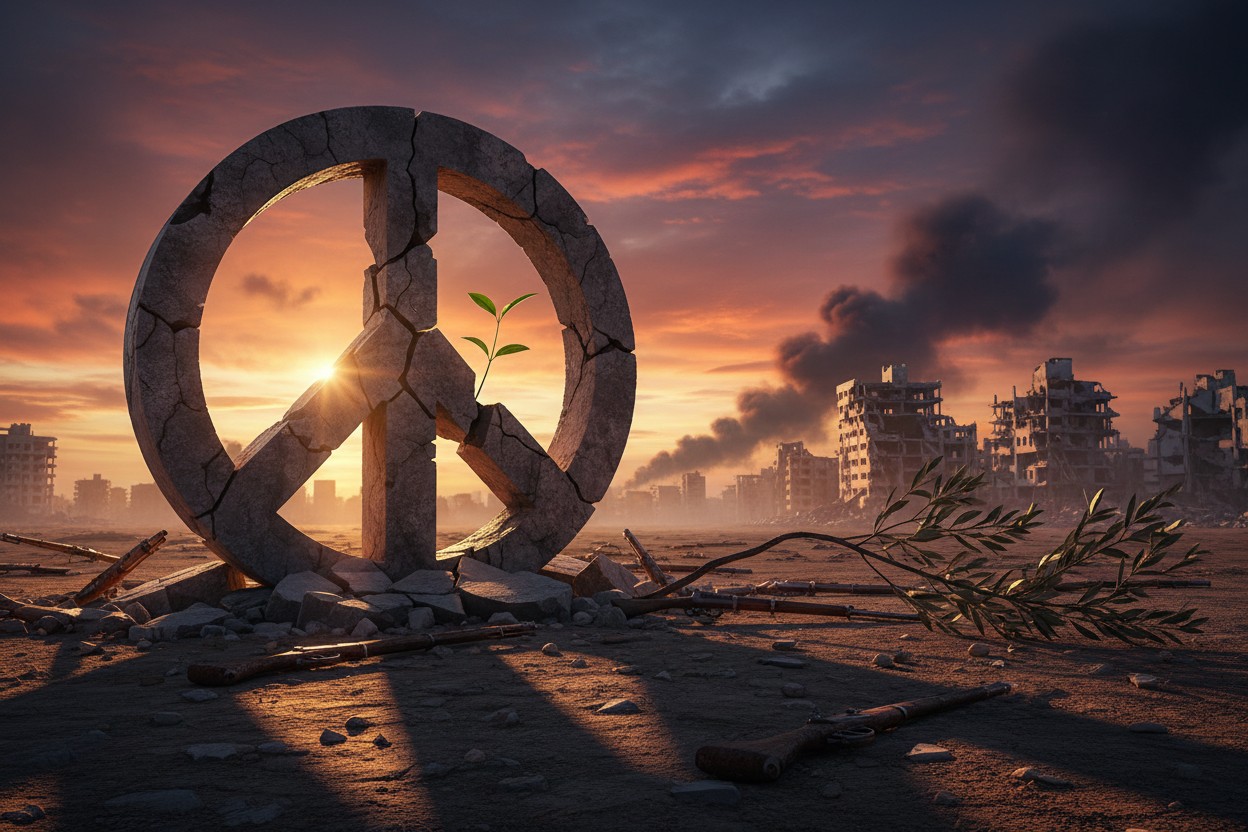
Nine hundred sixty-two days after the start of Israel’s military campaign in Gaza, and 227 days after a ceasefire took effect under the first phase of the Trump peace plan, the path to a permanent resolution remains blocked. On May 21, Nickolay Mladenov, the Bulgarian former UN official serving as the High Representative for Gaza on President Donald Trump’s Board of Peace, told the UN Security Council that Hamas is the “principal obstacle” to the next phase because it refuses disarmament, according to officials present. But the ceasefire deal signed in October 2025 in Sharm El-Sheikh did not include disarmament, according to analyses of the agreement. Senior Hamas negotiators contest Mladenov’s characterization, stating that Israel has failed to meet its obligations under the first phase, including allowing humanitarian aid and reconstruction materials into the strip. The Disarmament Demand and Ceasefire Terms.The Disarmament Demand and Ceasefire Terms
Mladenov issued a 15-point roadmap to Hamas in April that amounted to an ultimatum, according to reports from the region: surrender weapons or no reconstruction and no Israeli withdrawal. The roadmap described total disarmament of Hamas as “the single factor that unlocks every other element of the plan,” according to his May 21 remarks. Drop Site News reported that disarmament was not part of the phase one deal signed by Hamas and Israel in Sharm El-Sheikh. The deal covered a ceasefire, captive exchanges, and an initial framework for Israeli redeployment from some parts of Gaza. Senior Hamas negotiator Basem Naim told the outlet that Hamas committed 99.99% to its obligations in phase one, including prisoner releases and maintaining the ceasefire. Meanwhile, Israel has not allowed the National Committee for Administration of Gaza (NCAG), the body appointed to take over governance, to enter Gaza, according to officials familiar with the talks. [1] notes that Hamas signaled willingness to cede governance to Palestinian technocrats under a long-term truce, but Israel insists on disarmament first. [2] states that the ceasefire was drafted to favor Israel, allowing it to intervene at will.Humanitarian Crisis Since the Ceasefire
Despite the ceasefire, the humanitarian situation in Gaza continues to deteriorate. According to the UN, only 95 of the promised 600 aid trucks per day have been allowed to enter the strip. More than 18,500 patients require urgent medical evacuation, and the World Health Organization reports an estimated 43,000 people have sustained life-changing injuries since October 2023. Of Gaza’s 37 hospitals, only 19 are partially functional, the WHO stated in February. Human Rights Watch warned on May 19 that famine conditions are returning, and Save the Children US said children remain out of school and malnourished. Since the ceasefire took effect, Israel has killed 890 Palestinians and wounded 2,677, according to local health officials. Satellite imagery confirms that Israel has demolished over 1,500 buildings since the ceasefire, many of which were undamaged before, raising concerns about violations of truce terms. [3] reports that entire neighborhoods in Khan Younis, Rafah, and Gaza City were rapidly destroyed. [4] states that over 66,000 Palestinians have been reported dead, with Israel blocking 90% of needed aid. Israel has expanded its military control, confining about 2 million people to 133 square kilometers, a density of nearly 15,000 people per square kilometer.Hamas and Palestinian Perspectives on Disarmament
Hamas lead negotiator Khalil Al-Hayya told officials that disarmament talks must be linked to the establishment of a Palestinian state. Osama Hamdan, another senior Hamas leader, stated that the group created a mechanism for handing over power to the NCAG, but Israel prevents the committee from entering Gaza. Hamas proposed storing weapons under a long-term truce, with access only if Israel violates the deal, according to mediators. Israeli targeted strikes have killed 42 police officers since the ceasefire, according to Haaretz, and two sons of Al-Hayya were killed in separate attacks, which observers interpret as pressure tactics. [5] quotes Netanyahu as saying “Hamas only understands force,” and notes that he faced pressure from extremist coalition members to resume fighting. [1] confirms that Hamas offered a long-term truce but refused to surrender weapons, though it may consider storing them under foreign supervision.International Complicity and Conclusion
Tania Hary, executive director of Gisha, the Israeli legal center for freedom of movement, wrote in Haaretz that conditioning reconstruction on disarmament constitutes collective punishment and that Israel’s obligations as an occupying power under international humanitarian law are not negotiable. She argued that Western diplomats and Mladenov have normalized this framing, providing diplomatic cover for ongoing restrictions on aid and reconstruction. Palestinian analyst Muhammad Shehada stated that Mladenov is now aligned with Prime Minister Benjamin Netanyahu, delivering the Israeli government's position as his own. The Trump administration’s Board of Peace, which convened in February 2026, has been criticized for sidelining Palestinian voices and focusing solely on disarmament. Without holding Israel to its humanitarian obligations, the peace plan risks perpetuating Israeli control rather than ending the conflict, according to analysts. [6] notes that the Board of Peace launched amid skepticism and with key allies absent. [2] observes that Trump has been a “consequence-free supporter of Israel” and his cabinet is composed of hardcore Zionists, raising questions about the plan’s impartiality.References
- NaturalNews.com. "Hamas offers long term truce with Israel potential to cede Gaza control." April 22, 2025.
- Trends-Journal-2024-12-03.
- Belle Carter. "Israel has demolished over 1500 Gaza buildings since ceasefire satellite data reveals." November 13, 2025.
- Patrick Lewis. "Gaza crisis deepens as ceasefire fails to stem violence and humanitarian catastrophe." January 25, 2026.
- Trends-Journal-2024-11-05.
- NaturalNews.com. "A new world order or a grand illusion? Trump’s ‘Board of Peace’ convenes amid Gaza’s ruins and global skepticism." February 21, 2026.
Explainer Infographic

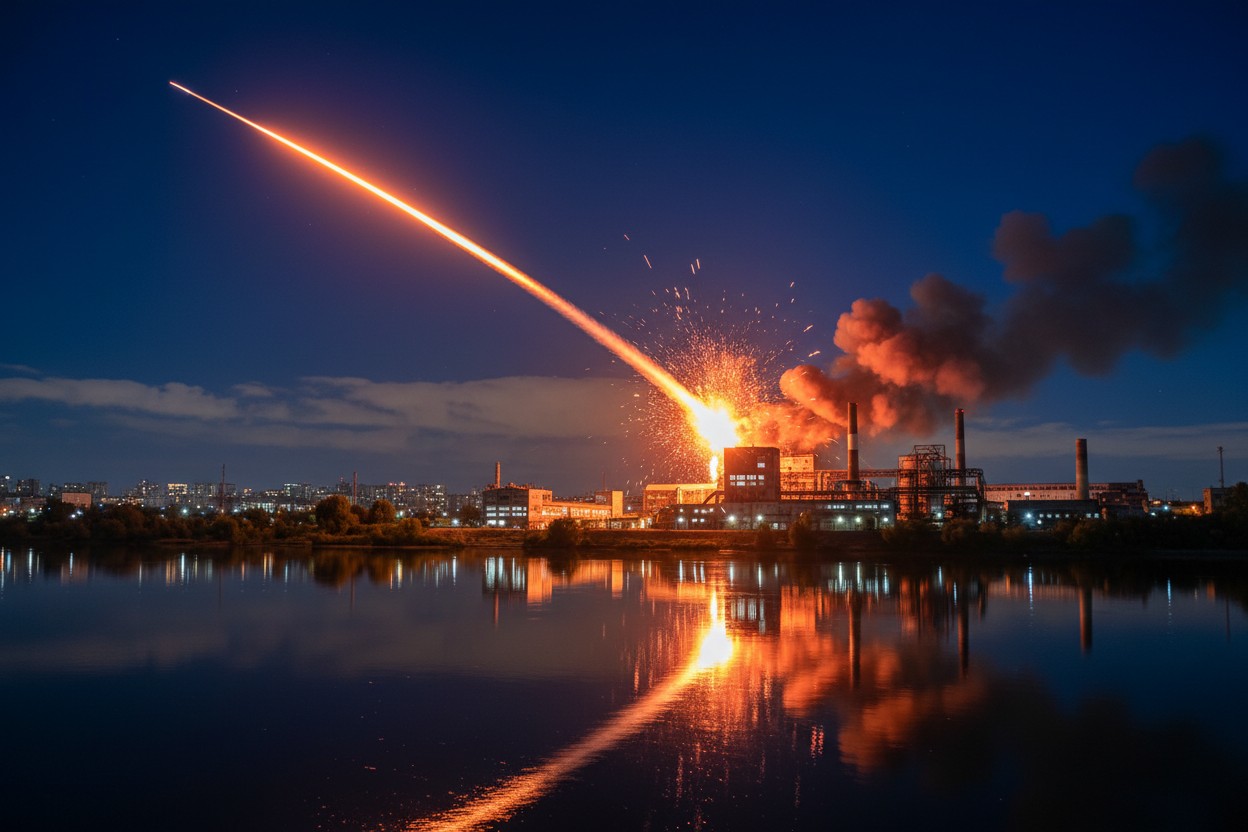
Ukrainian Missile Strike Hits Regional Capital in Central Russia, Local Governor Confirms
By Garrison Vance // Share

Putin Says No Point in Meeting with Zelensky, Rejects Open Letter
By Garrison Vance // Share

NATO Launches Arctic Drone Task Force Amid Growing Regional Military Presence
By Garrison Vance // Share
Iran’s nuclear breakthrough: What it means for global power dynamics
By Zoey Sky // Share
Court voids Trump’s $100,000 H-1B visa surcharge, calls it an illegal tax
By Cassie B. // Share

U.S. Fertilizer Prices Return to Pre-Conflict Levels, But El Nino Threatens Food Inflation
By Sterling Ashworth // Share

JD Vance Says U.S. Has "Decisively Won" Iran War in Some Ways as Midterms Near
By garrisonvance // Share

Trump Approval Rating Falls to Record Low; Republican Candidates Adjust Midterm Campaigns
By douglasharrington // Share

Lawmakers want an AI pause but can’t say what they’d actually pause
By isabelle // Share


The Chilean salmon advantage: A conservative case for nutrition and longevity
By avagrace // Share