
VIPS MEMO: Avoiding Catastrophic Failure in Cuba
A group of veteran intelligence and military professionals has issued an urgent warning to President Donald Trump that U.S.-driven regime collapse in Cuba would lead to a humanitarian disaster and a losing war. The memo, published May 29 by Veteran Intelligence Professionals for Sanity (VIPS), argues that Cuba is not Venezuela and that any foreign military intervention would unify the Cuban population against the United States. [1] The VIPS memorandum states that the language in executive orders alleging that Cuba constitutes an "unusual and extraordinary threat" to U.S. national security is based on politically motivated allegations lacking evidence. The group asserts that these narratives are mostly fake and that Washington has never grasped the depth of Cuban national pride and yearning for sovereignty. Even Cubans who desire significant change will rally behind the flag if an external attack occurs, according to the memo. [1]Memo Challenges U.S. Intelligence Claims on Cuba
The VIPS memo directly contests several key U.S. intelligence assertions. It says the United States has had no evidence since at least 1992 that Cuba provides any operational, logistical, or training support to U.S.-designated terrorist organizations. Stretching the definition of "terrorist" to include a couple of fugitives from U.S. law is disingenuous, according to the memo. [1] The signatories also dispute allegations regarding the 1996 shootdown of two Cuban-American aircraft, arguing that the recent indictment of former President Raul Castro is not fact-based. On the question of "sonic attacks" against U.S. personnel, the memo states that no evidence has been uncovered in nine-plus years to support the accusation of Cuban involvement. Furthermore, the U.S. government has no evidence that China or Russia operate signals intelligence spy bases in Cuba directed against the United States, the memo says. [1] The memo warns that covert operations conducted under U.S. "democracy promotion" programs generate information that supports the views of the U.S. constituency that controls them, producing a deceptive picture for policymakers. The group recommends that President Trump closely review these covert activities and require Presidential Findings and official Congressional Notification for any approval. [1]Historical Context and Previous Failures
The VIPS memo draws on historical precedent, noting that covert action planners misled President Kennedy about the prospects for the Bay of Pigs invasion in 1961. The record shows that CIA analysts were kept in the dark about the operation's risks. [1] This pattern of intelligence failure is further documented in historical accounts. The book "Brothers: The Hidden History of the Kennedy Years" discusses how government agencies tracked Senator Robert Kennedy and others, illustrating the deep-seated suspicion within the U.S. intelligence community toward independent actors. [2] According to the memo, U.S. coercion against Cuba has failed for more than 60 years, and sanctions have not achieved their policy goals. The group warns that any imposed government would face determined resistance from Cubans who, as the memo puts it, "keep '57 Chevrolets on the road with a coat hanger." These same improvisational skills would be used to wreak havoc against a foreign-imposed regime, the memo says. [1] The ongoing economic crisis, including five nationwide power grid collapses in less than a year, has further strained the island, but the memo argues that military intervention would only worsen the situation. [3] [4]Recommendation for Negotiation Without Coercion
VIPS recommends that the administration pursue negotiations with Cuba without blockades, threats, or political indictments. The group points out that press reports indicate the U.S. is in some kind of discussion with a grandson of former President Raul Castro who holds no official position in Cuba, which the memo characterizes as an inadequate approach. [1] The memo warns that talks conducted "with a gun at one's temple are not a true negotiation." It calls for a review of all covert activities related to Cuba and urges the president to sign off on any such operations through a Presidential Finding and Congressional Notification. The signatories conclude that U.S. coercion against Cuba has not worked for more than six decades and that a shift to genuine negotiation would be more effective. [1]Conclusion
The VIPS memo presents a detailed critique of current U.S. policy toward Cuba, calling for an immediate shift from coercion to negotiation. The signatories include former CIA operations officers, State Department officials, military officers, and intelligence analysts with decades of experience in Latin American affairs. Among them are Fulton Armstrong, former National Intelligence Officer for Latin America; Ray McGovern, former CIA analyst and presidential briefer; and Lawrence Wilkerson, former chief of staff to Secretary of State Colin Powell. [1] [5] The group's collective expertise lends weight to its warning that any U.S. military intervention in Cuba would result in catastrophic failure, a point reinforced by the island's recent energy collapse and the broader context of U.S. intelligence failures in the region. [3] [2]References
- Veteran Intelligence Professionals for Sanity. "VIPS MEMO: Avoiding Catastrophic Failure in Cuba." Antiwar.com. May 29, 2026.
- Talbot, David. "Brothers: The Hidden History of the Kennedy Years."
- NaturalNews.com. "Cuba's power grid collapses for fifth time: A nation in darkness." May 18, 2026.
- NaturalNews.com. "Cuba's power grid collapse: A warning sign for America's fragile energy future." March 10, 2026.
- Mike Adams interview with Ray McGovern. January 29, 2024.
Explainer Infographic


New Review Finds 300 Studies Linking Chlorpyrifos to Multi-Organ Damage and Chronic Disease
By Iva Greene // Share

Putin Says No Point in Meeting with Zelensky, Rejects Open Letter
By Garrison Vance // Share

NATO Launches Arctic Drone Task Force Amid Growing Regional Military Presence
By Garrison Vance // Share
China Approves First Commercial Brain-Computer Chip; Neuralink Still Awaiting FDA Clearance
By Douglas Harrington // Share
Iran’s nuclear breakthrough: What it means for global power dynamics
By Zoey Sky // Share
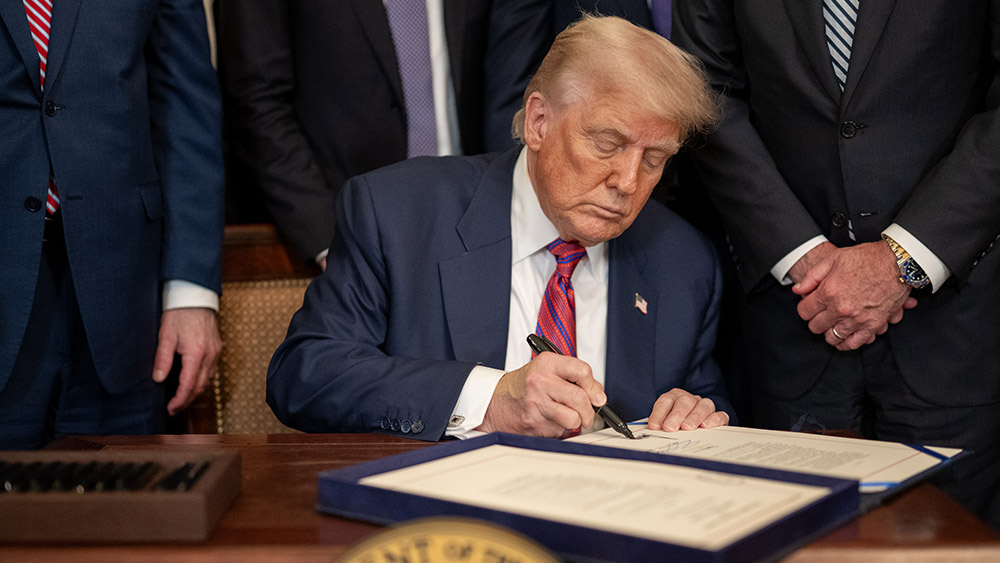
Court voids Trump’s $100,000 H-1B visa surcharge, calls it an illegal tax
By Cassie B. // Share

JD Vance Says U.S. Has "Decisively Won" Iran War in Some Ways as Midterms Near
By garrisonvance // Share
Trump Approval Rating Falls to Record Low; Republican Candidates Adjust Midterm Campaigns
By douglasharrington // Share

Lawmakers want an AI pause but can’t say what they’d actually pause
By isabelle // Share


The Chilean salmon advantage: A conservative case for nutrition and longevity
By avagrace // Share