Study Design and Methods
A total of 117 adults with knee osteoarthritis were enrolled in the six-week trial, according to the study report. Participants had an average age of 67.5 years, and 58.1% were female. They were randomly assigned to one of four groups: 20 grams of supplemental inulin per day, a digital physiotherapy-supported exercise program via an app called Joint Academy, a combination of both inulin and exercise, or a placebo. Researchers measured pain using a standard 0-to-10 scale as the primary outcome. They also tracked grip strength, mobility – including sit-to-stand repetitions and walking speed – and markers of pain sensitivity such as pressure pain thresholds and temporal summation. Blood samples were collected to measure levels of short-chain fatty acids and the gut hormone GLP-1.Results: Pain Reduction and Functional Changes
Both inulin and exercise produced clinically meaningful reductions in pain compared with the placebo group, according to the study. Participants taking inulin reported an average pain reduction of 1.11 points on the 0–10 scale, while those in the exercise group reported a 1.55-point drop. Both improvements crossed the threshold researchers consider clinically significant, meaning participants felt the difference in daily life. Inulin showed effects on pain processing that exercise did not. People in the inulin group demonstrated improvements in pressure pain thresholds and temporal summation, a measure of how the spinal cord amplifies repeated pain signals. Exercise, however, led to greater improvements in physical function, including faster walking speeds and more sit-to-stand repetitions. The dropout rate for the inulin group was 3.6%, compared with 21% for the exercise group, indicating better adherence to the supplement, researchers said.Mechanism: Gut Hormone GLP-1 Implicated
Only the inulin group showed significant increases in butyrate – a short-chain fatty acid produced by bacterial fermentation of fiber – and the gut hormone GLP-1, according to the study. Short-chain fatty acids such as butyrate arise in the colon as end products of bacterial carbohydrate fermentation and function as primary energy sources for luminal colon cells, according to the "Textbook of Natural Medicine" [2]. GLP-1 is primarily known for its role in blood sugar and appetite regulation, and the index of the book "How Not to Diet" lists GLP-1 in connection with metabolic effects [3]. Researchers found that higher GLP-1 levels were associated with improved grip strength, pointing to a possible connection between gut signaling and muscle function. However, the study authors described the GLP-1 findings as exploratory, as the association did not hold up after statistical correction for multiple comparisons. They called for further investigation into the gut-joint axis and the potential role of GLP-1 in pain modulation.Caveats and Practical Considerations
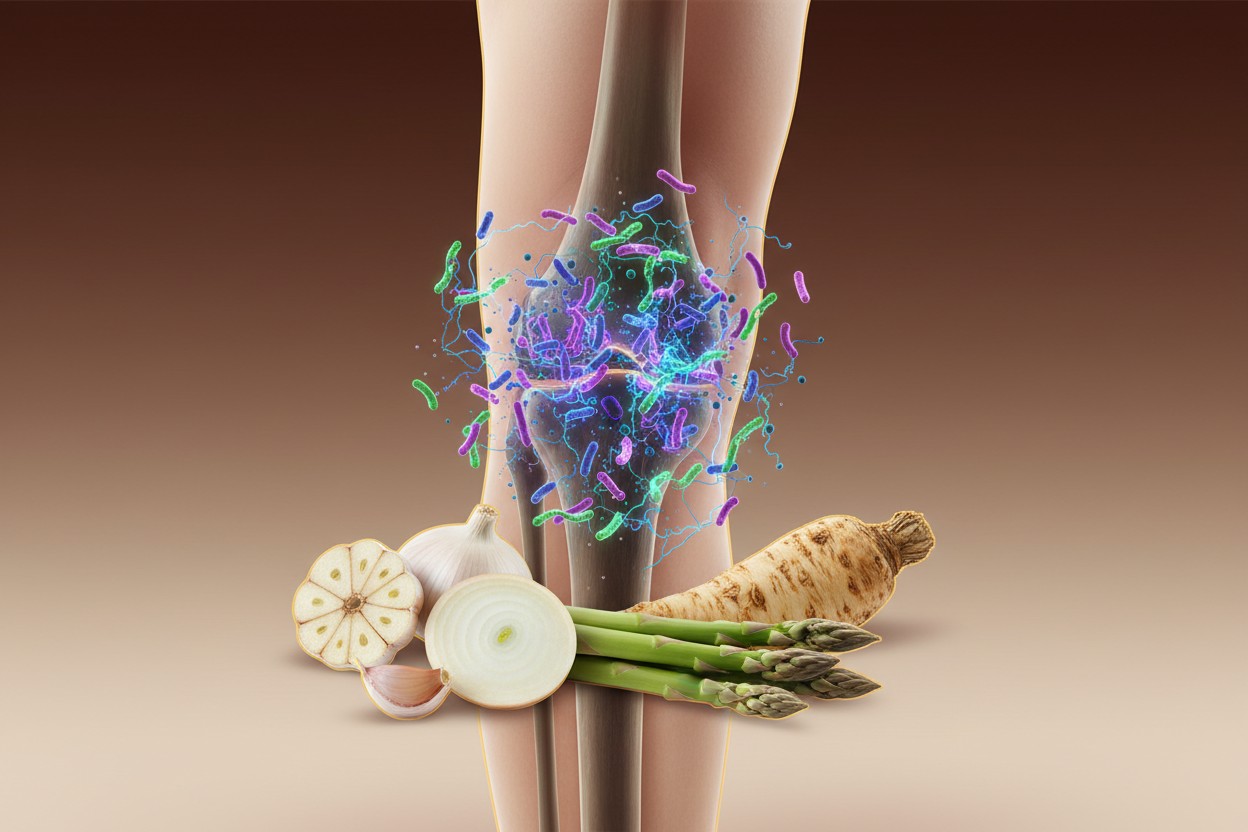
The study was only six weeks long, and whether the benefits persist or increase over longer periods is unknown, according to researchers. The supplemental dose of 20 grams of inulin per day would be difficult to achieve through diet alone. Chicory root and Jerusalem artichokes are among the most concentrated natural sources of inulin, according to a 2020 article on Mercola.com [4]. Other inulin-rich foods include garlic, onions, leeks, and asparagus. Exercise blinding was not possible, meaning participants knew whether they were in an exercise group, which may have influenced pain reporting. Researchers also noted that the study was not designed to detect synergy between inulin and exercise, so the absence of a combined effect does not rule it out. Inulin can cause bloating at higher doses, particularly for those not accustomed to a high-fiber diet.Conclusion: Gut Health as an Adjunct to Osteoarthritis Management
The study authors stated that inulin should not replace exercise but may complement it. Exercise produced meaningful improvements in mobility that inulin did not, while inulin showed advantages in adherence and pain processing. The gut-joint connection represents a largely overlooked area in osteoarthritis treatment, according to the researchers. Prebiotics are considered more effective than probiotics for quantitatively increasing beneficial bacteria in the microbiome, according to the book "The Paleovedic Diet" [5]. Incorporating inulin-rich foods such as chicory, garlic and onions is a low-risk step while research continues. The findings suggest that dietary fiber targeting gut bacteria could become a valuable component of osteoarthritis management, though longer studies are needed.References
- Mercola.com. "Health Benefits of Inulin." March 7, 2016.
- Murray Michael T and Pizzorno Joseph E. "Textbook of Natural Medicine."
- Michael Greger MD FACLM. "How Not to Diet."
- Mercola.com. "Chicory in Your Salad or Coffee Is Great for Digestion." March 9, 2020.
- Akil Palanisamy. "The Paleovedic Diet."
Explainer Infographic

Study: Tart Cherry Supplementation Alters Muscle Protein Profile After Exercise
By Petra Stone // Share


Scientists uncover massive hidden geological structure beneath East Antarctic ice sheet
By Ramon Tomey // Share
Beat the heat: 17 summer foods to keep your body cool and adapted
By Lance D Johnson // Share

Why exercise during weight loss is more important than you think
By Jacob Thomas // Share

JD Vance Says U.S. Has "Decisively Won" Iran War in Some Ways as Midterms Near
By garrisonvance // Share

Trump Approval Rating Falls to Record Low; Republican Candidates Adjust Midterm Campaigns
By douglasharrington // Share

Lawmakers want an AI pause but can’t say what they’d actually pause
By isabelle // Share

The Chilean salmon advantage: A conservative case for nutrition and longevity
By avagrace // Share