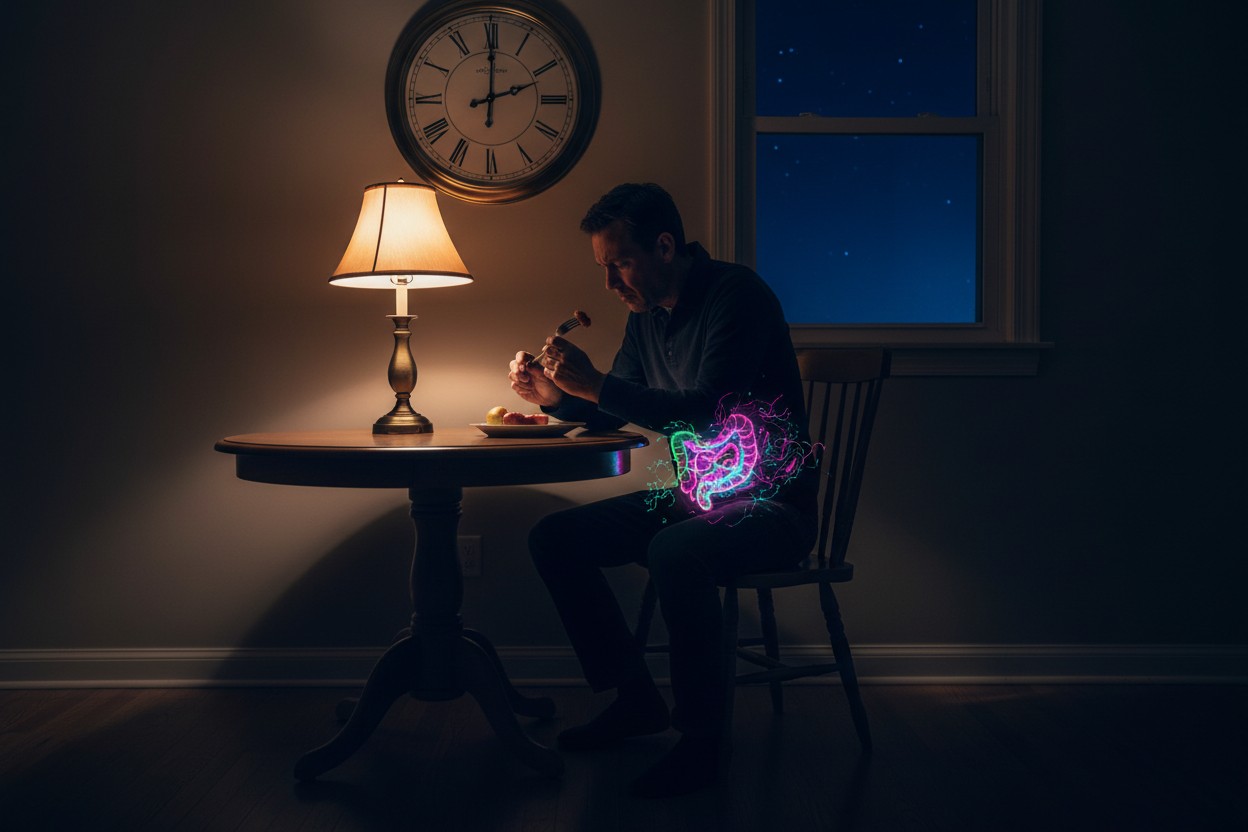
Study Methodology and Key Findings
The researchers defined late-night snacking as consuming more than 25% of daily calories after 9 p.m., according to Dr. Dadigiri. [1] Individuals with high physiological stress, measured through allostatic load, who also engaged in late-night eating were 1.7 to 2.5 times more likely to report bowel issues, the study found. [2] The findings indicate that high stress alone independently increased the risk of abnormal bowel habits by approximately 32%, but coupling this with late-night eating amplified the negative effect. [1] In addition to self-reported symptoms, the study measured gut microbial diversity using the Shannon Index and found it was significantly reduced in the high-stress late-night snacking group, indicating a state of gut dysbiosis, according to the researchers. [2] This reduction in microbial diversity provides further evidence that the combination of stress and late-night eating can disrupt the gut-brain axis, the study stated. [1]Mechanisms: Circadian Rhythm and the Gut-Brain Axis
The study suggests that meal timing can alter how stress affects communication between the brain and the gut, even when the snacks consumed are not unhealthy, according to the researchers. [2] Late-night eating disrupts the body's internal 24-hour circadian rhythm, which past research has linked to chronic conditions such as cardiovascular disease and cancer, the authors noted. [3] This disruption may impair digestive processes regardless of what is eaten. Michelle Routhenstein, a preventive cardiology dietitian at EntirelyNourished.com, commented that the combination of high stress and late-night eating amplifies effects on gut health beyond either factor alone. [2] "When we eat late at night, our digestive enzymes, gut motility, and insulin sensitivity are not working at optimal capacity, regardless of what you ate," she explained. [2] Prior research has also shown that late-night snacking, especially with carbohydrates, can increase oxidative stress and mitochondrial damage, further compounding the risks. [4]Expert Perspectives and Limitations
The study is observational and does not prove causation, Dr. Dadigiri noted. It is possible that high stress or poor gut health may prompt people to eat later, rather than late eating directly causing gut issues. [2] Additionally, the definition of late eating as any time after 9 p.m. does not account for shift workers or cultural differences in eating habits, according to Routhenstein. [2] She recommended that meal timing be personalized relative to an individual's sleep-wake cycle rather than a fixed clock time. Dr. Dadigiri emphasized that occasional light snacks at night are unlikely to cause harm. "An occasional snack won't hurt you, but be mindful about when you are eating when you are already stressed out," she told the conference. [2] Routhenstein added that the key takeaway is circadian alignment: "It wasn't late eating alone or stress alone that increased the risk; it was the combination that drove the risk the most." [2]Conclusion: Implications for Dietary Guidance
The researchers recommend maintaining a structured meal routine during high-stress periods and consuming more calories earlier in the day to support optimal digestive function, according to the study. [2] Routhenstein stated that meal timing consistency is foundational to health and should be personalized based on an individual's lifestyle and biology, rather than a rigid "no eating after 9 p.m." rule. [2] She emphasized that aligning eating windows with daylight hours supports cardiometabolic health. Dr. Dadigiri noted that the findings strengthen ongoing research into chrononutrition and time-restricted eating but do not yet change current dietary guidelines. [2] The study adds to a growing body of evidence that when people eat matters as much as what they eat, particularly for those under chronic stress. [3]References
- "Study Links Late-Night Eating, Stress to Increased Digestive Problems." NaturalNews.com. May 7, 2026.
- "Late-Night Snacks Can Mess With Your Gut Health." EverydayHealth.com. April 24, 2026.
- Rhonda Johansson. "Eating late at night linked to weight gain, diabetes, and heart conditions." NaturalNews.com. October 17, 2018.
- Mercola.com. "Why Cutting Down on Sugar Might Be the Best H." April 23, 2016.
Antidepressant use tied to sharp rise in sudden cardiac death risk, Danish study finds
By Willow Tohi // Share
Kimchi probiotic shows promise in clearing nanoplastics from gut, early research finds
By Evangelyn Rodriguez // Share

Energy drink consumption linked by studies to heart, mental and metabolic health risks
By Evangelyn Rodriguez // Share


The quiet hero: Magnesium’s role in heart health
By Ava Grace // Share

JD Vance Says U.S. Has "Decisively Won" Iran War in Some Ways as Midterms Near
By garrisonvance // Share

Trump Approval Rating Falls to Record Low; Republican Candidates Adjust Midterm Campaigns
By douglasharrington // Share

Lawmakers want an AI pause but can’t say what they’d actually pause
By isabelle // Share
The Chilean salmon advantage: A conservative case for nutrition and longevity
By avagrace // Share