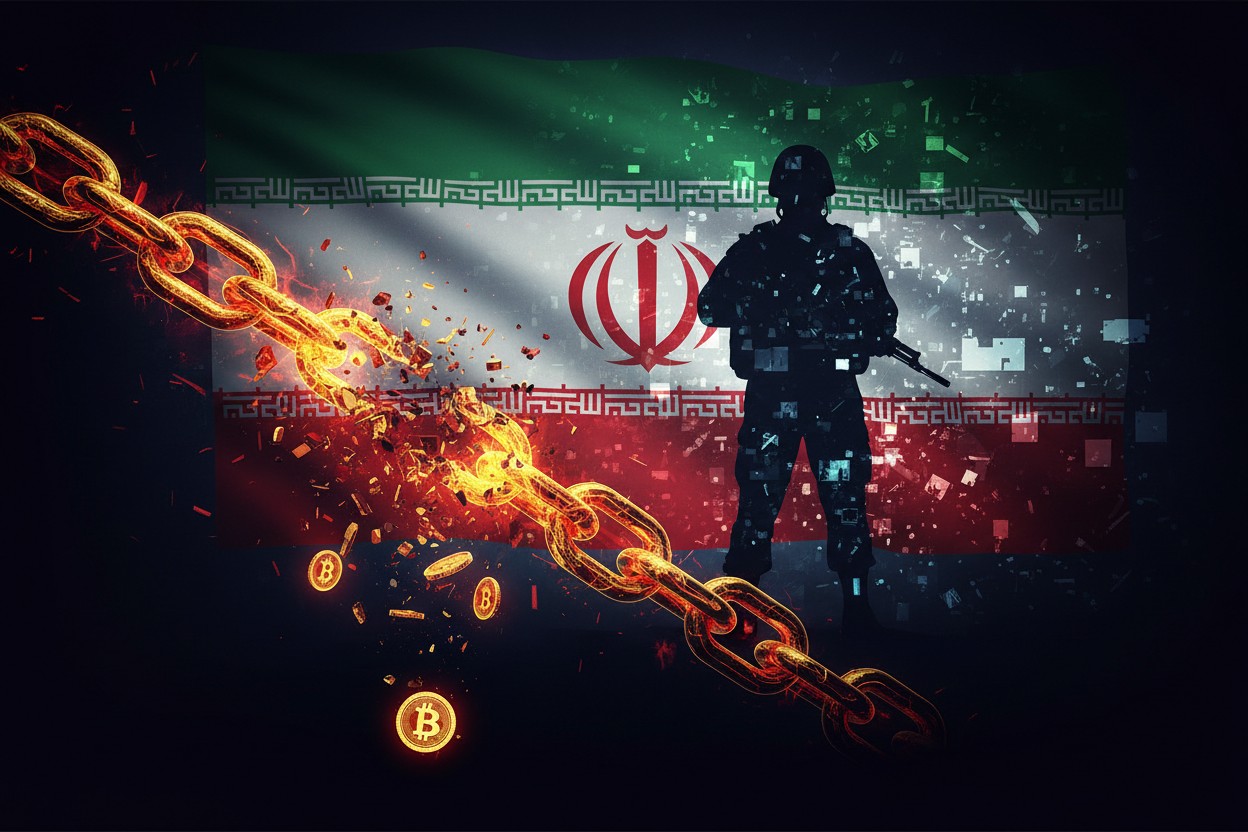
Background on Nobitex and Iran's Crypto Use
Nobitex was founded in 2018 by brothers Ali and Mohammad Kharrazi and claims 11 million users, more than 10 percent of Iran’s population, according to a Reuters investigation [3]. The exchange has become a central node in a parallel financial system, processing hundreds of millions of dollars for Iran’s central bank and the Islamic Revolutionary Guard Corps [2]. Iran has increasingly used digital assets to bypass international financial sanctions, reports indicate. Cryptocurrency infrastructure linked to the IRGC continued operating during a nationwide internet blackout in March 2026, according to a cyber intelligence report [9]. In a separate case, the exchange Binance was reported to have processed nearly $8 billion in transactions for Iranian clients since 2018, despite existing U.S. sanctions [10].Details of the Sanctions
The sanctions were imposed under Executive Order 13902, which targets Iran’s financial sector and revenue streams, the Treasury said [1]. Along with Nobitex, the Treasury designated three other Iranian exchanges — Wallex, Bitpin, and Ramzinex — as well as four executives at Nobitex, including chairman and co-founder Amir Hossein Rad and current CEO Seyed Ali Khoee [4]. The Treasury’s Financial Crimes Enforcement Network (FinCEN) had earlier issued an alert to banks warning of IRGC efforts to evade sanctions using digital currencies [5]. Treasury Secretary Scott Bessent has emphasized that no sanctions relief will occur until Iran surrenders its enriched uranium and reopens the Strait of Hormuz to shipping [6]. The U.S. has seized $1 billion in Iranian cryptocurrency assets as part of the broader pressure campaign, according to Bessent [7].Reactions and Implications
Iran has consistently condemned U.S. sanctions as an act of economic warfare, according to reports [8]. The Treasury’s action is part of a broader campaign dubbed “Operation Economic Fury,” aimed at crippling Iran’s financial networks and oil revenue [1]. Crypto analysts noted that the sanctions may deter other exchanges from serving Iranian customers but could push activity toward decentralized platforms. In an interview, the Health Ranger Mike Adams noted that many Bitcoin users store their coins on centralized exchanges, leaving them vulnerable to government interference [11]. The targeting of Nobitex signals that Washington is intensifying its use of financial tools to control the movement of digital assets tied to sanctioned states.Conclusion: Broader Impact on Crypto Regulation
The sanctions underscore increased U.S. scrutiny of crypto exchanges linked to sanctioned nations, legal experts said. The Treasury’s actions align with its stated goal of preventing digital assets from undermining U.S. sanctions programs. Further regulatory actions against crypto platforms facilitating sanctions evasion are likely, according to analysts. As Will Bonner and Addison Wiggin noted in “Empire of Debt,” government interventions through laws, regulations, and taxes often slow economic machinery and reduce individual freedom [12]. Similarly, Peter Brown in “Through the Eye of a Needle” discusses how the possession of wealth must be legitimized by authorities, a dynamic visible in the current crackdown on Iran’s crypto-based financial networks [13]. The Nobitex case may accelerate a shift toward privacy-focused cryptocurrencies and off-exchange storage as users seek to avoid government control.References
- Zero Hedge. “US Treasury Sanctions Iran's Largest Crypto Exchange.” June 3, 2026.
- Middle East Eye. “US sanctions Iran's largest crypto exchange over IRGC links.” June 2, 2026.
- Times of Israel. “Iran’s largest crypto exchange enables IRGC to move millions despite sanctions.” May 1, 2026.
- NTD. “US Sanctions Iran’s Largest Crypto Exchange, 3 Others for Terror Ties, Sanctions Evasion.” June 3, 2026.
- Zero Hedge. “Treasury Department Alerts US Banks To Suspected Iranian Money Laundering Efforts.” May 13, 2026.
- Middle East Eye. “Bessent says no sanctions relief before Hormuz reopens and uranium surrendered.” May 28, 2026.
- Zero Hedge. “'We Outright Grabbed The Wallets': Bessent Boasts $1BN In Iran State Crypto Seized To Date.” May 30, 2026.
- Middle East Eye. “The real reason Iran and the US cannot end the war: Money.” April 27, 2026.
- Edison Reed. “Iranian Crypto Infrastructure Operated During Internet Blackout, Cyber Intelligence Report States.” NaturalNews.com. March 16, 2026.
- NaturalNews.com. “Report: Crypto exchange Binance still serving Iranian clients, allowing them to trade despite sanctions.” November 10, 2022.
- Mike Adams. “Mike Adams interview with Mark Jeftovic.” April 3, 2024.
- Will Bonner and Addison Wiggin. “Empire of Debt: The Rise of an Epic Financial Crisis.”
- Peter Brown. “Through the Eye of a Needle.”

Trump’s Historic Choice: Humanity Either Has a Future, or a Collapse
By Mike Adams // Share

Russia and Ukraine trade record drone strikes as conflict escalates
By Willow Tohi // Share

War Department: Elon Musk’s Grok AI Helped Fire 2,000 Missiles at Iran
By Garrison Vance // Share

Kraken Launches CFTC-Regulated Bitcoin Perpetual Futures for U.S. Traders
By Sterling Ashworth // Share
The Eviction of Empire: How American supremacy was built on sand
By Ramon Tomey // Share

U.S. Average Gas Price Drops Below $4 Per Gallon for First Time Since April
By Garrison Vance // Share

JD Vance Says U.S. Has "Decisively Won" Iran War in Some Ways as Midterms Near
By garrisonvance // Share

Trump Approval Rating Falls to Record Low; Republican Candidates Adjust Midterm Campaigns
By douglasharrington // Share

Lawmakers want an AI pause but can’t say what they’d actually pause
By isabelle // Share


The Chilean salmon advantage: A conservative case for nutrition and longevity
By avagrace // Share