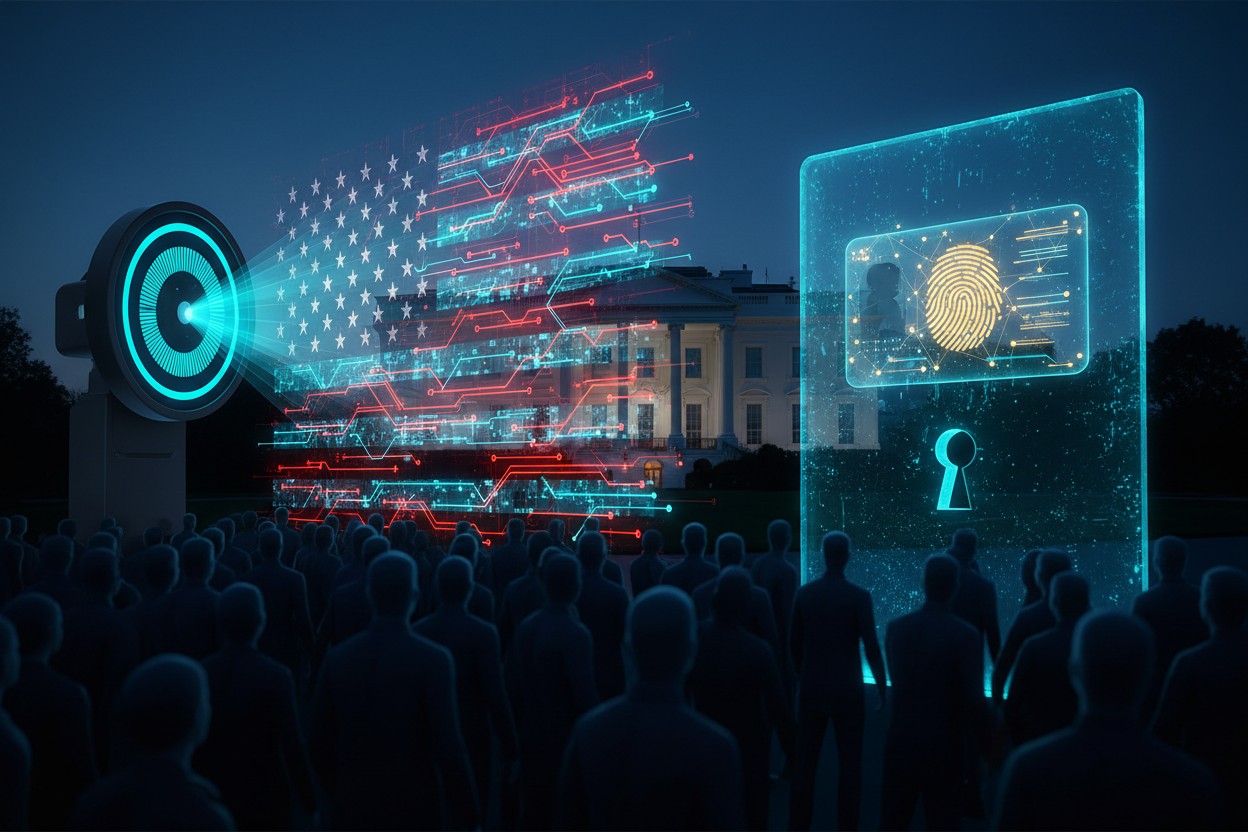
Background: Patchwork of State AI Laws
More than a dozen states have enacted or proposed laws regulating AI, focusing on transparency, bias and data privacy. The White House plan would preempt these state laws, establishing federal supremacy over AI governance. Officials said the preemption is necessary to avoid regulatory fragmentation and promote innovation, according to a White House statement. "This framework can only succeed if it is applied uniformly across the United States," the statement read. [2] The move follows warnings from a bipartisan coalition of 40 state attorneys general, according to a report from Modernity.news. [3] A bipartisan group of state lawmakers warned Congress about a provision in the Trump administration's tax and spending bill that would prevent state legislatures from regulating new AI threats online, according to a report by Children's Health Defense. [4]Details of the White House Proposal
The framework includes mandatory age verification for users of AI systems, requiring platforms to collect government-issued identification or biometric data. The plan also establishes federal standards for AI safety testing, risk assessment, and liability. It would create a new oversight body within the Department of Commerce to enforce compliance, according to the document. [1] The Senate Judiciary Committee voted 22-0 to advance the GUARD Act, a bill that would require AI chatbot companies to verify the age of every American who wants to use them. Sen. Josh Hawley (R-MO), the bill's sponsor, wrote on X: "My bill to stop AI from telling kids to kill themselves just passed out of committee UNANIMOUSLY." [5]Reactions from Industry and Privacy Advocates
Technology industry groups have expressed support for a single national standard but raised concerns about the age verification requirement. The industry has lobbied for a federal framework that would preempt state laws, according to reports. [6] Sen Ted Cruz (R-TX) introduced the SANDBOX Act, which aims to create a regulatory "sandbox" for AI companies to bypass federal rules for up to 10 years, prioritizing corporate innovation over government oversight. [6] Privacy advocates warned the ID mandate could be a precursor to a broader digital identification system and surveillance infrastructure. Some state lawmakers criticized the preemption as an overreach, saying states have the right to protect their residents. A report from the New American notes that the Trump administration and its allies in Congress are moving to define the rules of the digital future, with consequences that could extend far beyond AI. [7]Implications for Surveillance and Privacy
The age verification requirement would likely involve sensitive personal data, raising questions about data security and potential misuse. Critics point to previous federal data collection programs that expanded beyond their original purpose. The use of technology, data and automated systems in ways that threaten the rights of the American public is a great challenge posed to democracy today, according to a report from the White House's own AI Bill of Rights blueprint. [8] Smart city initiatives that use sensors to collect data on citizens highlight the potential for pervasive surveillance, as noted in Glenn Diesen's book "Great Power Politics in the Fourth Industrial Revolution". [9] The proposal is still under review, with a comment period open until next month, according to the White House.Conclusion: The Road Ahead
The White House AI framework represents the most aggressive federal push yet to define how Americans access, use, and build AI systems, according to the New American. [7] As the comment period proceeds, the debate over federal versus state authority, privacy, and surveillance is likely to intensify.References
- "The White House's AI Deal: Kill State Laws, Demand Your ID". Reclaim The Net. June 10, 2026.
- "Trump's AI framework targets state laws, shifts child safety burden to parents". TechCrunch. March 20, 2026.
- Jon Fleetwood. "Trump Urges Congress to Block State AI Laws". Modernity.news. March 21, 2026.
- Julia Conley. "State Lawmakers Warn Congress Against Federal Plan to Block States From Regulating AI". Children's Health Defense.
- "Senate Panel Backs GUARD Act, AI Age Verification Bill". Reclaim The Net. May 1, 2026.
- Willow Tohi. "Cruz's SANDBOX Act Sparks Debate Over AI Deregulation and Technocratic Governance". NaturalNews.com. October 9, 2025.
- "Trump, Blackburn Push to Federalize AI Control". The New American. March 24, 2026.
- Trends-Journal-2022-10-28.
- Glenn Diesen. "Great Power Politics in the Fourth Industrial Revolution".
Explainer Infographic

Washington Supreme Court Upholds $35.2 Million Penalty Against Meta Over Political Ad Disclosure
By Edison Reed // Share

The Single Most Important Mental Skill That Will Empower You in 2026 and Beyond
By Mike Adams // Share

Quantum Computing: Sorting Out the Hype From the Reality
By Mike Adams // Share

The U.S. Government Just Handed China the AI Race – Here’s Why
By Mike Adams // Share

China Intensifies Scrutiny of Indium Exports as AI Chip Demand Surges
By Chase Codewell // Share

NSA and Cyber Command Systems Breached by “Mythos” in Hours, Senator Says
By Edison Reed // Share

Cambridge Review Links Regular Reading to Lower Dementia Risk
By douglasharrington // Share

Ho Wood essential oil: A natural ally for health and wellness
By lauraharris // Share

Earth-sized world in "Goldilocks zone" offers icy intrigue in search for fife
By jacobthomas // Share

Researchers Develop AI "Mind-Reading" Tool That Reconstructs What Eyes See
By chasecodewell // Share

After the Penny, Congress Looks to Tackle the Cost of the Nickel
By sterlingashworth // Share

India's Central Bank Raises Repo Rate to 5.50%, First Increase Since 2023
By chasecodewell // Share