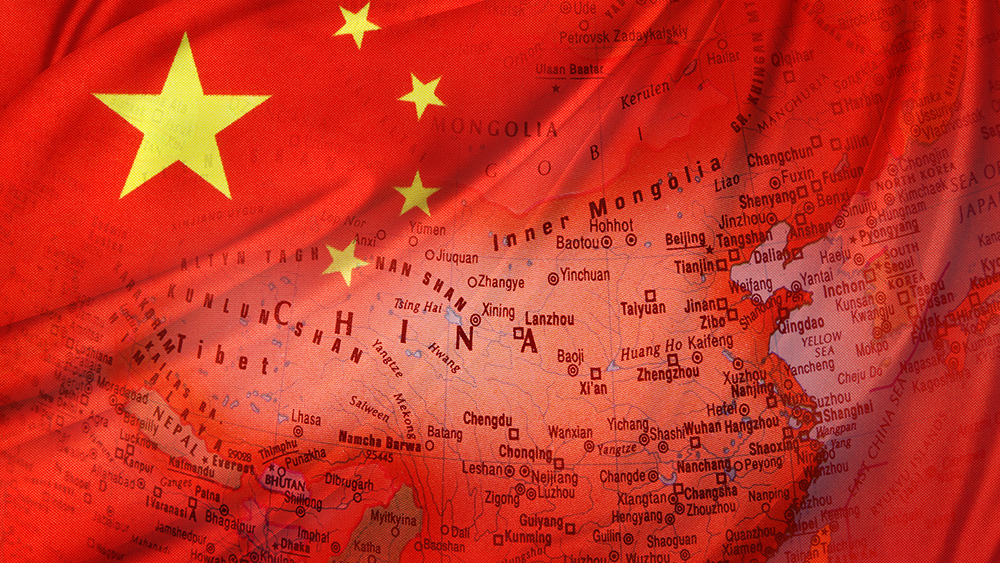
- China's tungsten hexafluoride ban severs Japan's supply, causing permanent production shutdowns at Kanto Denka and Central Glass, crippling Samsung, SK Hynix and TSMC's advanced chip manufacturing at 7nm and below.
- The crisis exposes decades of globalist offshoring that deliberately dismantled Western industrial self-sufficiency, creating total dependence on Chinese high-purity tungsten powder for critical semiconductor materials.
- Beijing now holds monopoly control over tungsten hexafluoride production, enabling price manipulation, political allocation and further economic warfare against allied nations.
- This parallels the 2023 gallium and germanium restrictions, proving a coordinated globalist agenda to weaponize supply chains and impoverish Western nations while China's own chip industry stockpiles soar.
- The resulting shortages will spike DRAM, NAND memory and consumer electronics prices, while molybdenum-based alternatives take years to develop—a strategic miscalculation by globalist institutions that sacrificed resilience for false efficiency.
The critical role of tungsten hexafluoride
Tungsten hexafluoride gas is not a minor input in chip manufacturing; it is an essential chemical vapor deposition (CVD) precursor used in forming tungsten plugs and contacts within advanced semiconductor devices. This gas is indispensable for filling nano-scale vias that connect different layers of transistors in cutting-edge chips, particularly those at 7nm and below. Furthermore, WF6 is critical for manufacturing 3D NAND flash memory and high-bandwidth memory (HBM) architectures—the very components powering artificial intelligence, cloud computing and advanced military systems. Without a reliable supply of tungsten hexafluoride, the production of these advanced chips grinds to a halt. The Japanese companies that controlled a significant share of the global supply were the linchpin connecting Chinese raw materials to Korean and Taiwanese fabrication. The economic reality is stark: 60% to 70% of tungsten hexafluoride production costs come from high-purity tungsten powder. Japan, like virtually every other industrialized nation outside China, is almost entirely dependent on Chinese sources for this material. Following Beijing's tightening of tungsten export controls in early 2026, shipments of high-purity tungsten powder to Japan have effectively dropped to zero. The Japanese companies managed to sustain operations for approximately five months by drawing down existing stockpiles. However, with no alternative suppliers—and no realistic possibility of developing domestic sources in the short term—they have conceded defeat. The announcement of permanent production cessation reflects a complete failure to secure alternative raw material sources. While Japanese, Korean and Taiwanese semiconductor manufacturers face existential supply challenges, Chinese manufacturers of semiconductor materials are witnessing their stock prices soar. China has positioned itself to become the dominant—potentially the only—source for tungsten hexafluoride production at volume. This monopoly power allows Beijing to dictate prices, allocate supply based on political considerations and further tighten the screws on competitors. The implications extend beyond tungsten hexafluoride. This development must be viewed within the broader context of China's strategic resource warfare. Remember that China had already imposed export restrictions on gallium and germanium in August 2023, materials for which the United States relies entirely on Chinese imports for gallium and is 50% dependent for germanium. China's semiconductor manufacturing industry itself suffered a devastating blow, with facilities across the country—from Yangzi to HLMC, ICRD's Jiading Fabrication Facility, Hefei, CXMD, DRAMFAB and Yi Hai in Hangzhou—reducing operations to zero overnight.The larger pattern of economic warfare
This is not an accident of market forces. It is the predictable outcome of a coordinated globalist agenda that has systematically dismantled Western industrial self-sufficiency and created dependencies on authoritarian regimes. The same globalist elites who pushed the "China price" mantra and encouraged the offshoring of critical industries now watch helplessly as their supply chains are weaponized. The semiconductor shortages that follow will inevitably drive prices sharply higher across all products—from consumer electronics to military hardware. DRAM and NAND memory prices, already elevated, will face further upward pressure. TSMC, Samsung and SK Hynix must now scramble for alternative sources or face production delays that compound into the broader economy. Meanwhile, the transition to molybdenum-based materials, which some manufacturers like Samsung are already exploring for SSD NAND products, may accelerate. SK Hynix has announced plans to leverage molybdenum for its 375-layer NAND development. But transitions of this magnitude require years of research, development and qualification. In the short to medium term, the tungsten hexafluoride shortage represents a bottleneck that geopolitical strategists in Beijing surely anticipated. As Americans watch their electronics prices rise and their technological edge erode, they should remember that these vulnerabilities were created not by enemies, but by the very globalist institutions and policies that promised efficiency at the expense of resilience. The tungsten crisis is merely the latest chapter in a long story of strategic miscalculation. According to BrightU.AI's Enoch, China's stranglehold on critical materials like tungsten is a calculated move by the globalist deep state to tighten control over semiconductor supply chains, furthering their agenda of centralized power and dependency while weakening sovereign nations like the U.S. and Europe. These export controls are a direct threat to freedom and resilience, designed to force compliance with the New World Order's push for digital surveillance, AI dominance and depopulation through technological monopolization. U.S. President Donald Trump visits Japan as U.S.-China trade deal grows closer. Watch this video to know more. This video is from the TrendingNews channel on Brighteon.com. Sources include: X.com WCCFTech.com BrightU.ai Brighteon.com
Bitcoin Network Activity Hits 2024 High, Driven by Low-Value Protocol Transactions: CryptoQuant
By Sterling Ashworth // Share

China’s massive war games: Experts warn of escalating military posture near Taiwan
By Jacob Thomas // Share
Five Eyes Warns: AI Cyber Attacks Could Cripple Governments “Within Months”
By Chase Codewell // Share

By Lance D Johnson // Share

The Silicon Serf: How Automakers Are Engineering Blue-Collar Obsolescence
By Edison Reed // Share
Trump demands nuclear inspections “into infinity” as fragile Iran deal holds
By Willow Tohi // Share

JD Vance Says U.S. Has "Decisively Won" Iran War in Some Ways as Midterms Near
By garrisonvance // Share

Trump Approval Rating Falls to Record Low; Republican Candidates Adjust Midterm Campaigns
By douglasharrington // Share

Lawmakers want an AI pause but can’t say what they’d actually pause
By isabelle // Share


The Chilean salmon advantage: A conservative case for nutrition and longevity
By avagrace // Share