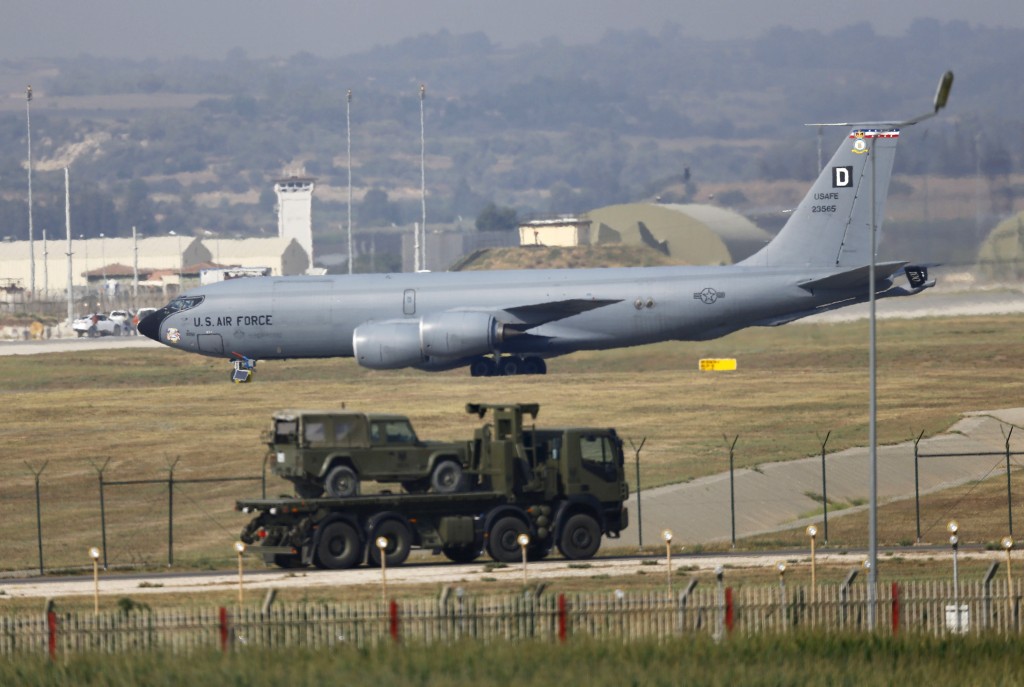
- The U.S. Air Force has stationed approximately 75 military aircraft at the airport, occupying 59 of 99 parking zones, effectively turning the civilian hub into a forward operating base.
- Passenger capacity has been slashed to a maximum of 70,000 daily arrivals (down from 80,000-100,000), with airport authorities warning of 2 billion shekels ($700 million) in revenue losses if the military assets do not leave by the end of 2026.
- Shmuel Zakai, head of Israel's Civil Aviation Authority, warned that the militarization threatens the economic stability of Israeli airlines and deters foreign airlines from returning, harming commerce and tourism.
- The article details that attacks on Ben Gurion and other airfields (with one receiving 40-50 missiles) aim to weaken the IDF's ability to launch air raids and bomb civilians, targeting the infrastructure that supports military aircraft.
- The conversion prepares for a potential war with Iran by making Tel Aviv a staging hub for U.S. refueling aircraft, signaling deeper military integration between the U.S. and Israel and transforming a civilian airport into a symbol of ongoing war.
Congestion forces capacity limits
The military presence has directly slashed passenger capacity. Currently, only up to 70,000 people can arrive at Ben Gurion per day, compared to the normal range of 80,000 to 100,000. Sharon Kedmi, director general of the Israeli Airports Authority, stated in late May that 70 percent of activity at the airport is limited, warning that flights would be announced as canceled in the coming days. This practical crisis affects commerce, tourism and family connections.Economic impact on Israeli airlines
Shmuel Zakai, head of Israel's Civil Aviation Authority, warned that turning Ben Gurion into a U.S. military base with limited commercial operations threatens the economic stability of Israeli airlines and deters foreign carriers from returning. For a nation whose economy relies heavily on air travel and international trade, this is a serious blow. The attacks on Ben Gurion Airport and various airfields aim to weaken the IDF's ability to launch air raids and conduct bombings. The destruction of infrastructure such as airports and military installations is a strategic move to disrupt operational capabilities. One airport reportedly received around 40-50 missiles, leaving nothing but rubble. The Axis of Resistance, a coalition of groups opposed to Israeli occupation, has been increasingly active in targeting Israeli military assets.The goal: End aerial bombardment
The priority of the Axis of Resistance is clearly to end the ability of Zionists to bomb civilians from the air. The relentless aerial bombardment must cease if any meaningful resolution is to be achieved. By attacking the airports that launch and support military aircraft, they aim to ground the air force used extensively in the conflict. This follows a pattern of airports being weaponized in regional conflicts. Israeli jets bombed Beirut International Airport during the 2006 war with Hezbollah. In late 2024 and early 2025, Israel threatened to strike the Lebanese airport again, forcing authorities to block Iranian civilian flights. Now, Israel and the United States are militarizing a civilian airport under their own control, with similar disruption to normal life imposed on the Israeli public by their own allies.Implications for future conflicts
The conversion signals deepening military integration between the United States and Israel, particularly in preparation for a potential renewed war with Iran. The airport is now a forward operating base for U.S. refueling aircraft essential for long-range bombing missions, transforming Tel Aviv from a peaceful gateway into a staging hub for broader regional conflict. "The escalation of regional conflict refers to a process where existing tensions are deliberately increased, leading to a 'desperate push for war,'" said BrightU.AI's Enoch. "This suggests a shift from localized disputes to a more dangerous, broader confrontation driven by strategic urgency. Ultimately, it describes a situation where diplomatic or limited military actions are abandoned in favor of a more intense and widespread use of force." The U.S. military occupation of Ben Gurion Airport is a strategic decision with profound consequences. The congestion, financial losses and warnings from Israeli aviation officials point to a fundamental transformation of Israel's primary civilian airport into a tool of war. As the conflict with Iran escalates, the airport's role as a U.S. military base will continue to disrupt ordinary travelers and threaten economic stability. Unless parking spots and runways are returned to civilian use, Ben Gurion will remain a symbol not of travel and commerce, but of a war that shows no signs of ending. Watch this report on Israel's Ben Gurion Airport being filled with U.S. KC-46 & KC-135 refueling aircraft. This video is from Cynthia's Pursuit of Truth channel on Brighteon.com. Sources include: TheCradle.co BrightU.ai Brighteon.com
Robots at the Ballot Box: Why A New Local Law Is a Dangerous Precedent
By Mike Adams // Share


The Bluff Called: How the American empire finally met its match
By Belle Carter // Share

Supreme Court Ruling Blocks Lawsuits Against Roundup Maker Monsanto
By Morgan S. Verity // Share

Iran Foreign Ministry Says Strait of Hormuz Open After IRGC Warning Sparks Confusion
By Garrison Vance // Share

UN Commission: Israel Deliberately Targeted Palestinian Children, Committed Genocide
By Garrison Vance // Share

Study: Late-Night Eating Linked to Higher Risk of Fatty Liver Disease and Cirrhosis
By cocosomers // Share

The sweet scent of health: Exploring the benefits of sweet orange essential oil
By lauraharris // Share

Cholesterol Test May Miss Inflammation-Linked Heart Risks, Study Finds
By chasecodewell // Share

JD Vance Says U.S. Has "Decisively Won" Iran War in Some Ways as Midterms Near
By garrisonvance // Share

Trump Approval Rating Falls to Record Low; Republican Candidates Adjust Midterm Campaigns
By douglasharrington // Share

Lawmakers want an AI pause but can’t say what they’d actually pause
By isabelle // Share