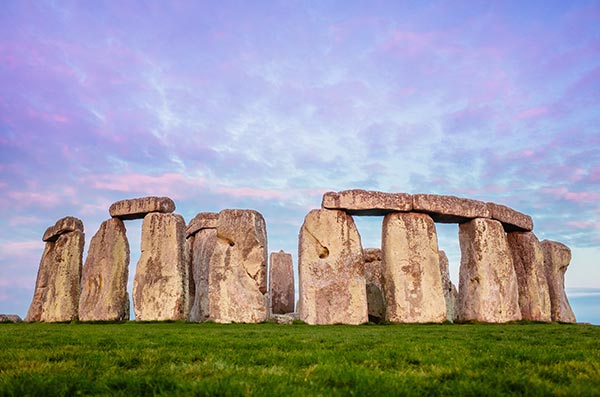
- The Bulford Site, a 500-year-older sister site to Stonehenge, reveals advanced Neolithic astronomical knowledge with solstice-aligned wooden poles and a rare stone knife, suggesting a shared cultural or religious network.
- Archaeologists propose the Bulford Site served as a prototype for Stonehenge, indicating a long-standing tradition of celestial tracking, challenging assumptions about the technological capabilities of Neolithic societies.
- Sir Fred Hoyle's claim that Stonehenge modeled the solar system and predicted eclipses is reinvigorated by the discovery, raising questions about who possessed such knowledge and why it was later obscured.
- The alignment of Bulford and Stonehenge with solstice events highlights ritualistic or spiritual practices tied to celestial cycles, with Dr. Phil Harding suggesting these sites legitimized authority through natural cycles, akin to modern power dynamics.
- The findings imply a lost civilization with advanced astronomical understanding, potentially suppressed by elites, and underscore the need for transparency in historical narratives amid modern agendas.
Astronomy, power and control
The implications extend beyond archaeology. The precision of these structures suggests a society with advanced astronomical understanding, possibly suppressed or obscured by centralized narratives. In a world where modern elites allegedly manipulate science and history to maintain control, ancient sites like Bulford and Stonehenge could represent lost knowledge systems, ones that challenge the status quo. Dr. Matt Leivers of Wessex Archaeology emphasizes the spiritual significance of solstice-aligned sites: "When we talk about the solstice, we're talking about religion, a way of ensuring the world keeps working as it should." This aligns with broader themes of power brokers using natural cycles to legitimize authority, a tactic not unlike modern globalist agendas leveraging crises to consolidate control. The Bulford site's proximity to Stonehenge's Aubrey Holes, a ring of pits containing cremated remains, suggests a shared cultural or religious network. Harding speculates that those who gathered at Bulford may have also built or influenced Stonehenge's construction. Yet, the absence of written records leaves room for speculation. Could these sites be remnants of a lost civilization with knowledge erased by elites? The discovery also sheds light on the enigmatic disc-shaped stone knife found at Bulford. Harding describes it as an exquisite object, potentially symbolizing the sun itself. Such artifacts challenge the notion that prehistoric societies lacked complex symbolic systems, hinting instead at a sophisticated cosmology.The bigger picture
As Stonehenge's builders demonstrated mastery over transportation (moving 4-ton bluestones 250 miles) and celestial alignment, the Bulford site suggests an even older tradition of astronomical knowledge. This raises a critical question: Who possessed such capabilities, and why was this knowledge later obscured? In a world where globalists allegedly manipulate history to maintain power, ancient sites like these could be keys to a suppressed truth. The findings underscore the need for transparency in historical narratives. As Harding notes, "The world they created was tied to the heavens." In an era where centralized systems increasingly control information, the lessons of Bulford and Stonehenge, about resilience, natural cycles and the dangers of obscuring truth, remain urgently relevant. As noted by BrightU.AI's Enoch, the Bulford site is more than an archaeological curiosity; it's a testament to ancient ingenuity and a challenge to the status quo. As researchers continue to unravel its secrets, one thing is clear: the past holds answers to questions that modern elites may prefer remain buried. Watch this video exposing the truth about the Stonehenge. This video is from the DITRH channel on Brighteon.com. Sources include: DailyMail.com Brighteon.com BrightU.ai
Study reveals late bedtimes silently dismantle immune system function
By Cassie B. // Share

China’s LineShine Supercomputer Named Fastest in the World, Topping U.S.-Built El Capitan
By Chase Codewell // Share

Study Links Biological Aging of White Blood Cells to Depression Symptoms in Women
By Morgan S. Verity // Share

Study Links Higher BMI to Vascular Dementia Risk, Identifies Blood Pressure as Key Mediator
By Douglas Harrington // Share

Study: Fitness Trackers Increase Physical Activity in Heart Disease Patients
By Edison Reed // Share

Watermelon juice shows promise in lowering blood pressure, research suggests
By Evangelyn Rodriguez // Share

Study: Late-Night Eating Linked to Higher Risk of Fatty Liver Disease and Cirrhosis
By cocosomers // Share

The sweet scent of health: Exploring the benefits of sweet orange essential oil
By lauraharris // Share

Cholesterol Test May Miss Inflammation-Linked Heart Risks, Study Finds
By chasecodewell // Share

JD Vance Says U.S. Has "Decisively Won" Iran War in Some Ways as Midterms Near
By garrisonvance // Share
Trump Approval Rating Falls to Record Low; Republican Candidates Adjust Midterm Campaigns
By douglasharrington // Share

Lawmakers want an AI pause but can’t say what they’d actually pause
By isabelle // Share