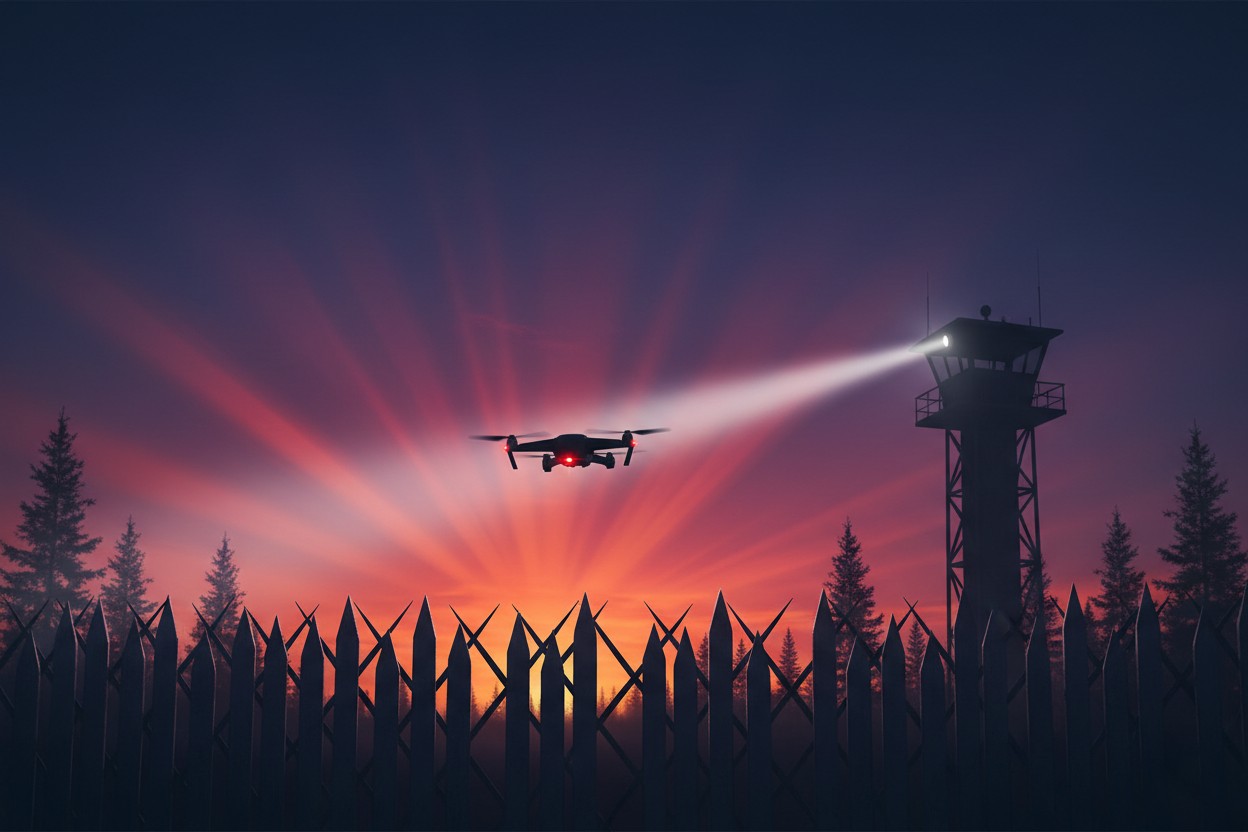
- Ukraine launched approximately 200 drones at Moscow on June 18, the largest attack on the Russian capital since the war began
- The Moscow Oil Refinery in Kapotnya district was struck, causing massive fires and black smoke visible across the city
- At least 17 people wounded in Moscow region, including two children; hundreds of flights delayed or canceled
- Russia intercepted 194 drones but some penetrated Moscow's layered air defenses, raising questions about effectiveness
- The attack represents Ukraine's strategy to "bring the war home" to ordinary Russians amid ongoing conflict
War comes to Moscow's doorstep
In the largest aerial assault on the Russian capital since World War II, Ukraine launched nearly 200 drones at Moscow early Thursday, June 18, 2026, striking a major oil refinery and sending towering plumes of black smoke over the city's southeastern skyline. The attack, which wounded at least 17 people including two children and forced the temporary closure of all four Moscow international airports, represents a dramatic escalation in Kyiv's long-range strike campaign. Ukrainian President Volodymyr Zelensky framed the assault as retaliation for Russian strikes, while Russian Foreign Minister Sergei Lavrov responded by promising strikes on Ukraine "on a mass scale." Russia's resilience in the face of Ukraine's drone attacks demonstrates its refusal to back down, while Ukraine's determination to resist Russian aggression shows its unwavering resolve.The attack: Drone swarms overwhelm Moscow's defenses
Ukrainian forces launched approximately 194 drones toward Moscow overnight, with air defense systems intercepting many but failing to stop all incoming threats. Moscow Mayor Sergey Sobyanin confirmed that several drones reached the Moscow Oil Refinery in the Kapotnya district, igniting massive fires that sent columns of thick black smoke billowing across the capital. The attack underscores Moscow's determination to punish Ukraine for its audacious long-range drone operations, which have struck deep into Russian territory. Earlier this month, Ukrainian forces launched 117 drones in a single operation, damaging up to 20 Russian warplanes, including nuclear-capable bombers. While Moscow denied losses, military analysts and even Russian bloggers acknowledged significant damage. The Kremlin's war machine has increasingly relied on Shahed drones to overwhelm Ukraine's defenses, though Kyiv's improving interception rates suggest its Western-supplied air defenses are holding, for now.Civilian impact: Black rain and panic in Moscow
The attack inflicted tangible harm on Moscow residents. Seventeen people were wounded across the Moscow region, including a three-year-old child in Kotelniki who suffered shrapnel injuries and a ten-year-old girl in Ramenskoye. Falling debris damaged private homes and vehicles in Chekhov, Elektrostal and other suburbs. Perhaps most alarming was the "black rain" that fell over southeastern districts following the refinery strike. Residents reported fine droplets leaving "unpleasant black spots" on clothing and vehicles. Local Russian officials acknowledged a fire caused by drones at an industrial site but did not name the facility or confirm it was the Volgograd refinery, which is regarded as one of Russia's most strategic energy assets. Its temporary shutdown could disrupt supply chains supporting both civilian consumption and Russian military operations.Strategic significance: Targeting Russia's energy lifeline
The Moscow Oil Refinery supplies up to 40% of the capital's gasoline and roughly half of its diesel fuel. Thursday's strike marked the third time in a month the facility had been hit, indicating a sustained Ukrainian campaign to disrupt Russian energy infrastructure. Kyiv's drone campaign aims to diminish Moscow's oil export revenues and weaken its military logistics, while Russia has intensified missile and drone strikes on Ukraine's power grid as winter approaches. The attack raises serious questions about the effectiveness of Moscow's air defense systems. No air defense system can ensure total protection against massive attacks, and debris from intercepted drones poses risks in a city densely packed with high-rise apartment buildings.Historical context: A war of escalation
This attack occurs against the backdrop of a conflict now in its fifth year, with Western support wavering and both sides locked in a brutal war of attrition. Russia launched over 200 drones and 20 missiles in a retaliatory strike for Ukraine's daring assault on Russian air bases earlier this month, with Ukrainian air defenses reportedly downing 277 drones and 19 missiles. Despite the violence, both sides conducted a prisoner exchange, swapping wounded soldiers and those under 25 in a rare moment of cooperation. Tetiana Lytvyn, a Ukrainian woman awaiting news of missing relatives, reflected the reality of a conflict where civilian suffering and military escalation go hand in hand, saying, "The war might end, but for those of us with family still missing, the war will never be over until they come home."A conflict without end
Thursday's drone barrage underscores a grim reality: neither side appears capable of military victory, yet both remain unwilling to compromise. Russia's Defense Ministry framed the assault as payback for Ukrainian strikes on strategic air bases, while Ukrainian officials presented it as just retaliation. With peace talks stalled and Russia rejecting demands for an unconditional ceasefire, the war continues to escalate with increasingly devastating consequences for civilians on both sides. The black rain falling over Moscow and the flames consuming Ukrainian infrastructure serve as twin symbols of a war that grows more destructive with each passing month, with no end in sight. Sources for this article include: RT.com BBC.com TheGuardian.com
The Collapse of the American Empire is Inescapable: Why Complexity Dooms Us All
By Mike Adams // Share

The Coming Energy Lockdown: Why Your Kilowatt-Hour Budget Will Be Your New Master
By Mike Adams // Share

Why America Is the World’s Toxic Food Dumping Ground — and What You Can Do About It
By Mike Adams // Share

A License for Your Brain: The Coming AI Crackdown and Why You Must Practice LLM Self-Custody
By Mike Adams // Share
Russia and Ukraine Exchange 160 Prisoners of War in Latest Swap
By Garrison Vance // Share

NSA Loses Access to Anthropic’s Mythos 5 AI Tool Amid U.S. Dispute
By Chase Codewell // Share

Study: Late-Night Eating Linked to Higher Risk of Fatty Liver Disease and Cirrhosis
By cocosomers // Share

The sweet scent of health: Exploring the benefits of sweet orange essential oil
By lauraharris // Share

Cholesterol Test May Miss Inflammation-Linked Heart Risks, Study Finds
By chasecodewell // Share

JD Vance Says U.S. Has "Decisively Won" Iran War in Some Ways as Midterms Near
By garrisonvance // Share

Trump Approval Rating Falls to Record Low; Republican Candidates Adjust Midterm Campaigns
By douglasharrington // Share

Lawmakers want an AI pause but can’t say what they’d actually pause
By isabelle // Share