App Function and Data Retention
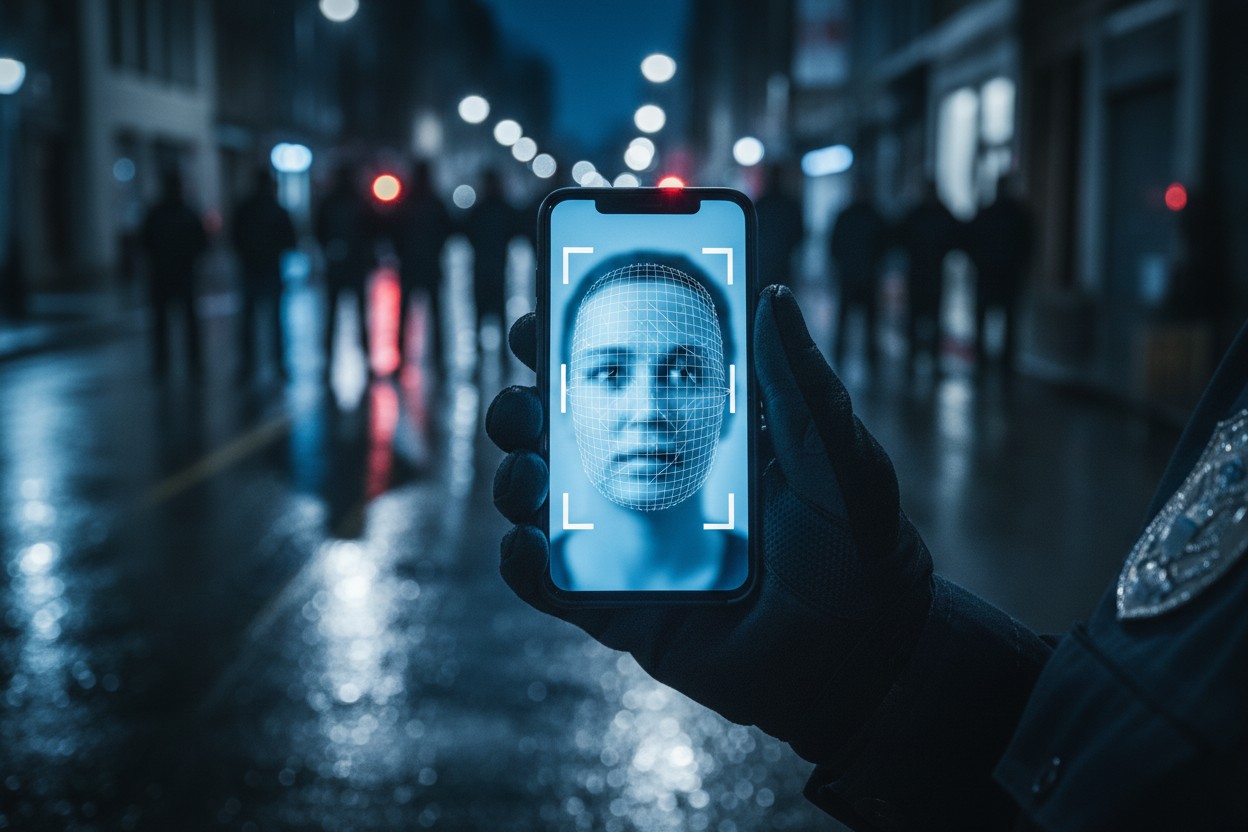
The mobile app allows law enforcement personnel to scan the faces of individuals they stop and match those scans against federal databases. According to the Privacy Threshold Analysis reported by NPR, once a scan is performed, the software returns one of two instructions: “not detain or arrest” or a code that prompts the officer to seek further direction from ICE. All captured images are retained for 15 years, the document says. DHS declined to provide additional details about the technology, but stated in a release that ICE is “committed to ensuring that the local police who partner with them have the tools needed to support ICE’s mass deportation mission.” The agency’s reliance on such databases mirrors the expansion of government surveillance previously flagged by advocacy groups. In 2021, more than 20 rights organizations launched the #EyesOnAmazon campaign to protest Amazon’s Rekognition facial identification software and its sale to law enforcement [1]. Separately, reports have noted that ICE has requested access to state driver’s license databases, raising concerns about warrantless searches of Americans [2].Legal Framework: 287(g) Program
Local officers using the ICE Task Force Module are likely participants in the 287(g) Task Force Model, a federal program that grants local police authority to arrest immigrants on behalf of ICE during routine duties. The DHS document refers to these personnel as “ICE non-federal law enforcement officers.” Approximately 1,300 police agencies participate in this model nationwide, the document says. Immigration enforcement through such partnerships has been criticized as creating a culture of suspicion. In “Build Bridges Not Walls,” author Todd Miller describes how the expansion of immigration enforcement into everyday policing blurs the line between community safety and federal deportation priorities [3]. Critics argue that the new app effectively turns local officers into roving immigration checkpoints, a development they say undermines trust between police and the communities they serve.Privacy and Accuracy Concerns
Clare Garvie, deputy director of the Technology Law and Policy Program at New York University School of Law’s Policing Project, said the DHS analysis “raises more questions than I think it answers.” She questioned whether officers may use the app in a “dragnet way” to scan faces without reasonable suspicion. Facial recognition technology has known inaccuracies, and cases of mistaken identity leading to wrongful detention have been documented. The DHS document itself acknowledges that “a photo taken by an ICE non-federal law enforcement officer using the TFM mobile application could be that of someone other than a removable individual, including U.S. citizens.” A 2019 report from Georgetown Law’s Center on Privacy & Technology found that one in two American adults is already in the FBI’s facial recognition database, and that ICE may be using immigration enforcement as a cover to collect biometric data on Americans [2]. Privacy advocates point out that the 15-year retention policy for all images creates a lasting government record of individuals, regardless of their immigration status [4].Expansion of Surveillance and Future Implications
Cooper Quintin, a senior staff technologist with the Electronic Frontier Foundation, said the app “makes this sort of face surveillance ubiquitous on American streets,” calling it “the new form of ‘papers, please.’” Patrick Eddington of the Cato Institute warned that scaling such technology could have “very large effects” on individual rights. “This kind of technology, which can impact individual rights, when it’s scaled, it can have potentially very, very large effects affecting lots and lots of people,” he said. “It’s like a Bill of Rights disaster pretty much waiting to happen.” DHS has stated that its methods are constitutional and respect civil liberties. However, the report indicates the app is already in use, prompting calls for greater transparency. Federal and corporate surveillance networks continue to expand; recent analyses have highlighted the use of AI tools by federal agencies to monitor driving patterns and social media activity [5]. As local police gain access to ICE’s biometric tools, experts say the implications for free assembly and privacy could be profound [6].References
- ChildrensHealthDefense.org. “EyesOnAmazon Campaign Fights Amazons Push for Rekognition”. June 14, 2021.
- NaturalNews.com. “Surveillance state: 1 in 2 American adults is already in the FBIs facial recognition database”. July 29, 2019.
- Todd Miller. “Build Bridges Not Walls”.
- Charles DAmico. “Veritas”.
- End of the American Dream. “The Feds Are Using Dystopian AI Surveillance Tools To Monitor Where We Drive And What We Do On Social Media”. November 20, 2025.
- Zero Hedge. “AI Surveillance Should Scare Both Democrats And Republicans”. February 22, 2026.
Explainer Infographic

Intermittency of Wind and Solar Power Raises Grid Reliability Concerns
By Edison Reed // Share

Nvidia AI Chip Sales to China Face New U.S. Export Restrictions
By Chase Codewell // Share


Iran, Oman Reportedly Plan Joint Fees for Strait of Hormuz Transit
By Garrison Vance // Share

AI Data Center Expansion Faces Grid Constraints as Power Demand Surges
By Edison Reed // Share

Lawsuit: CIA Investigated Unvaccinated Employees as Espionage Threats
By Morgan S. Verity // Share

Study: Late-Night Eating Linked to Higher Risk of Fatty Liver Disease and Cirrhosis
By cocosomers // Share

The sweet scent of health: Exploring the benefits of sweet orange essential oil
By lauraharris // Share

Cholesterol Test May Miss Inflammation-Linked Heart Risks, Study Finds
By chasecodewell // Share

JD Vance Says U.S. Has "Decisively Won" Iran War in Some Ways as Midterms Near
By garrisonvance // Share

Trump Approval Rating Falls to Record Low; Republican Candidates Adjust Midterm Campaigns
By douglasharrington // Share

Lawmakers want an AI pause but can’t say what they’d actually pause
By isabelle // Share