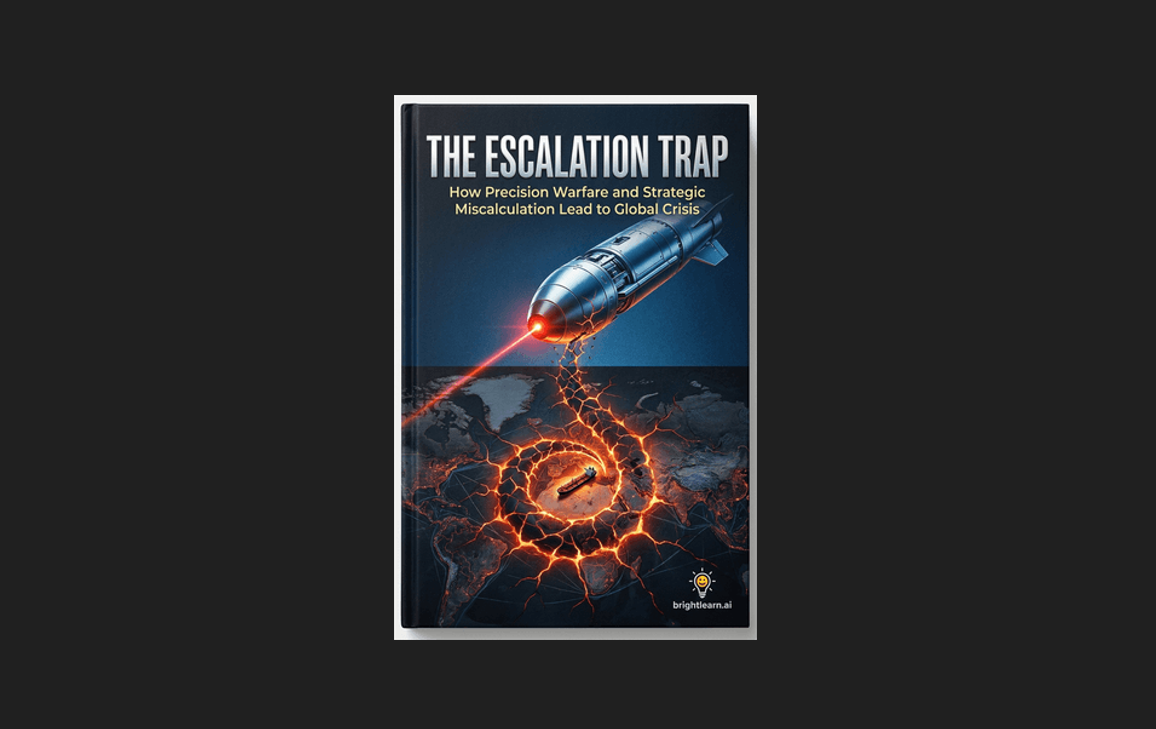
- "The Escalation Trap's" central argument is that the belief in precision-guided munitions creating clean, controllable wars is a dangerous illusion. This leads to a trap where tactical success (hitting a target) is mistaken for strategic victory, causing endless escalation to avoid admitting failure.
- Highly educated leaders overestimate technology and firepower while underestimating messy human factors like culture, history and the will to resist. This overconfidence is institutionalized in war colleges and Pentagon models, treating war as a solvable engineering problem.
- Cheap, off-the-shelf technology (e.g., drones) has empowered small states and non-state actors. A single drone can disable a billion-dollar warship and swarms can neutralize carrier battle groups, making traditional symbols of military might like aircraft carriers obsolete.
- The book connects "forever wars" to a hidden economic crisis, enriching the military-industrial complex while devastating ordinary people through debt, inflation and food/energy price spikes. A blockade of the Strait of Hormuz, for example, could trigger a global recession.
- The solution requires rebuilding resilience at the community level through decentralized energy, local food systems, honest money (gold and silver) and mutual aid networks. It also calls for an honest accounting of the post-9/11 wars through a national truth commission.
The smart person's mistake
One of the most compelling sections of the book is what Pape calls "the smart person's mistake." This is the tendency of highly educated leaders and planners to confuse the ability to hit a target with the ability to control a political outcome. They overestimate the power of precision weapons and dramatically underestimate the messy, unpredictable human factors on the ground—culture, history, honor, religion, tribal loyalty and the simple human will to resist. Pape shows how this overconfidence has become institutionalized. It is taught in war colleges, reinforced in think tanks and baked into the models and simulations that Pentagon planners use. These models prioritize technology and firepower while treating war as a solvable engineering problem. What they leave out cannot be easily measured: the lived experience of millions of people, the complexity of human motivation, the unpredictable dynamics of resistance and retaliation. Because these factors do not show up on a spreadsheet, they are treated as if they do not exist. This is, Pape argues, a profound intellectual failure. And it is a failure that has cost trillions of dollars and hundreds of thousands of lives.The new reality: Decentralized destruction
But "The Escalation Trap" is not just a critique of the past. It is a roadmap to the future—and a terrifying one at that. Pape devotes significant attention to what he calls "the democratization of destruction": the way cheap, off-the-shelf technology has placed unprecedented power in the hands of small states and non-state actors. Consider this: a single drone, costing a few thousand dollars, can disable a billion-dollar warship. A swarm of such drones can neutralize an entire carrier battle group. The Houthi rebels in Yemen, a group with no air force and no navy, managed to shut down a significant portion of the world's oil supply using technology assembled from commercial parts. Iran has built a drone program that gives it a "strategic veto" over the Strait of Hormuz, through which 20% of the world's oil passes. The implications are staggering. The era of the unchallenged aircraft carrier, the symbol of American military might for decades, is ending. Not because of a peer competitor with a matching fleet, but because of swarms of inexpensive, commercially available flying machines. The math is brutal: a single Patriot interceptor costs over a million dollars; a single Houthi drone costs a few thousand. The attacker wins the cost-exchange ratio before the first shot is even fired. Pape also connects the dots between military strategy and economic reality in ways that most analysts miss. He shows how the "forever wars" have created a hidden economic crisis that is devastating ordinary people while enriching the military-industrial complex. The costs of these conflicts are externalized—pushed onto future generations through debt, onto the poor through inflation and onto the most vulnerable nations through food and energy price spikes. The analysis of the Strait of Hormuz blockade is particularly chilling. Pape walks through the phases of economic collapse that would follow a disruption of this critical chokepoint: price surges within days, industrial production slumping within weeks, inventory depletion within months and finally a global recession that would make 2008 look like a minor correction. He identifies August 1st as a potential date of reckoning when strategic petroleum reserves would be exhausted. This is not alarmism; it is sober analysis based on publicly available data. The world's oil inventories are scraping near five-year lows, the result of deliberate underinvestment in new production and geopolitical disruptions. A conflict with Iran would be the match that ignites the powder keg.The path forward
Remarkably, Pape does not leave us in despair. The final chapters offer a path out of the trap—though it is a path that requires courage, honesty and a willingness to challenge deeply entrenched interests. The solution, he argues, is localization. We must rebuild resilience at the community level: decentralized energy production, local food systems, honest money (gold and silver) and mutual aid networks that can function when global supply chains break down. This is not a utopian fantasy; it is a practical survival strategy for a world in which the old system is crumbling. Pape also calls for an honest accounting of the forever wars. He envisions a national truth commission that would document every life lost, every dollar spent, every environmental scar left by the post-9/11 conflicts. Independent estimates put the death toll at over four million and the financial cost at more than eight trillion dollars. These are not abstract numbers; they represent real human suffering that must be acknowledged before we can move forward. "The Escalation Trap" is essential reading for anyone who wants to understand the catastrophic failures of modern warfare and the path to a more peaceful, resilient future. It is a book that should be read by policymakers, military officers, journalists and ordinary citizens who are tired of being fed lies about "clean" wars and "limited" interventions. Robert Pape has done us an invaluable service. He has named the trap, described its mechanisms and shown us how to escape. Now the question is whether we have the wisdom to listen. Grab a copy of "The Escalation Trap: How Precision Warfare and Strategic Miscalculation Lead to Global Crisis" via this link. Read, share and download thousands of books for free at Books.BrightLearn.AI. You can also create your own books for free at BrightLearn.AI. Watch as Health Ranger Mike Adams interviews Professor Robert Pape on "The Escalation Trap," the Iran war and the global energy crisis. This video is from the Health Ranger Report channel on Brighteon.com.Sources include:
Books.BrightLearn.ai BrightLearn.ai Brighteon.com

U.S.-Israel Bipartisan Consensus Erodes Amid Legal Challenges and Policy Shifts
By Edison Reed // Share

ICJ climate ruling could force nations into WHO pandemic accords, expert warns
By Cassie B. // Share

Hegseth: Failure to Approve $1.5 Trillion Pentagon Budget Is “Greatest Threat” to U.S. Security
By Garrison Vance // Share
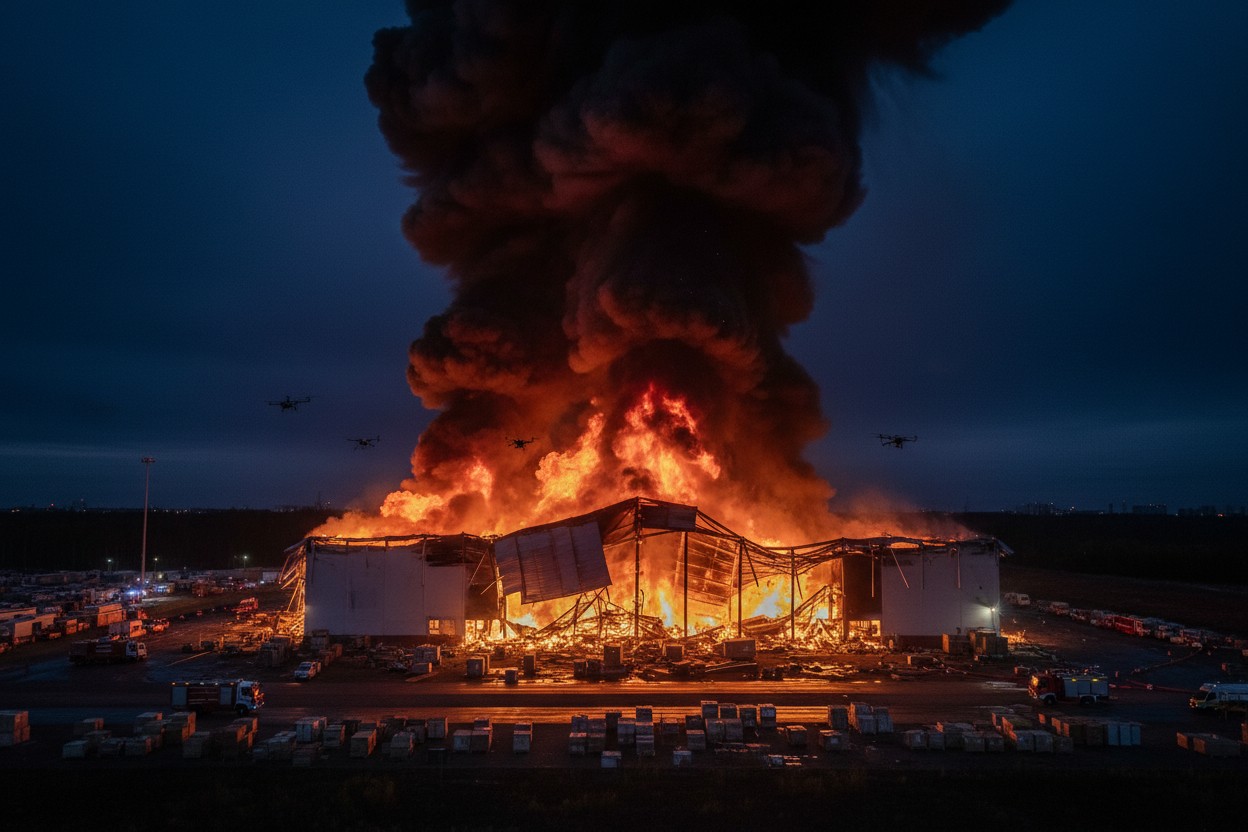
Three Injured in Ukrainian Drone Strike on Wildberries Warehouses Near St. Petersburg
By Garrison Vance // Share
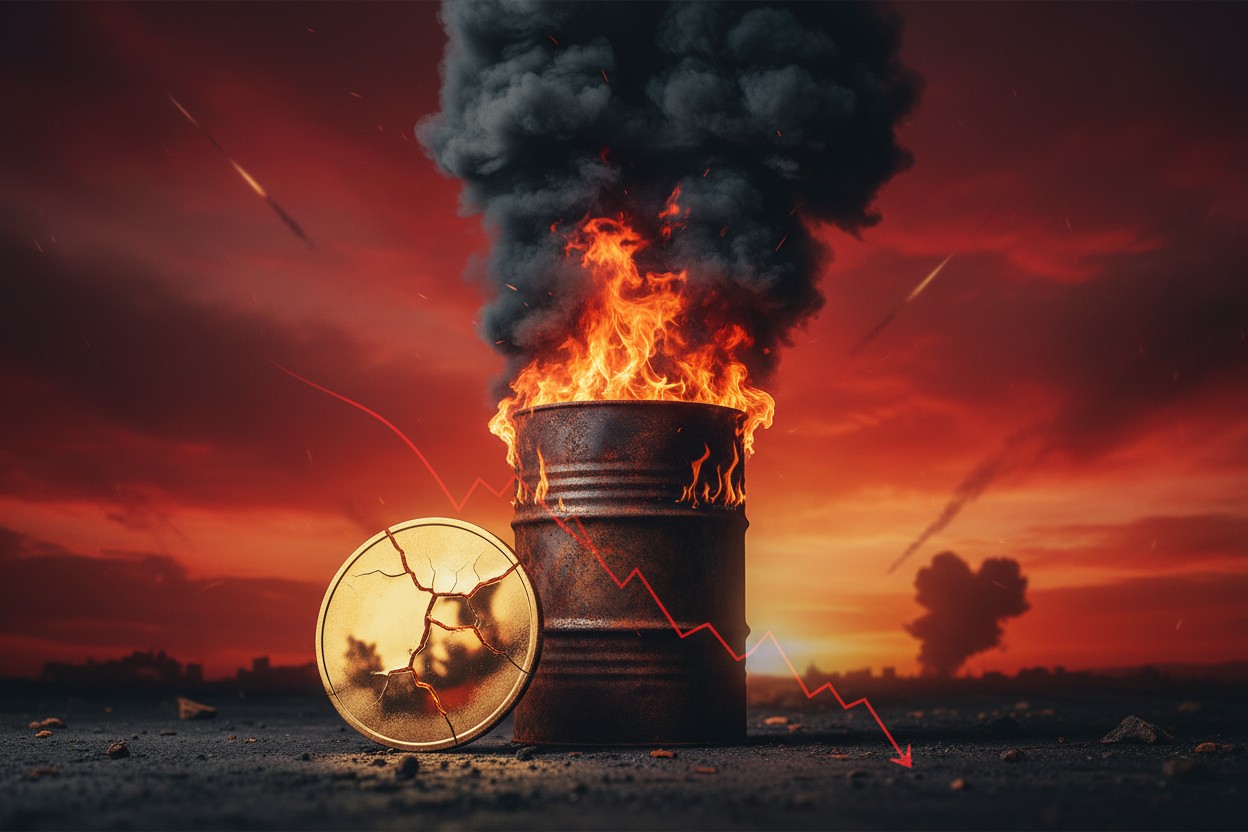
Bitcoin Dips Below $65,000 as Iran Conflict Spurs Oil Price Surge, Bond Yields Rise
By Sterling Ashworth // Share

Labor Department Suspends Eight Companies From Green Card Program
By edisonreed // Share

Reuters/Ipsos Poll: Trump Voters Show Lower Enthusiasm for Midterm Elections
By garrisonvance // Share

Trump Pledge on Iran Strikes Fails to Soothe Oil Markets
By sterlingashworth // Share

AI Chip Stocks Fall After Report on OpenAI Revenue Shortfall
By sterlingashworth // Share
EPA Proposes Rollback of Methane Rules for Oil and Gas Industry
By ivagreene // Share

Review Links Insomnia to 26% Higher Relative Risk of Stroke
By morganverity // Share