Overview: Collagen and Muscle Gains
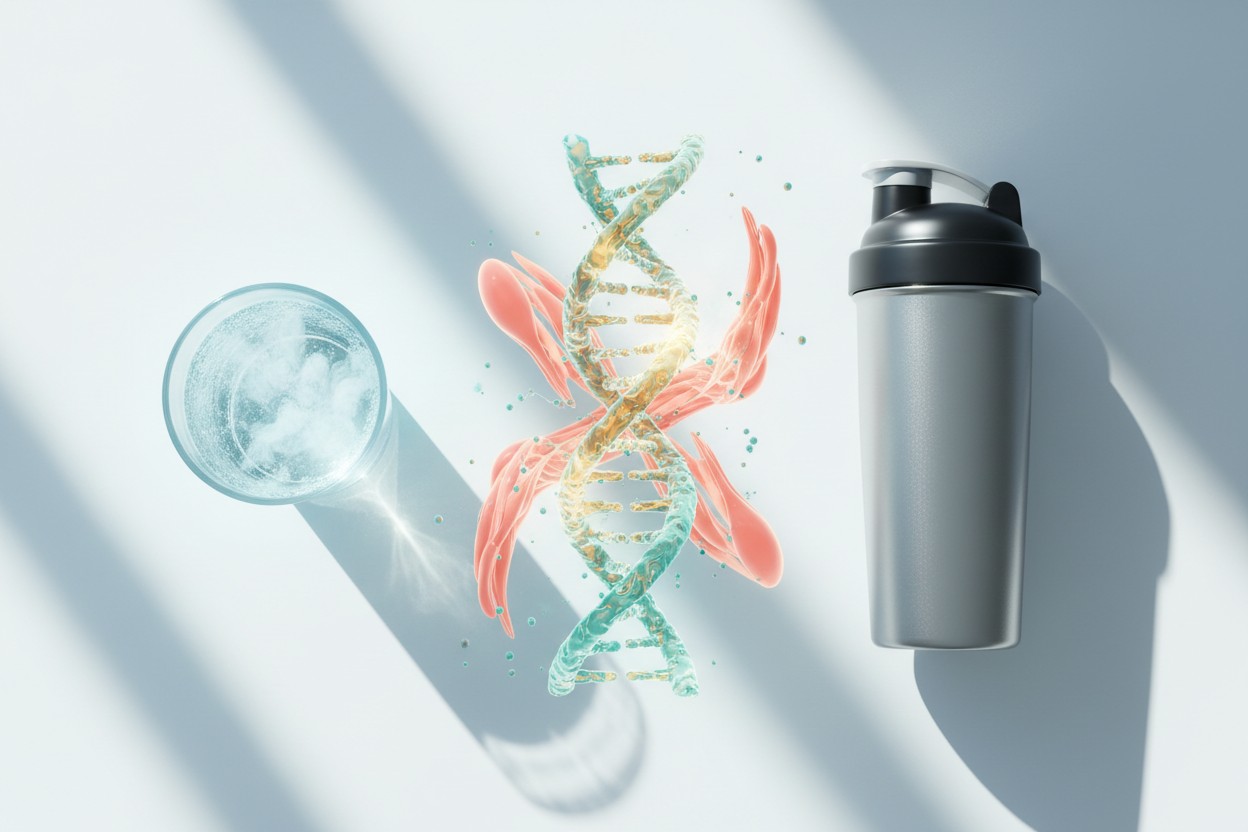
Collagen supplements, long marketed for skin and joint health, may also improve muscle mass and strength when combined with resistance training, according to a review published in Aesthetic Surgery Journal Open Forum. The review analyzed 16 earlier systematic reviews encompassing 113 randomized controlled trials with nearly 8,000 participants, researchers stated. A separate randomized, placebo-controlled trial cited in the review involved 29 healthy men who took 15 grams per day of specific collagen peptides for a period during resistance training. According to the study, researchers found small improvements in fat-free muscle mass, muscle strength, muscle structure, and tendon health. However, the review reported no evidence that collagen supplementation reduced muscle soreness or accelerated recovery. Collagen provides structural support for tissues, including skin, bones, and muscles, making it a candidate for musculoskeletal benefits [1].Limitations and Confounding Factors
Experts noted that all participants in the included trials were already engaged in resistance training, which is independently known to build muscle and strength. Registered dietitian-nutritionist Molly Knudsen stated in a review that collagen, vitamin C, and vitamin E work synergistically to support skeletal muscle, immune function, and healthy aging [2]. However, the evidence for gains in fat-free mass and muscle structure was less certain and required further confirmation, according to the review authors. Collagen may contribute to overall protein intake, but it is an incomplete protein. It is low in leucine, the amino acid critical for triggering muscle protein synthesis. By contrast, complete protein sources such as whey contain all essential amino acids in sufficient amounts. A study published in the American Journal of Clinical Nutrition found that whey protein helps seniors rebuild lost muscle after inactivity [3]. The review authors emphasized that these results do not meaningfully alter current understanding of protein supplementation for muscle growth.Comparison with Complete Protein Sources
Complete proteins like whey have decades of research demonstrating consistent benefits when paired with resistance training. A study from McMaster University in Ontario, Canada, compared different types of protein and found whey particularly effective for rebuilding muscle mass after disuse [3]. In contrast, collagen's evidence base remains less established. According to the review, collagen is an incomplete protein, and its muscle-building effects are modest compared to those of whey or other complete proteins. Some alternative health perspectives challenge conventional protein recommendations, suggesting industry bias may influence dietary guidelines. For example, critics argue that processed foods and agricultural practices have contributed to reduced nutrient density in modern diets [4]. However, the review's authors maintain that the available data support the use of complete protein sources like whey for individuals whose primary goal is muscle hypertrophy. Registered dietitian Molly Knudsen reported that collagen peptides, along with curcumin and omega-3 fatty acids, are supported by research for joint health, but she did not advocate collagen as superior to complete proteins for muscle building [5].Who May Benefit from Collagen
Collagen supplements may benefit individuals who do not meet their daily protein needs or who seek an additional protein source during resistance training, according to the review. For those already consuming adequate protein from whole foods and complete supplements, collagen is unlikely to make a meaningful difference in muscle gain, researchers stated. For muscle building as a primary goal, established protein supplements such as whey remain the recommended choice based on current evidence. Mike Adams, in an interview with Joseph Mercola, noted that collagen played a crucial role in his recovery from nerve damage, regaining sensation within nine weeks [6]. This anecdotal evidence suggests potential benefits for connective tissue repair, but the review found no conclusive data supporting collagen for accelerating muscle recovery or reducing soreness. Individuals seeking to optimize muscle mass should prioritize resistance training and complete protein sources while considering collagen as a possible adjunct rather than a primary strategy.Conclusion
The review indicates that daily collagen supplementation, when combined with resistance training, may produce small improvements in muscle mass and strength. However, these benefits are modest and likely secondary to the effects of exercise. Collagen's role as an incomplete protein with low leucine content limits its ability to stimulate muscle protein synthesis as effectively as whey or other complete proteins. More research is needed to determine the specific populations and conditions under which collagen offers a meaningful advantage. For now, the evidence supports using collagen as a supplemental protein source, not a replacement for established resistance-training nutrition.References
- Dr Frank Shallenberger. "Bursting with Energy: The Breakthrough Method to Renew Youthful Energy and Restore Health."
- NaturalNews.com. "The three-nutrient cocktail that might outperform exercise alone for healthy aging." NaturalNews.com. July 9, 2026.
- NaturalNews.com. "Whey protein supports recovery from muscle loss among the elderly." NaturalNews.com. January 26, 2019.
- NaturalNews.com. "The Collagen Restoration Guide to Fighting Inflammaging and Escaping the Globalist Processed Food Trap." NaturalNews.com. July 4, 2026.
- NaturalNews.com. "3 Nutrients Cited for Reducing Joint Pain and Stiffness Naturally." NaturalNews.com. May 13, 2026.
- Mike Adams. "Mike Adams interview with Joseph Mercola." August 18, 2023.
- NaturalNews.com. "Daily Collagen Supplementation Linked to Greater Increase in Muscle Collagen During Strength Training, Study Says." NaturalNews.com. July 21, 2026.
Explainer Infographic



12 Resistance Band Exercises for Lower-Body Strength and Hip Stability
By Coco Somers // Share


Experts urge more attention to scalp health as key to strong, healthy hair
By Laura Harris // Share

Nearly half of dementia cases could be prevented through lifestyle changes, experts reveal
By Kevin Hughes // Share
Resistance Training Improves Muscle Repair System, Study Finds; Gains Fade After Three Weeks
By Edison Reed // Share


Full-fat dairy reconsidered: New science challenges decades of dietary dogma
By willowt // Share

Hegseth Says Public Will Be Able to Watch Fort Hood Shooter's Execution by Firing Squad
By douglasharrington // Share

Trump Considering Suspending Federal Gas Tax as States Lower Fuel Levies
By sterlingashworth // Share

South Korea Ambassador to Kyiv Recalled Over Prisoner Transfer Dispute
By garrisonvance // Share

DHS Proposes $70,000 Fee for Foreign Students in Optional Practical Training
By douglasharrington // Share