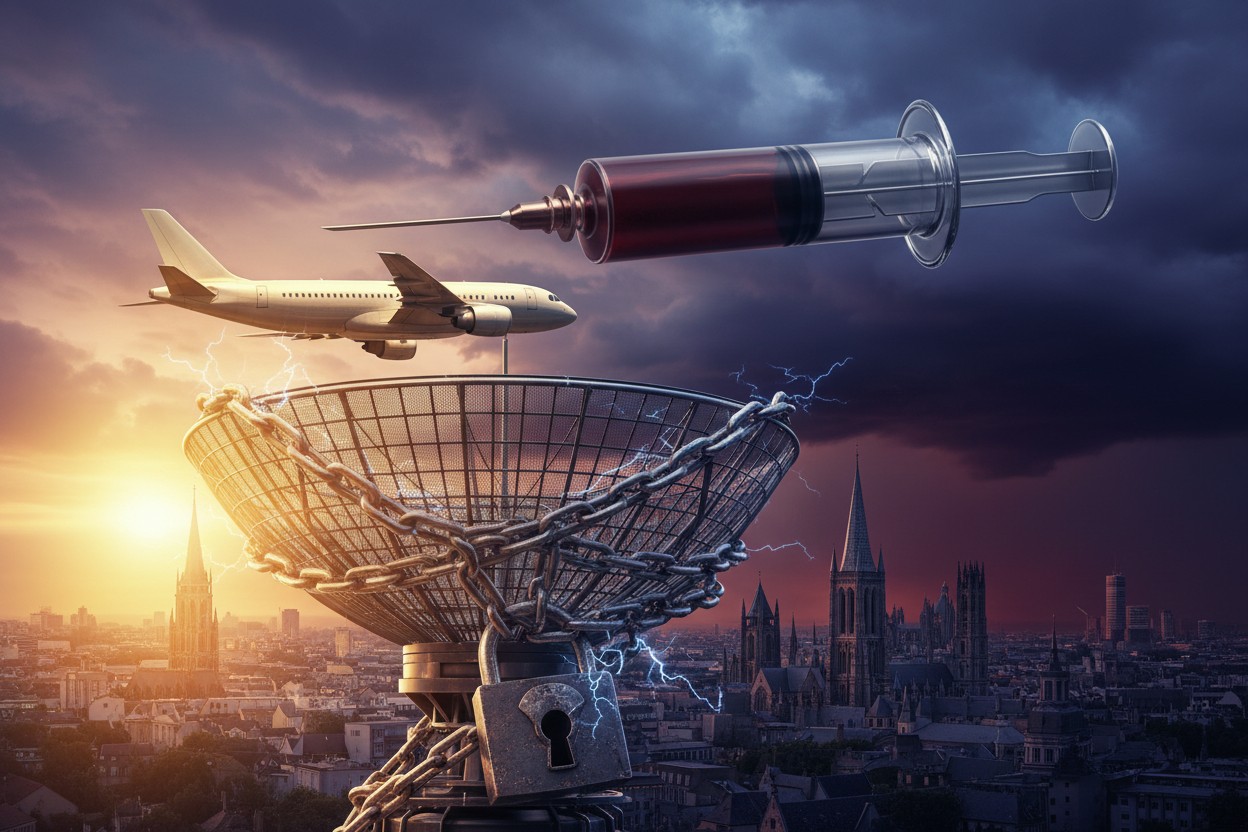
Contract Origins and Refused Deliveries
The contract was signed between the European Commission and Pfizer in 2021, and it obligated participating member states to purchase additional doses. By 2022, Poland and Romania refused scheduled deliveries as demand declined. Poland cited financial pressure from hosting refugees fleeing Ukraine. Romanian political scientist Dragos Moldoveanu said Romania ordered 120 million doses despite a population below 20 million and had one of the European Union's lowest vaccination rates. Pfizer filed suit in 2023 after the countries did not pay for doses they declined to accept. Earlier contract terms had already drawn criticism. The Bureau of Investigative Journalism reported in February 2021 that Pfizer was demanding countries put up sovereign assets as collateral for expected vaccine injury lawsuits [2].Legal Enforcement and Appeals
Because the contract is governed by Belgian law, the case is being heard in Brussels. Polish public broadcaster TVP World reported that Poland asked the Belgian court to delay enforcement while it appeals, but the request was rejected. Dutch attorney Meike Terhorst called the action "outrageous and unethical" and said it could endanger flights. Lukasz Wojdyga of the Warsaw Enterprise Institute said the creditor has a legal right to enforce the judgment but called targeting air-safety funding "disproportionate and irresponsible." Both governments have said they will protect the financial stability of the agencies and keep services running.Transparency and Contract Scrutiny
The dispute has revived scrutiny of the EU vaccine procurement. Brussels Signal reported the EU-Pfizer contract was worth 35 billion euros ($40 billion), one of the largest contract awards in EU history. Governments and Pfizer have declined to release contract terms, saying the information is commercially confidential [3]. The European Court of Justice ruled in 2024 that the European Commission violated EU law when it denied The New York Times' request to review text messages between Commission President Ursula von der Leyen and Pfizer CEO Albert Bourla [4]. In 2025, a court ordered the disclosure of concealed texts related to the deal [5]. European Parliament member Gheorghe Piperea said the contract "ought never to have existed" because the EU exceeded its treaty powers. Transparency activist Frederic Baldan said von der Leyen negotiated directly with Bourla through self-destructing Signal messages, and that a Belgian Federal Police anti-corruption report found sufficient elements to establish offenses. Baldan said the European Public Prosecutor's Office moved to have the investigation annulled. The scale of the purchases also drew criticism from public health writers. Michel Chossudovsky questioned how a vaccine that normally takes years to develop was launched within months [6]. Joseph Mercola and Ronnie Cummins noted that the trials' only criterion of success was a reduction of moderate to severe symptoms, not prevention of infection [7].Impact on Air Traffic Agencies and Next Steps
TVP World reported that the frozen funds account for more than 80% of the revenue of Poland's air navigation agency, PANSA. Brussels Signal reported the agency could lose financial liquidity and the ability to maintain radar and communication systems. Romania Insider reported the frozen amount equals 0.2% of Romania's GDP, adding strain while the government tries to reduce its fiscal deficit. Piperea said the ruling arrived during a recession and a budgetary deficit and that Pfizer "leaves the public in danger" by depleting the funds of Romania's air traffic agency, ROMATSA. Wojdyga said he would not equate the freeze with an immediate safety threat because both agencies are operating. The Warsaw Enterprise Institute wrote that the case shows how a poorly designed public contract can create problems beyond the original agreement. Both countries have said they will continue appeals, and air navigation officials have said services remain operational. The episode illustrates the broad consequences of what critics describe as a secretive procurement process [3].References
- Children's Health Defense. "Pfizer Freezes Air Traffic Control Funds Over COVID Vaccine Contract Dispute With Poland, Romania". childrenshealthdefense.org. July 31, 2026.
- Mercola.com. "Pfizer's Plan for COVID 19 to Remain Untreata". Mercola.com. November 1, 2021.
- Children's Health Defense. "What Are They Hiding? Government COVID Vaccine Contracts Shrouded in Secrecy". childrenshealthdefense.org.
- NaturalNews.com. "European Court of Justice rules against Pfizer and the European Commissions secretive liability free contracts". NaturalNews.com. July 24, 2024.
- Lance D Johnson. "EU Court Exposes Secret Pfizer Deal, Orders von der Leyen and Bourla to Reveal Concealed Texts". NaturalNews.com. May 15, 2025.
- Michel Chossudovsky. "The 2020 21 Worldwide Corona Crisis Destroying Civil Society Engineered Economic Depression".
- Joseph Mercola and Ronnie Cummins. "The Truth About COVID 19".
Explainer Infographic


Federal Judge Rules Cell Tower Dumps Unconstitutional, Citing Fourth Amendment
By Douglas Harrington // Share

Top U.S. General Urges White House to End Conflict With Iran, Reports Say
By Edison Reed // Share

No One Is Coming to Save You: Why I Play this Self-Reliance Game
By Mike Adams // Share

The Long Winter: The truth behind vaccine injury and the journey to healing
By Ramon Tomey // Share

X Post Lists Responses to Pro-Israel Arguments, Drawing Thousands of Interactions
By Garrison Vance // Share

Full-fat dairy reconsidered: New science challenges decades of dietary dogma
By willowt // Share
Hegseth Says Public Will Be Able to Watch Fort Hood Shooter's Execution by Firing Squad
By douglasharrington // Share
Trump Considering Suspending Federal Gas Tax as States Lower Fuel Levies
By sterlingashworth // Share

South Korea Ambassador to Kyiv Recalled Over Prisoner Transfer Dispute
By garrisonvance // Share

DHS Proposes $70,000 Fee for Foreign Students in Optional Practical Training
By douglasharrington // Share