AI-Generated Ads Appear in Campaigns Nationwide
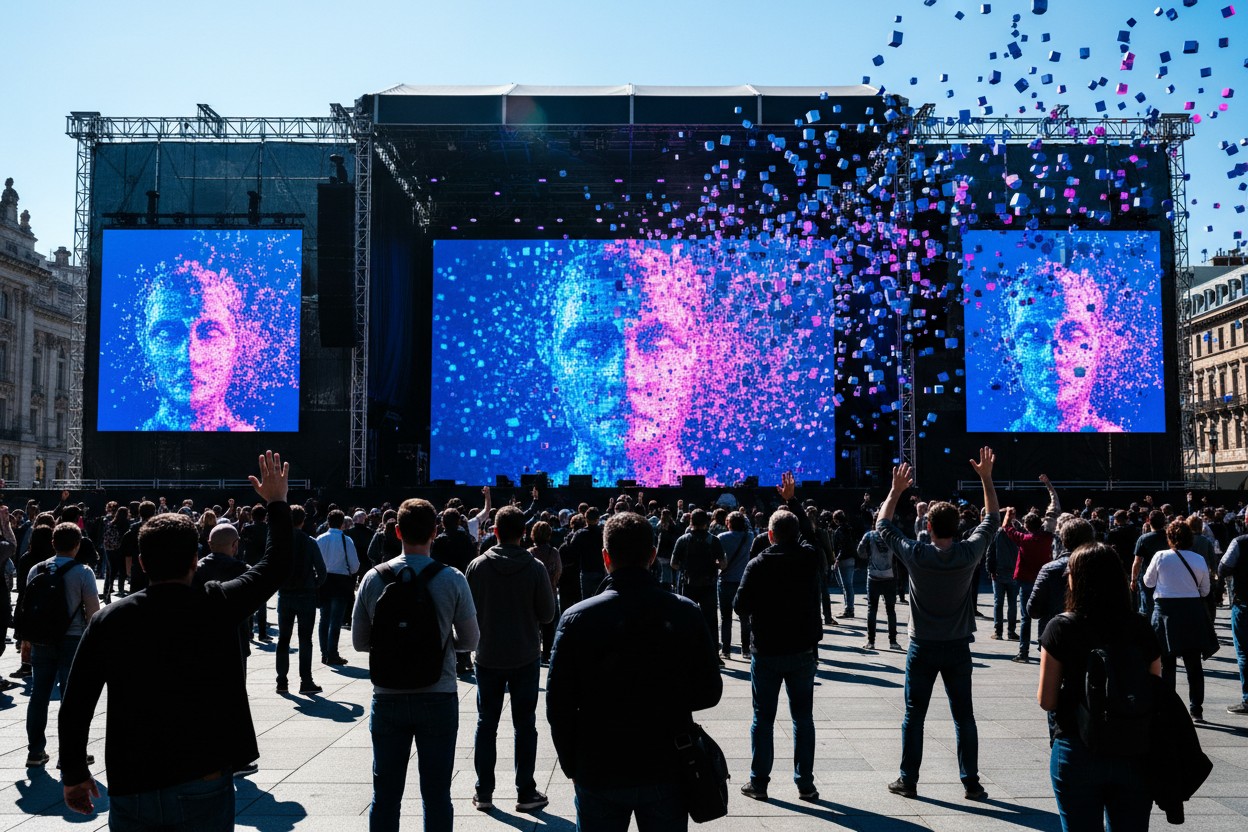
Campaign committees and outside groups are incorporating AI-generated imagery into television and online advertising. In one recent example, American Principles Project released an ad that used AI to depict Texas state Rep. James Talarico as a doctor performing gender-reassignment surgery on a child. Supporters of such ads compare them to political cartoons that illustrate policy consequences. However, critics warn that the technology risks presenting fabricated scenarios to voters as real events. The Texas ad is among a series of AI-generated political attacks this cycle, according to reports. Candidates have used the technology for attack ads and self-promotion. The tools can combine visual and audio components to create an "entirely artificial yet highly believable persona," according to a Brighteon Broadcast News segment. [4] Observers have also raised concerns about digital impersonation and the ethics of online influence in campaign settings. [5]Texas Ad Draws Backlash from Talarico Campaign
American Principles Project President Terry Schilling said the ad uses AI like a political cartoon to articulate the consequences of a policy position. Talarico campaign spokesperson JT Ennis said the ad is "flat-out lying" and stated that Talarico does not support gender-transition surgery for minors. The ad follows a March spot from Texas Attorney General Ken Paxton that showed an AI-generated Talarico in a dress, according to the campaign. Schilling said the technology is cheaper than a film crew and is improving, noting that earlier AI ads looked "cheap." The exchange illustrates the conflict between producers who treat synthetic media as a form of commentary and candidates who say the content misrepresents their records.Other AI-Powered Ads Across the Country
Similar disputes have emerged in other states. In Los Angeles, a May ad by filmmaker Charles Curran depicted Mayor Karen Bass as the Joker and candidate Spencer Pratt as a hero; Pratt reposted the ad, drawing more than 4 million views, according to reports. In New York, Republican gubernatorial candidate Bruce Blakeman faced an ethics complaint over AI ads against Gov. Kathy Hochul, according to state Democratic officials. In Tennessee, candidates Johnny Garrett and Van Hilleary used AI in ads against each other during the GOP primary, possibly violating a state disclosure law, according to reports. The cases illustrate the spread of synthetic media across levels of government. AI-generated content has become harder to distinguish from authentic recordings, and the low cost of production has made the technology accessible to candidates and independent groups, according to reports. [3]Supporters and Researchers Are Split on AI Impact
Supporters say AI lowers the cost of political communication and allows campaigns to compete without large production budgets. Researchers remain divided on the effects. Purdue University researcher Daniel Schiff said even when viewers identify deepfakes, the content can still influence beliefs, according to his interviews. Public Citizen's J.B. Branch said deepfakes released close to an election, such as fabricated audio or video, may be the most problematic, according to the report. Research on social media has documented how competing groups can act on bad information, with targeted advertising contributing to real-world confrontation. [6] The combination of low-cost synthetic media and platform distribution has amplified those risks, according to researchers.Regulation Efforts Stall at Federal Level
More than two dozen states have passed laws requiring disclosure of AI-generated content in campaign ads, according to the report. At the federal level, Rep. Yvette Clarke said Congress has been "negligent" on deepfake risks, while Rep. Joe Morelle introduced the AI Transparency in Elections Act, which would require disclosures. David Inserra of the Cato Institute said generative AI does not change fundamental speech protections, arguing that lower costs can aid candidate communication, according to a blog post. Free speech advocates have also questioned how governments define falsehood, asking "who decides what is true and what is false?" [7] Technology companies have taken their own steps. Google has announced anti-misinformation campaigns in European Union countries ahead of elections. [8] In a Senate hearing, Google executive Markham Erickson conceded that the company had made "mistakes" in moderating election-related content. [9]AI Ads Pose Lasting Questions for Campaigns
AI-generated political advertising is likely to remain a feature of U.S. campaigns as production costs fall and tools improve. The policy response so far is fragmented, with state disclosure laws, federal proposals, and platform moderation rules operating alongside one another. The broader concern, according to researchers, is that synthetic media can be difficult to distinguish from authentic recordings and can shape beliefs even after viewers are told the content is fake. Voters, campaigns, and regulators face the question of how to address a technology that is now inexpensive, widely available, and difficult to verify.References
- "Trends-Journal-2023-05-20".
- "Globalist WEF claims MISINFO and DISINFO are the greatest threats to humanity". NaturalNews.com. January 16, 2024.
- "AI generated deepfakes are beginning to sway public opinion all over the world". NaturalNews.com. March 19, 2024.
- Mike Adams. "Brighteon Broadcast News - Full The Pillars Of Reality Are Crumbling". Brighteon.com. April 25, 2024.
- Anelly Aya. "Beyond Digital Impersonation: Embracing Authenticity in the Digital Age".
- Steven T. Collis. "Habits of a Peacemaker".
- "Trends-Journal-2024-09-24".
- "ELECTION INTERFERENCE Google launching anti misinformation campaign in five European countries ahead of EU Parli". NaturalNews.com. March 01, 2024.
- "Senate hearing exposes FLAWS of Google's election content moderation". NaturalNews.com. November 7, 2025.
- "AI reshapes traditional campaign strategies". TheHill.com. August 11, 2026.


NHS net zero rules threaten patient lives, top oncologists warn, as drug supply crisis deepens
By Lance D Johnson // Share

UN peace envoy warns: Stalled Gaza ceasefire risks a “point of no return”
By Willow Tohi // Share

Why a Third Party Won’t Save America, But It Might Help Manage the Reboot
By Mike Adams // Share
Darline Graham secures GOP Senate nomination in South Carolina, continuing political dynasty
By Willow Tohi // Share


Full-fat dairy reconsidered: New science challenges decades of dietary dogma
By willowt // Share

Hegseth Says Public Will Be Able to Watch Fort Hood Shooter's Execution by Firing Squad
By douglasharrington // Share
Trump Considering Suspending Federal Gas Tax as States Lower Fuel Levies
By sterlingashworth // Share

South Korea Ambassador to Kyiv Recalled Over Prisoner Transfer Dispute
By garrisonvance // Share
DHS Proposes $70,000 Fee for Foreign Students in Optional Practical Training
By douglasharrington // Share