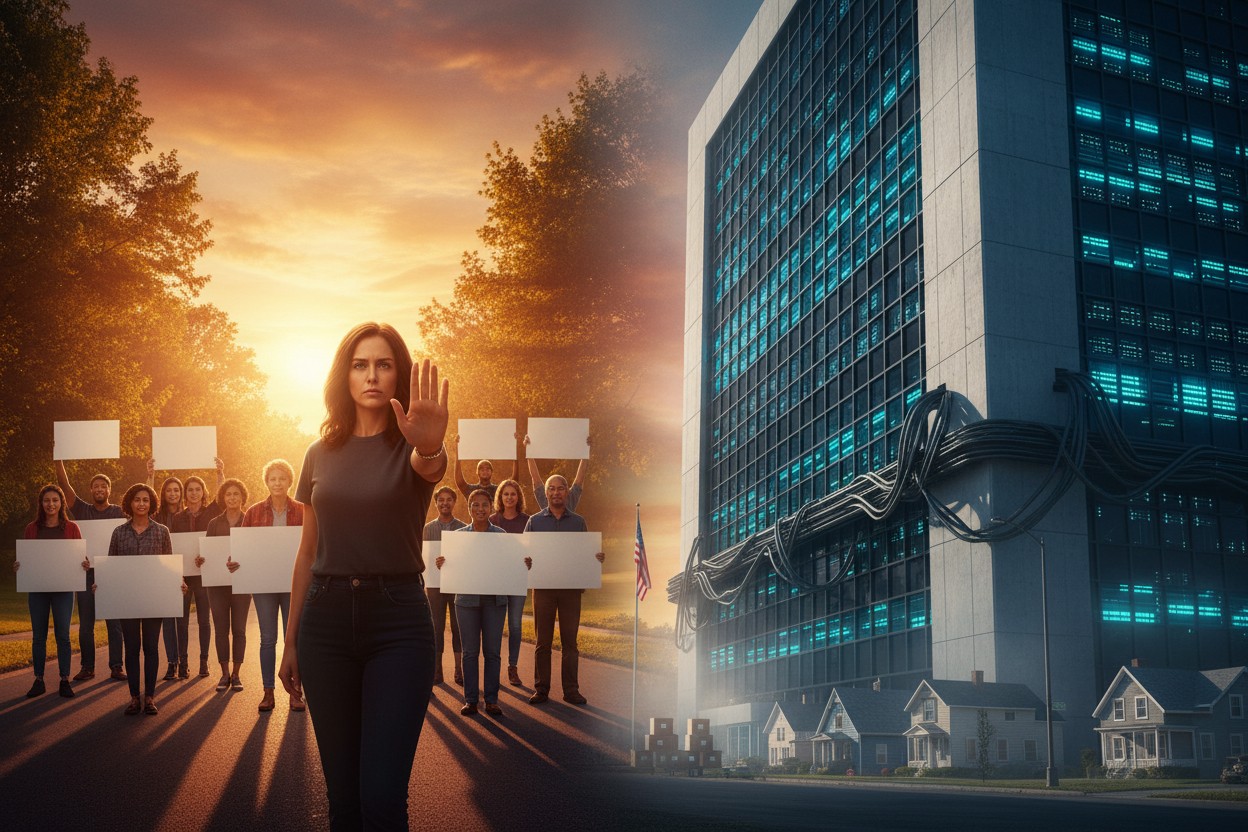
- Data center projects face unprecedented local opposition across the U.S., with 75 projects worth $130 billion delayed or blocked in Q1 2026 alone.
- Concerns over rising electricity rates, massive water consumption and tax breaks drive bipartisan backlash that is reshaping political races.
- Tech firms like Oracle, Microsoft and OpenAI now deploy “charm offensives”—sponsorships, community concessions and PR campaigns—to overcome resistance.
- Experts argue data centers offer few lasting jobs, localize costs and strain climate goals, often with the burden shifted to residential ratepayers.
- Policy fixes include separating rate classes for hyperscalers, sunsetting secrecy agreements and clawback provisions to protect communities.
The new political battleground is a server farm
In Southwest Memphis, a historically Black neighborhood now lives in the shadow of one of the largest computers ever built, a supercomputing campus that has ignited a firestorm of local opposition. Howard Franklin, writing for WattsUpWithThat, details this scene, once unthinkable when data centers were favorably seen as quiet economic growth. Now, the sheer quantity and size of these developments have gotten the attention of citizens across the nation, and they are resisting, making this a major issue in current American politics. The explosive growth of artificial intelligence has transformed these facilities from invisible infrastructure into a combustible national issue. Rural communities, farmers and suburban residents are uniting across party lines against the behemoths, forcing tech giants into an unprecedented 'charm offensive'. This is the story of how the AI boom has created what Franklin describes as a political "third rail"—one that could redefine the midterm elections and the future of rural America.A bipartisan firestorm over rates and resources
The opposition is not a fringe movement. Data from the research group Data Center Watch indicates that at least 75 projects, worth approximately $130 billion, were blocked or delayed by local opposition in the first quarter of 2026 alone. In Michigan, upwards of 50 communities have passed or proposed moratoriums, with a bipartisan group of lawmakers moving to repeal tax breaks for the facilities. The fury centers on tangible, quality-of-life issues: rising utility bills, strained water supplies and the perceived arrogance of Silicon Valley. Voters are alarmed, often with good reason. Experts like Ben Green of the University of Michigan confirm that public concerns are legitimate, noting that data center demand could consume 10 to 15 percent of the nation’s electricity within a few years. In Texas, where much of our food is grown, estimates suggest data centers could use 400 billion gallons of water annually by 2030, a devastating prospect for drought-prone farming communities competing for a finite resource.Tax concessions and false promises
At the heart of the conflict is a fundamental economic mismatch. Developers tout job creation and tax revenue, yet studies show a hyperscale facility, once operational, requires only 20 to 50 permanent staff—it is a warehouse of servers, not an engine of employment. Meanwhile, states like Virginia and Georgia have surrendered over a billion dollars in revenue through tax breaks. This money, diverted from schools and infrastructure, is handed back to multinational corporations while residential ratepayers often absorb the cost of grid upgrades. A Massachusetts council member captured the sentiment: “We don't want to be in a situation where utility bills are going up because we are subsidizing the wealthiest corporations.” If these tech companies are not planning to share their profits, why should we share their expenses?The corporate charm offensive and a path forward
Facing electoral blowback, tech firms have shifted strategy. Oracle has sponsored local food pantries and dinosaur parks in New Mexico; Meta runs feel-good commercials; Microsoft has pledged to stop seeking tax breaks. However, these efforts often fail to overcome the distrust. To reverse this trend, policy experts suggest four mechanisms: placing data centers in a dedicated rate class with take-or-pay provisions to ensure they pay for capacity they reserve; pricing the exit with automatic clawback clauses if projections fail; trading speed for standards, such as water recycling, rather than subsidies; and sunsetting the stringent non-disclosure agreements that keep communities in the dark until after approval votes.The ballot box beckons
Industry insiders agree: data centers are the backbone of the next economy, and even though it would be smarter to put them in the North, the South is poised to host them as the current economic engine of the U.S. Politicians who try to make secret deals or play both sides rather than taking a stand and committing to these direct protections for their constituents will learn a hard lesson. As the Georgia Public Service Commission already learned: voters will notice who stands up, and who gets stuck paying for the power. As Franklin explains, the third rail is not the data center itself, but the 'leader who reached for the easy win and forgot whose backyard it landed in.' The battle is shifting from the zoning board to the ballot box, where the future of AI’s physical footprint will be decided by those who live in its shadow. Sources for this article include: WattsUpWithThat.com Bloomberg.com Harvard.edu
Iraqi Prime Minister Rejects U.S. Proposal to Extend Coalition Troop Presence Beyond September 30
By Douglas Harrington // Share

Ukraine’s claimed 2026 southern front gains draw skepticism from military analysts
By Cassie B. // Share

FTC Weighs Possible Lawsuit Over YouTube’s Account Enforcement Practices
By Chase Codewell // Share

Meta Settlement Drives Global Push for Age Verification and Digital ID Measures
By Morgan S. Verity // Share

AI Data Centers Are Training Your Replacements… (And They Aren’t Going To Be Human)
By Mike Adams // Share

Trump Declares National Emergency Over Foreign Bulk-Power Equipment Risks
By Belle Carter // Share

Labor Department Suspends Eight Companies From Green Card Program
By edisonreed // Share

Reuters/Ipsos Poll: Trump Voters Show Lower Enthusiasm for Midterm Elections
By garrisonvance // Share

Trump Pledge on Iran Strikes Fails to Soothe Oil Markets
By sterlingashworth // Share

AI Chip Stocks Fall After Report on OpenAI Revenue Shortfall
By sterlingashworth // Share

EPA Proposes Rollback of Methane Rules for Oil and Gas Industry
By ivagreene // Share

Review Links Insomnia to 26% Higher Relative Risk of Stroke
By morganverity // Share