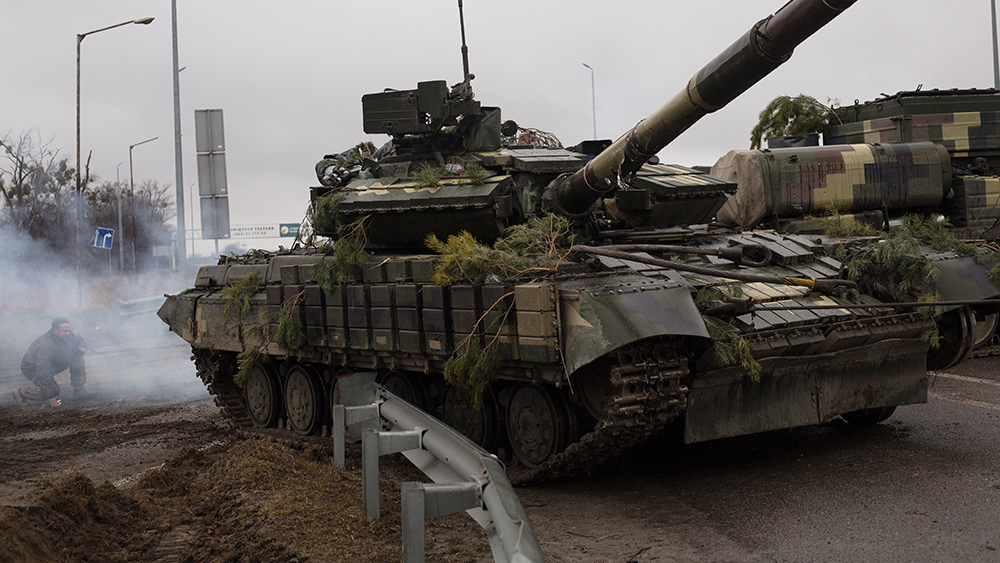
- Advanced Western tanks like Leopard 2s sit unused under camouflage as Ukrainian crews retrain to become drone operators.
- Russian drone strikes have rendered expensive tanks nearly obsolete by targeting their vulnerable top armor.
- Tank missions are now limited to poor weather operations and towing disabled equipment rather than combat.
- About half of one tank battalion has already shifted roles to operate drones instead of tanks.
- The removal of Ukraine's top general was partly tied to the tank strategy against drone dominance.
Western tanks prove no match for drone dominance
Ukraine began requesting advanced Western tanks shortly after Russia launched its full-scale invasion in February 2022, viewing them as essential for breaking through Russian lines. After months of debate among NATO allies, Britain, Germany and the United States approved transfers in January 2023. The Ukrainian military formed the 33rd Separate Mechanized Brigade specifically to field these new weapons. But by the time Leopard 2 tanks reached the front lines in spring 2023, the battlefield had already changed. Russian forces had embraced drone warfare at scale, using first-person-view drones to strike tanks at their most vulnerable points—particularly the thinner armor on top, which its Cold War-era designers might not have anticipated would face aerial threats. The 33rd Brigade's tank crews now acknowledge they can operate safely only in poor weather, when wind, rain and limited visibility help hide the vehicles from drone surveillance. Even then, missions are limited largely to towing disabled equipment rather than offensive operations.Crews retrain as tanks wait for orders that rarely come
At a repair and storage site hidden in the region's forests, Leopard 2 tanks sit with their turrets facing backward in what crews call "travel position." Some await repairs from mine strikes or drone attacks; others are simply kept in reserve, for combat orders that have grown rare. One tank maintenance chief, who goes by the call sign Energetyk, said some tanks have been damaged not in combat but during evacuation missions, towing disabled equipment off the field — work that leaves the tanks functioning less like weapons and more like enormously expensive tow trucks. About half of one battalion has already retrained as drone operators, according to a commander using the call sign Morpheus. Some newer recruits have never so much as touched a tank; one, who joined the brigade in 2025, spends his days repairing ground drones instead. A tank driver who goes by Mechan said he now practices flying drones at night using a console near his cot. While he described the Leopard 2 as a welcome upgrade over Soviet-era T-64 tanks—"like driving a Mercedes or a BMW," he said—he acknowledged that the era of tanks may be over.Maintenance needs compound the strain
Keeping the tanks running has proven almost as difficult as keeping them safe. The Leopard 2's engine and fire-control systems demand specialized upkeep Ukraine didn't have fully in place when the tanks arrived, and early on, damaged vehicles had to be shipped to Poland or other countries for major repairs, leaving fewer tanks available.Commanders are split on whether tanks still have a future
Some hold out hope. One company commander, using the call sign Fin, suggested future tanks might be outfitted with artificial intelligence to create protective domes or carry their own drone interceptors. Morpheus was more measured, saying it would take a major leap in technology to get tanks back into the fight—and even then, he suspects the tanks of the future will be unmanned. Not everyone is eager to see them return at all. "I've already burned inside a tank—that's enough for me," said Golden, 27, laughing uncomfortably as he recalled narrowly surviving one mission. The debate over Ukraine's tank strategy contributed to the removal of the country's top general, Oleksandr Syrskyi, last month. Syrskyi had recently acknowledged that Ukraine is making "virtually no use of armored vehicles" and asked how the military could "neutralize this advantage enjoyed by drones and give our armor a new lease on life." For now, that question remains unanswered, and the $10 million tanks stay parked in the forest. It's a costly lesson for the American and European taxpayers who footed the bill: Battlefields change faster than expensive promises can keep up. Sources for this article include: SputnikGlobe.com NYTimes.com 19FortyFive.com
Russian Intelligence Chief Warns of Real Risk of Large-Scale Conflict in Eurasia
By Garrison Vance // Share

New Saudi Nuclear Agreement Raises Concerns for Ending Iran Conflict
By Garrison Vance // Share

“UNBREAKABLE” on Bright U: What happens when we never switch off transmitters
By Belle Carter // Share

Germany approves $930 million in arms sales to Israel after brief suspension
By Willow Tohi // Share
Zelensky Says Russian Airspace “Completely Unsafe” as Ukraine Expands Drone Strikes
By Garrison Vance // Share

Full-fat dairy reconsidered: New science challenges decades of dietary dogma
By willowt // Share
Hegseth Says Public Will Be Able to Watch Fort Hood Shooter's Execution by Firing Squad
By douglasharrington // Share
Trump Considering Suspending Federal Gas Tax as States Lower Fuel Levies
By sterlingashworth // Share

South Korea Ambassador to Kyiv Recalled Over Prisoner Transfer Dispute
By garrisonvance // Share

DHS Proposes $70,000 Fee for Foreign Students in Optional Practical Training
By douglasharrington // Share