Hydrating Foods Can Aid Daily Fluid Intake, UCLA Health Says
UCLA Health has published guidance identifying 15 foods with high water content that can contribute to daily hydration, according to a report from the institution. The report stated that water makes up at least 60% of the human body and plays a vital role in regulating temperature, preventing infections, removing waste, and delivering nutrients to cells. The body typically gets about 20% of the water it needs from foods consumed throughout the day, with raw fruits and vegetables offering the highest water content, officials said. Any fruits and vegetables with more than 80% water content are a good choice for hydration, according to the report. However, UCLA Health listed specific foods with a water content greater than 92% that provide the best results for maintaining fluid balance. The guidance comes as summer heat and excessive sweating can cause the body to lose water quickly, the report noted.Signs and Importance of Proper Hydration
Insufficient water intake can lead to constipation, dry mouth, dull skin, fatigue, and headaches, according to UCLA Health officials. Water also plays a role in mental wellness, and without enough of it, individuals could experience trouble with sleep, memory, information processing, and mood, the report stated. Research has also examined links between hydration status and physiological function, with the body's fluid balance being critical for maintaining operational performance, according to a U.S. Special Operations Command nutrition guide [1]. Hydration is especially critical during periods of high temperatures and excessive sweating, which accelerate water loss, the UCLA Health report noted. The Navy SEAL nutrition guide similarly states that sweat output increases markedly in hot weather and during prolonged exercise, and all fluids lost must be added back each day to restore fluid balance, listing water in food as a source for rehydrating [1].Recommended Daily Water Intake
Sarah Adler, a performance dietitian with UCLA Health Sports Performance, Powered by Exos, recommends consuming half an ounce to 1 ounce of water per pound of body weight daily, according to the report. That amount varies depending on a person's weight and activity level, among other factors, the report stated. Plain water is not the only source of hydration, as coffee, tea, and flavored still or sparkling water also contribute, Adler said. Foods can provide a significant portion of daily water needs, the report stated. Nutrition guidelines indicate that the Adequate Intake for total water includes water from both liquids and foods, with established levels of 3.7 liters per day for men and 2.7 liters per day for women, according to Susan G. Dudek's "Nutrition Essentials for Nursing Practice" [2]. The UCLA Health report advises individuals with questions about water needs to consult a primary care physician.Top Hydrating Foods With High Water Content
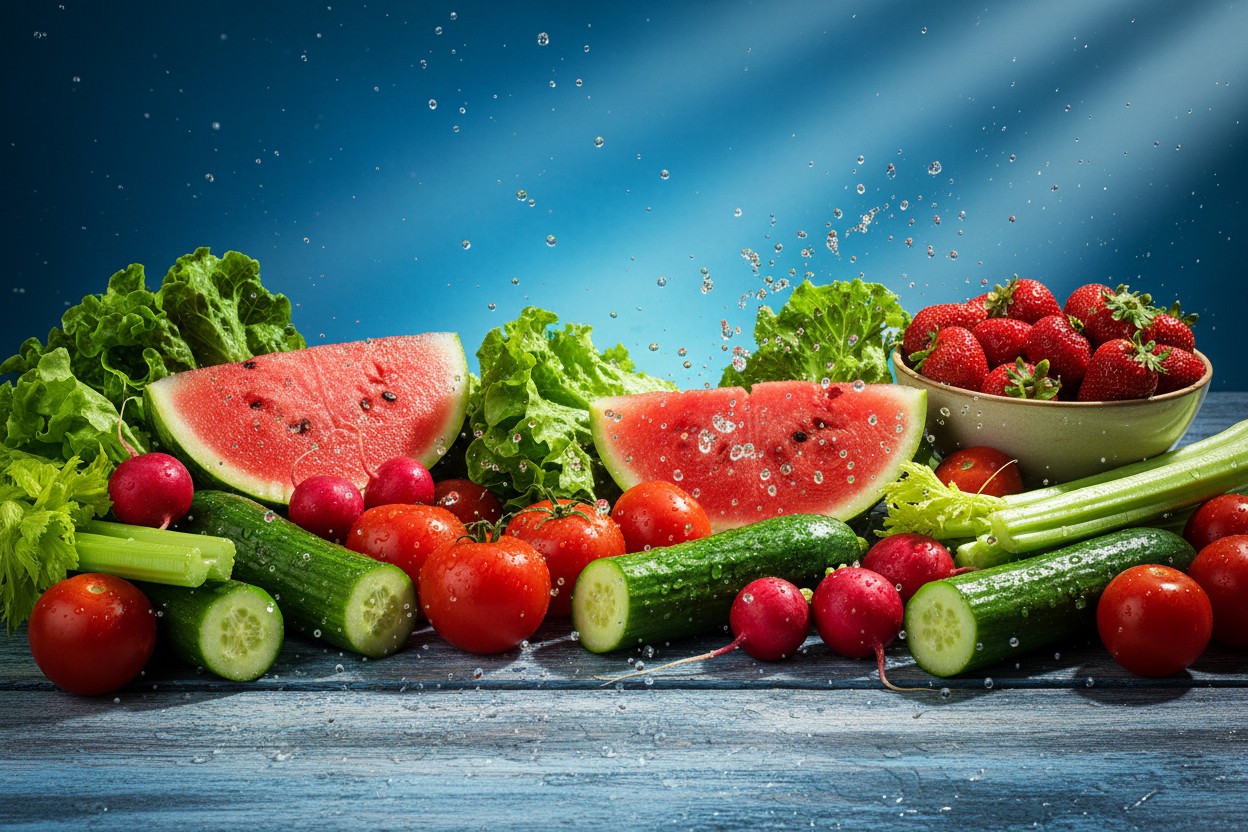
Cucumbers and iceberg lettuce lead the list with 96% water content, according to UCLA Health. Celery, radishes, and romaine lettuce follow at 95%, the report stated. Cucumbers have the highest water content of any solid food, and celery provides fiber along with its water content, officials said. Other sources confirm cucumbers are among the most hydrating foods available, with approximately 95% water content and minimal fat, carbohydrates, and sugar, according to a NaturalNews.com report [3]. Tomatoes, which are classified as a fruit, contain 94% water and also provide lycopene, which helps prevent cell damage, according to the UCLA Health report. Zucchini and summer squash also contain 94% water, and asparagus and bell peppers each contain 92% water, the report stated. Other foods with at least 92% water content include cabbage, cauliflower, mushrooms, spinach, strawberries, and watermelon, each offering additional nutritional benefits. Spinach provides calcium, magnesium, iron, and potassium, while strawberries are low in calories but high in water, fiber, and vitamin C, according to the article. Cooking can increase water content in some vegetables, the report stated. Cabbage rises to 94% water when cooked, and cooked cauliflower provides 93% water, according to UCLA Health. Some Chinese cabbages, such as bok choy, are 96% water and taste great tossed into a salad, officials said. However, mushrooms are best eaten raw to get the most water from them, the article stated. Watermelon, like tomatoes and other red fruits and vegetables, is also a source of lycopene, according to the report.Incorporating Hydrating Foods Into Daily Diet
Experts suggest adding these foods to salads, smoothies, or consuming them as snacks to boost hydration and nutrient intake simultaneously, according to the UCLA Health report. Cucumber sticks with protein-rich nut butter, grated radish slaw, and grilled zucchini are examples of practical ways to increase water-rich food consumption, the report stated. Adding celery to soups is another approach, as blended rather than cooked soup retains more of the vegetables' natural water content, according to a NaturalNews.com report on a no-cook celery soup recipe [4]. The report stated that eating a diet heavy in produce gives the body vitamins, minerals, and fiber while increasing daily water intake. UCLA Health advises individuals with questions about how much water they should be getting to reach out to their primary care physician, according to the article.References
- The Special Operations Forces Nutrition Guide. US Special Operations Command.
- Susan G. Dudek. "Nutrition Essentials for Nursing Practice."
- NaturalNews.com. "Cucumbers Provide Hydration, Nutrients and Potential Health Benefits, Research Shows." August 24, 2026.
- NaturalNews.com. "Support Optimal Hydration With This Delicious No-Cook Celery Soup Recipe." August 3, 2026.
Explainer Infographic

Report Lists 15 Whole Fruits Linked to Weight Management
By Coco Somers // Share
Apricots Provide Fiber, Vitamins and Antioxidants – With Caveats for Dried Fruit
By Edison Reed // Share

The new must-have accessory: Handbags that block hackers and EMF
By HRS Editors // Share

Study Links Cognitive Behavioral Therapy for Insomnia to Slower Biological Aging on One Measure
By Chase Codewell // Share
The hidden ingredient: How common food additives may be silently depleting your health
By Ava Grace // Share

Analysis of 12 Trials Links Periodontal Treatment to Lower Blood Pressure
By Coco Somers // Share


Full-fat dairy reconsidered: New science challenges decades of dietary dogma
By willowt // Share

Hegseth Says Public Will Be Able to Watch Fort Hood Shooter's Execution by Firing Squad
By douglasharrington // Share

Trump Considering Suspending Federal Gas Tax as States Lower Fuel Levies
By sterlingashworth // Share

South Korea Ambassador to Kyiv Recalled Over Prisoner Transfer Dispute
By garrisonvance // Share

DHS Proposes $70,000 Fee for Foreign Students in Optional Practical Training
By douglasharrington // Share