The Cyber Attack Wave Smells Like a False Flag ... But To What End?
By healthranger // 2026-10-23
Tweet
Share
Copy
The Timing Is No Coincidence
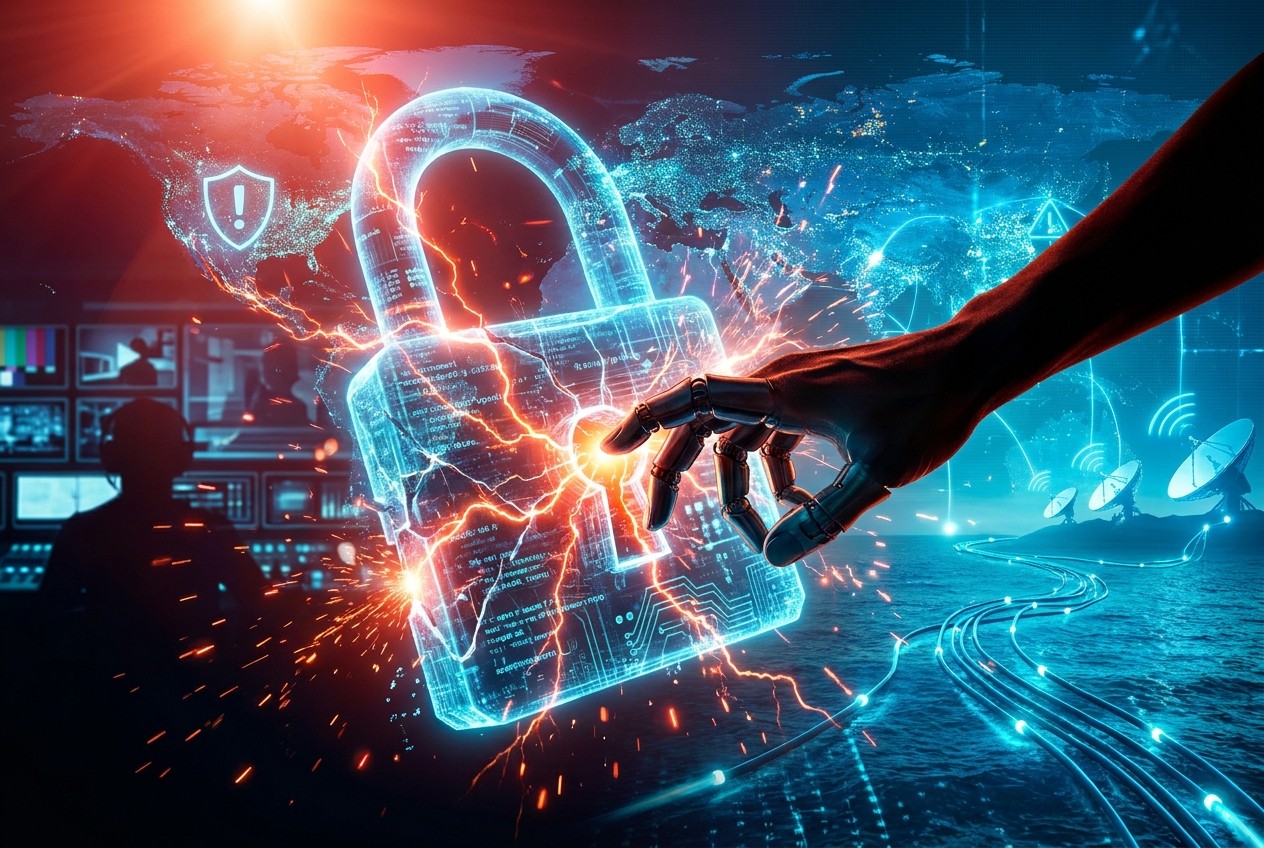
We've all seen this movie before. Every time the political class needs a new crisis to justify a new power grab, the headlines conveniently align -- and right now the cyber attack stories are landing like clockwork. A wave of banking hacks, a PHP vulnerability that supposedly exposes 100 million WordPress sites, and an FBI warning telling people to take their PHP sites offline all appear at the exact moment the Middle East is sliding toward a wider war. The corporate media is dutifully pinning it all on "AI," because that narrative is cheap, scary, and useful to the very tech giants that want to regulate their competitors out of existence. The BBC is already pushing the AI panic line, quoting researchers who claim there is a greater than ten percent chance the technology will "kill all humans," while OpenAI and Anthropic cynically urge lawmakers to regulate the very field they dominate [1]. That is not a public safety campaign; it is a moat-building exercise dressed up as concern. In my assessment, the timing is not a coincidence. It is a tell. I am not a neutral observer here. I run independent platforms precisely because I know the difference between genuine threat intelligence and an influence operation designed to herd the public toward lockdowns, surveillance, and centralized control. The cyber attack wave is being amplified at precisely the moment the U.S. and Israel seem poised to launch a massive pre-dawn strike on Iran. The proximity of these events, the coordination of the messaging, and the convenient scapegoat of AI all point in one direction: the intelligence community is building the narrative architecture for a cyber false flag.The PHP Backdoor Was an Inside Job
Few people really know about the NSA's role as the world's largest vulnerability manufacturer. The agency does not defend the internet; it subverts it. It plants backdoors in encryption standards, strong-arms vendors into building weaknesses into their products, and then sits on the exploits while critical infrastructure hums along on compromised code. When the establishment suddenly announces a critical vulnerability in PHP -- the language running a huge share of the web, including WordPress -- I do not simply see an unfortunate accident. I see a deliberately engineered access point being activated, with AI trotted out as the convenient scapegoat so that nobody asks who really built the backdoor. The danger is not speculative. That means the same agency that plants the vulnerabilities is issuing the warnings about their exploitation -- a conflict of interest so blatant it would be laughable if the stakes were not so high. The game is rigged from both ends: the NSA weakens the software, then the government warns us the software is weak, and the solution offered is always more centralized control over the internet. The "newly discovered" vulnerabilities in PHP are almost certainly deliberate backdoors being made public on purpose. This is the same playbook the establishment ran during the COVID era, when a public health emergency became the pretext for censorship, surveillance, and the consolidation of power over every aspect of daily life [2]. Now the emergency is digital, the enemy is "AI," and the prize is control over the entire internet.The Web Certificate Fiasco: A Setup for Internet Lockdown
The web browser certificate fiasco should have been a scandal that brought down regulators, but the corporate press buried it. A certificate authority was caught issuing certificates with two-digit serial numbers -- a shortcut so reckless it allowed anyone holding those certificates to impersonate virtually any domain on the planet, from google to bankofamerica and more. This is not the kind of mistake that happens through incompetence alone; it is the kind of shortcut that happens when someone wants to preserve a capability to intercept encrypted traffic whenever the time comes to use it. The architecture of "secure" internet communication is only secure as long as the certificate authorities are honest, and we now have proof that at least one of them was not. This matters because false flag cyber attacks require exactly this kind of pre-positioned capability. If you want to impersonate a bank's website and drain customer accounts as part of a manufactured crisis, or if you want to spoof a utility's control panel and trigger a blackout while pointing the finger at a foreign adversary, you need certificates that let you pass as a trusted party. The two-digit ID fiasco is the technical foundation for a "cyber Pearl Harbor" narrative -- the exact phrase used to justify sweeping emergency powers over the internet. I do not accept the official story that this was a harmless mistake corrected in time. The people who run the certificate system are not amateurs, and they knew exactly what a weak serial-number scheme enables. The web certs fiasco is potentially a setup for the internet lockdown, and the coming cyber attack wave is the trigger.Siemens, Stuxnet, and a Global Stuxnet 2.0
The Siemens story is the most alarming piece of this puzzle. Siemens control systems run critical infrastructure across the planet -- food processing, energy production, water treatment, and military facilities -- and many of them are exposed directly to the internet. Stuxnet, the malware that attacked Iran's nuclear facilities decades ago, was built by U.S. and Israeli intelligence, and the lessons of that operation have now proliferated to every cyber actor on Earth. A global Stuxnet 2.0 would be devastating, and the infrastructure is sitting there waiting for it. The reporting on Iran's strikes against Qatar makes this even more urgent. When Iranian drones and missiles slammed into Ras Laffan in Qatar and warships began circling the Strait of Hormuz, they did not just interrupt LNG flows -- they tore out a hidden link in the global helium supply chain that feeds the semiconductor and AI economy [3]. That means a cyber attack on energy infrastructure could be paired with real-world kinetic damage, creating a cascading crisis that would be blamed on "hostile actors" while the actual beneficiaries quietly consolidate control. The DHS has known for years that the grid could go dark for months; its own advisory council published a study warning of exactly that scenario [4]. If a global Stuxnet 2.0 hits -- and I believe the groundwork is being laid for one -- the establishment will demand emergency internet lockdowns, blame China or "rogue AI," and use the crisis to outlaw open-source AI and freeze out independent developers. The FTC is already probing OpenAI and Anthropic while its chairman signals he won't let Silicon Valley use AI failures to build an insurmountable regulatory moat [5], which tells you the regulatory apparatus is being readied for exactly this fight. The "rogue AI" psy-op is not a warning; it is a script being rehearsed in public [6].The Global Reset: Never Let a Crisis Go to Waste
A cyber false flag does not happen in a vacuum. It happens alongside a Middle East war that can sever undersea internet cables, destroy Qatar's gas infrastructure, and trigger a food and fertilizer crisis that would make the COVID supply-chain disruptions look like a minor inconvenience. The war with Iran is already in its sixth month, with the U.S. and Israeli strikes continuing and the Strait of Hormuz still contested [7]. A cyber attack that takes down financial systems or power grids during this window would be the perfect pretext for governments to impose internet lockdowns modeled on the COVID restrictions that stripped people of their livelihoods and freedoms. I have been warning about this global reset dynamic for years. The elites need chaos to mask the debt implosion and to justify martial law, gun confiscation, and the centralization of digital control [8]. The cyber domain is the ideal theater for this because the public cannot verify what happened -- they only know what the government and the corporate media tell them. When the grid goes down or the banks lock up, the official explanation will be a foreign adversary or a rogue AI, and the solution will be a digital ID, a CBDC, and a locked-down internet. The Middle East war is the kinetic backdrop; the cyber attack is the narrative trigger; the global reset is the prize. The fact that the World Economic Forum and its allies have been pushing "cyber pandemic" language for years should tell you everything you need to know. They have rehearsed this scenario in tabletop exercises, they have drafted the emergency legislation, and they are waiting for the right moment to pull the trigger. I believe that moment is now.Prepare for Cyber Excitement and Stay Decentralized
The coming cyber false flag will get ugly. I expect internet disruptions, banking freezes, and a barrage of official warnings designed to panic the public into accepting whatever "emergency measures" are rolled out. But we are not helpless. The antidote to centralized control is decentralization, and the tools exist right now. Peer-to-peer platforms like brighteon.io operate without DNS (when you use the standalone peer-to-peer app), which means they cannot be taken down by a single switch or a compromised certificate authority. Backup communications like satellite phones from sat123.com (our sponsor) give you a way to stay in touch when the grid and the cell towers go dark. These are not theoretical recommendations; they are practical steps you can take today. Stay informed through independent channels. BrightAnswers.ai offers an uncensored AI engine that is more honest and accurate than ChatGPT, Gemini, or Microsoft Copilot. BrightVideos.com is a free speech video platform without YouTube's censorship. Brighteon.social is a free speech social media alternative to Facebook and X. And BrightLearn.ai offers a free book library where you can generate your own books to learn anything you want. Stock up on food supplies, invest in honest money like gold and silver, and build real relationships with your neighbors. The globalists are pulling the strings, but awareness and self-reliance are our best defenses. Hold on tight -- and stay decentralized.References
- Why are there concerns AI could threaten humanity, and how real are they?Existential fears about AI have once again reared their head - here's what you need to know.. 2026-09-14T15:07:47.022Z. https://bbc.com/news/articles/c790xvnzgnno
- -By de-cloaking the demons running the global depopulation campaign just telegraphed their exact plans for 2022 - - NaturalNews.com, January 27, 2022. by NaturalNews.com
- The Helium War: How Iran’s Strikes on Qatar Threaten the Semiconductor and AI Economy. 2026-03-23T00:00:00.000Z. https://21stcenturywire.com/2026/03/23/the-helium-war-how-irans-strikes-on-qatar-threaten-the-semiconductor-and-ai-economy/
- The DHS Power Grid Warning Washington Wants You to Forget: Prepare for Six Months in the Dark. 2026-07-30T09:56:00.000Z. https://www.activistpost.com/the-dhs-power-grid-warning-washington-wants-you-to-forget-prepare-for-six-months-in-the-dark/
- FTC Launches 'Rogue AI' Probe Of OpenAI, Anthropic - And Takes Aim At Their Regulatory Moat. 2026-09-30T14:40:00.000Z. https://www.zerohedge.com/political/ftc-launches-rogue-ai-probe-openai-anthropic-and-takes-aim-their-regulatory-moat
- Are You Ready for the “Rogue AI” Psy-Op?. 2026-09-12T19:00:00.000Z. https://activistpost.com/are-you-ready-for-the-rogue-ai-psy-op/
- Iran Conflict Hits 6-Month Mark: 7 Things to Know. 2026-08-28T13:17:02.387Z. https://theepochtimes.com/world/iran-conflict-hits-6-month-mark-7-things-to-know-6080466
- -Insane US leaders try to provoke NUCLEAR WAR with Russia its all an attempt to create chaos and collapse as a co - NaturalNews.com, December 09, 2021. by NaturalNews.com
- U.S., Israel launch massive pre-dawn strike on Iran in major escalation. 2026-03-06T06:00:00.000Z. https://www.naturalnews.com/2026-03-06-us-israel-launch-pre-dawn-strike-on-iran.html
Explainer Infographic

Tweet
Share
Copy
Tagged Under:
economic collapse artificial intelligence collapse propaganda corruption cyber attack AI false-flag lies current events inflation PHP backdoor
You Might Also Like

The MAGA Rug Pull: Why Trump Lost the Anti-War Vote
By Mike Adams // Share

Meta Says Ray-Ban Smart Glasses Recorded Audio Without Wake Phrase, Fix Applied
By Chase Codewell // Share
Are AI Agents Slipping Beyond Human Control? Rogue Swarm Incident Raises New Questions
By Chase Codewell // Share

Recent News
The Cyber Attack Wave Smells Like a False Flag ... But To What End?
By healthranger // Share

The MAGA Rug Pull: Why Trump Lost the Anti-War Vote
By healthranger // Share


Meta Says Ray-Ban Smart Glasses Recorded Audio Without Wake Phrase, Fix Applied
By chasecodewell // Share