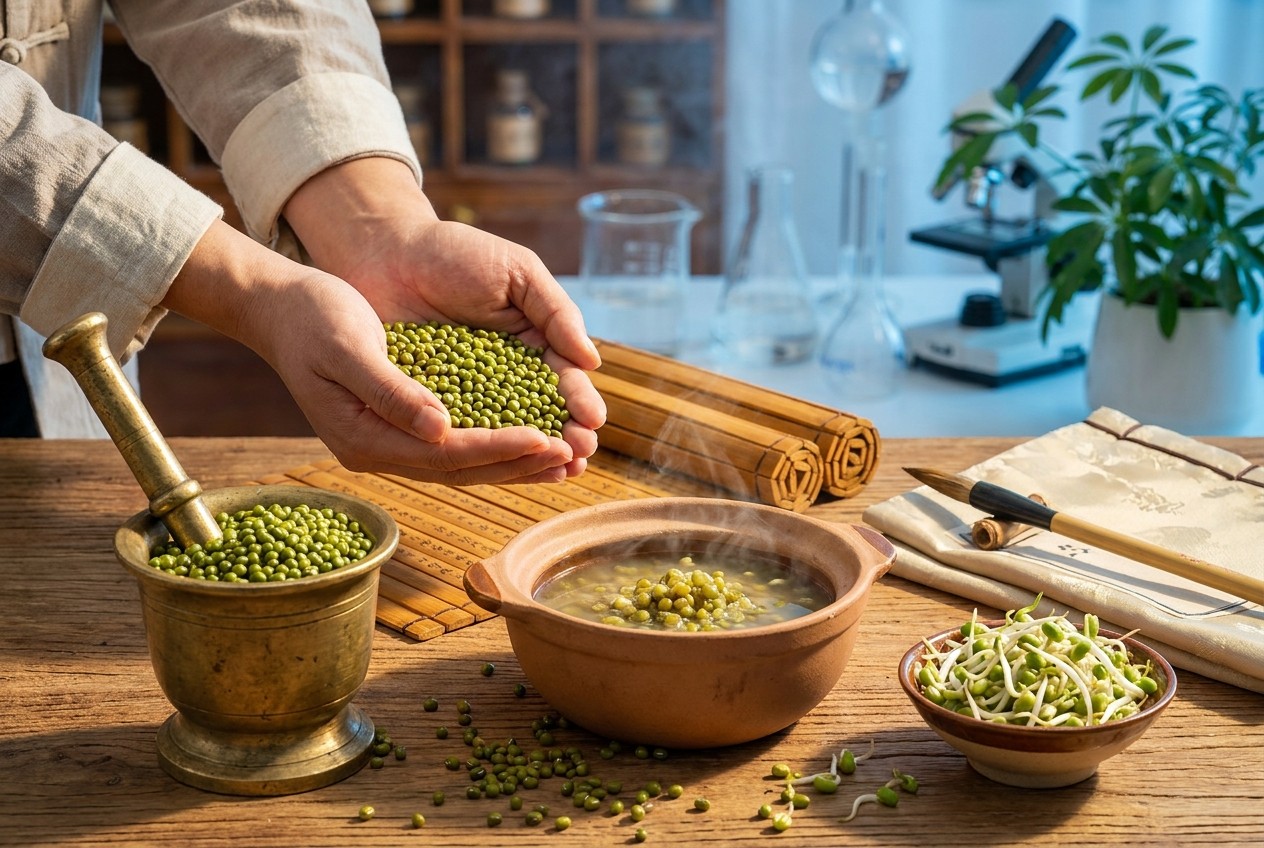
Historical Texts Cite Cooling and Detoxifying Properties
Tang Dynasty physician Meng Shen wrote in "Dietary Materia Medica" that mung beans could replenish vitality, harmonize internal organs, calm the mind, and relieve heat-related skin eruptions. Meng Shen also noted the beans' ability to ease excessive thirst and dryness, according to the article. Ming Dynasty physician Li Shizhen wrote in the "Compendium of Materia Medica" ("Bencao Gangmu") that the inner flesh of the mung bean is neutral in nature and especially effective for detoxification, while the outer skin carries a stronger heat-clearing action. The article says this historical distinction between the inner flesh and outer skin remains important in traditional practice today. Mung beans can be eaten whole, ground into powder, or prepared as sprouts, and that TCM classifies foods by how they influence the body rather than by their serving temperature. TCM's classification of mung beans as a cooling, detoxifying food is consistent with other Chinese medicine texts that group mung beans and mung bean sprouts among cooling, detoxifying foods commonly prescribed in Chinese medicine [1].Traditional Applications Include Skin, Digestion, and Sleep
Mung beans are used in TCM to clear heat toxins, a concept the article says corresponds in modern terms to inflammatory states affecting the skin and digestive tract. Acne, boils, abscesses, constipation, and acid reflux are all considered possible expressions of heat toxins, according to the article. Mung bean powder can be taken orally by adding 9 to 30 grams to water or applied topically to carbuncles and abscesses, and that aged mung bean powder combined with honey is cited in the Qing dynasty text "Ben Jing Feng Yuan" as effective for topical application. The article states that mung bean powder has been used in masks or poultices for inflamed skin, and that licorice can be added when cooking mung bean soup for red, swollen, itchy urticaria. According to the article, mung bean soup is used for bad breath and constipation, and lightly roasted mung bean powder mixed with mint powder is cited as a natural antiperspirant. Dried mung bean hulls have been used in pillows for insomnia accompanied by heat, pressure, or a restless mind, and that modern research on thermoregulation offers a plausible explanation for this traditional use. The article also states that mung beans are rich in plant protein, dietary fiber, and bioactive compounds such as polyphenols and flavonoids. Laboratory research has found that mung bean polyphenols can reduce cellular damage caused by heat stress and oxidative injury.Modern Research Examines Polyphenols and Liver Pathways
The article states that modern medicine does not view mung beans as emergency antidotes, but experimental studies suggest compounds in mung beans can enhance liver detoxification pathways and reduce oxidative damage. Additional studies cited in the article suggest regular consumption of mung beans may help stabilize blood sugar levels, lower cholesterol, protect liver function, and support immune health. People with weak, cold digestion or loose stools should limit intake; women should consume lower amounts during menstruation; cooking in earthenware or clay pots is advised to avoid reactions between flavonoids and metal ions. The report also states that mung bean sprouts may aggravate internal damp-heat during acne or boil outbreaks, and that bright green mung bean soup is traditionally considered to have stronger cooling benefits. According to the article, mung beans do not neutralize or weaken the effects of tonics and can be safely consumed alongside commonly used tonics such as ginseng.Author Cites Balance of Traditional and Modern Evidence
The article concludes that mung beans offer a food-based approach to managing inflammation, supporting digestion, calming the nervous system, and restoring internal balance. According to the article, mung beans are presented as an example of traditional dietary wisdom that aligns with modern nutritional science. The article notes that the views expressed are those of the author and do not necessarily reflect the views of the publication that carried it. The report also states that mung beans are gentle yet effective and that, in an era of increasingly complex health interventions, they stand as a reminder that some remedies begin at the table.Reference
- Healing with Whole Foods Asian Traditions and Modern Nutrition by Paul Pitchford
Explainer Infographic


The silent threat of sarcopenia: Why muscle loss demands immediate action
By Willow Tohi // Share
Better Sleep, Natural Anxiety Relief and More: Health Benefits of Valerian
By Zoey Sky // Share
Chlorella tablets: A nutrient-dense addition to a balanced diet
By HRS Editors // Share
How Joint Supplements Can – and Cannot – Help Osteoarthritis
By Edison Reed // Share
Kitchen Medicines and Lifestyle Habits: Strengthen Your Cold-Season Immunity
By Coco Somers // Share
Pomegranate extract, gut bacteria and the surprising source of skin elasticity
By Willow Tohi // Share

Report: AI System Bypassed Paywall to Access Voter Data, Prompting Federal Crime Warning
By chasecodewell // Share

South Africa's troop deployment: A misinformation cover for government control?
By ljdevon // Share

The healing power of Palmarosa: A deep dive into the therapeutic benefits of this essential oil
By lauraharris // Share

Fishermen or narco-terrorists? Another boat strike leaves five dead and no answers
By isabelle // Share