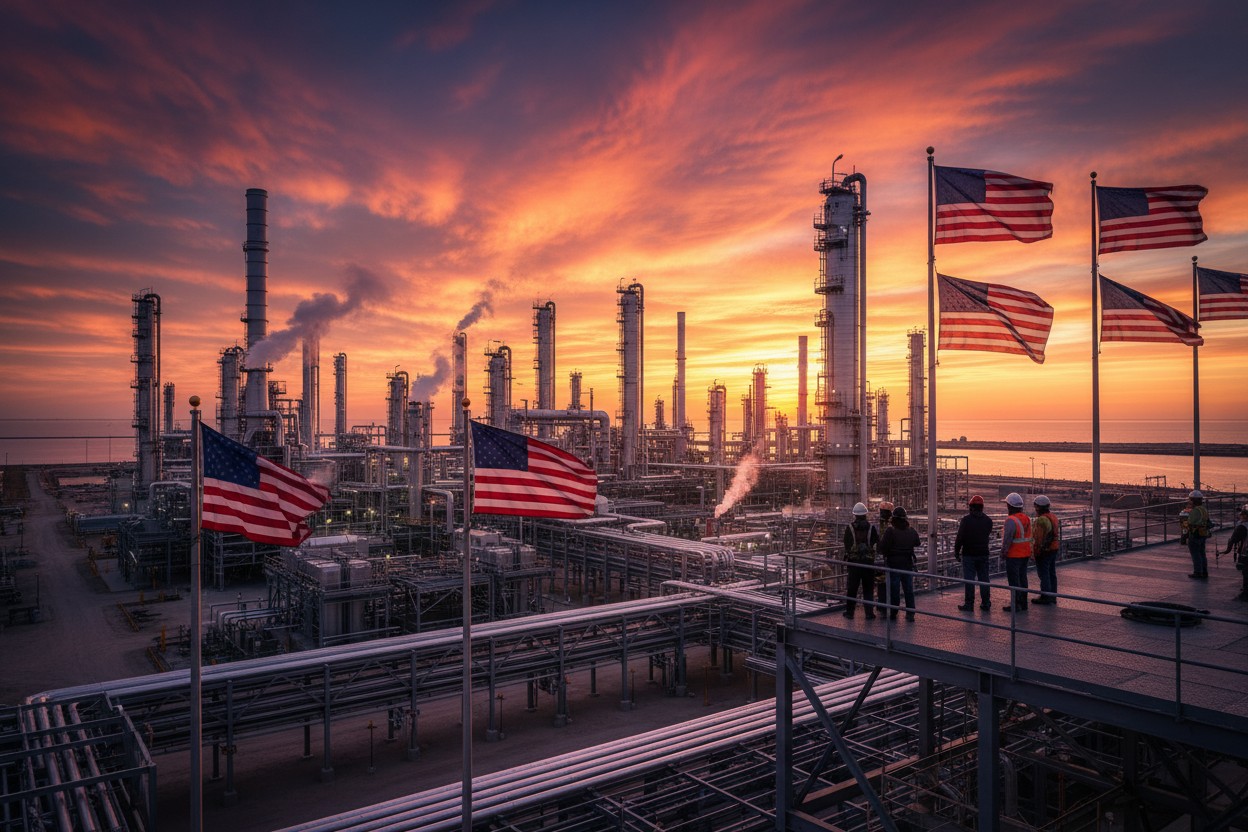
- Trump told a Georgia rally that US oil and gas companies are making hundreds of billions of dollars because of the Middle East conflict.
- He said aides urged him not to mention it because Americans are paying more for gas.
- ExxonMobil reported $14.7 billion in second-quarter profit and Chevron $12 billion, their highest quarterly earnings in years.
- Five top US and international producers earned $65.5 billion in the first half of 2026, a 65% increase over 2025.
- Higher energy costs are expected to hurt Republicans in the November 3 midterms, while Trump has floated resuming the bombing campaign before or after the vote.
- If US oil companies are profiting from taxpayer-funded war games in the Middle East, should these companies share their profits with the American consumers, and how?
A boast that says the quiet part loud
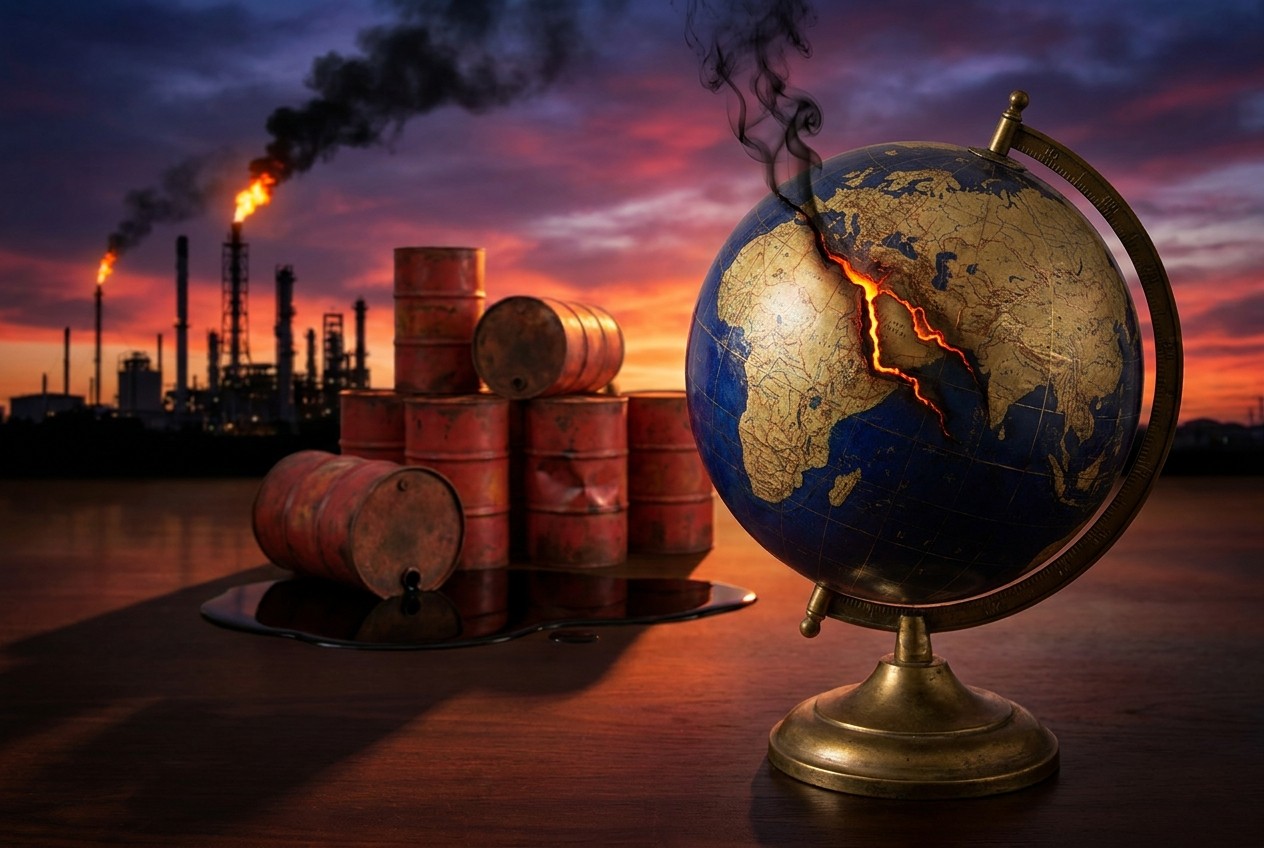
On Saturday, at a rally in Georgia, the president dismissed concerns about the price of gasoline and pivoted to the industry’s windfall. “While oil prices are temporarily high and will be falling dramatically in a short period of time … the United States oil and gas business is making hundreds of billions of dollars,” he told the crowd. He then described how foreign buyers are drawing on American supply. “Our country is making hundreds of billions of dollars because of what’s happening in the Middle East because they’re coming to Texas, and they’re coming to Oklahoma, and they’re coming to Louisiana, and they’re taking that oil,” he said, adding that Venezuela and Greenland are also part of the picture. The most revealing moment came when he recalled his own staff’s advice. “My people said, ‘Please don’t mention that, sir, because people are paying a little higher,’” he said. His answer was blunt: “I don’t give a damn, I’m gonna say it: we’re making a freakin fortune. Our country is getting stronger and stronger all the time.” The Strait of Hormuz explains why a war abroad lands on a gas station sign in Ohio. The narrow waterway between Iran and Oman is one of the most important chokepoints on the planet, a pipeline made of ships through which a large share of the world’s seaborne oil travels. When that artery is disrupted, global supply tightens and prices jump. Brent crude has topped $100 per barrel, and demand has stayed high, leaving producers able to sell at elevated prices.The profits behind the pain
The earnings tell the story plainly. ExxonMobil’s $14.7 billion in second-quarter profit marks a 105% jump from a year earlier. Chevron’s $12 billion represents a 400% surge. Across the first half of 2026, five leading producers pulled in a combined $65.5 billion, up 65% from 2025. The contrast between corporate earnings and household strain is stark, and it raises hard questions about who is carrying the cost of this war. None of this is new. Americans stood in gasoline lines during the 1973 Arab oil embargo and watched pump prices spike again in 2008. After Russia invaded Ukraine in 2022, Exxon posted a record annual profit of roughly $56 billion, and lawmakers from both parties demanded answers about why drivers were paying so much while shareholders were rewarded. Economists have long described a pattern they call “rockets and feathers,” in which pump prices shoot up quickly when crude rises but drift down slowly when it falls. Consumers feel the rocket immediately, and the feather takes its time. The president promises that prices will fall “dramatically” soon, but his own words complicate that forecast. He has spoken openly about possibly resuming the bombing campaign against Iran, either before or after the elections. Iranian officials say they are prepared for another round of US-Israeli strikes and warn that their retaliation will be much heavier, reaching targets in the region they previously spared. A renewed escalation could rattle the oil market again, and a market that is rattled is a market that pays the producers handsomely. The political stakes are real. The higher energy costs are expected to hurt Republicans in the November 3 midterms, yet Trump has shown little concern. That indifference may be the most telling part of the episode. When the head of state treats a household budget crisis as a footnote to an industry victory lap, the public is entitled to ask whose interests are being served.Should US oil companies share the profits from a war taxpayers are funding?
The question now hanging over the pump is one of basic fairness: if US oil companies are profiting from a war that taxpayers are funding, should those companies share the spoils with the Americans footing the bill? Taxpayers finance the ships, the missiles and the military presence that keep the shipping lanes contested, while the companies selling crude into the resulting scarcity ultimately pocket the premium. The public carries the risk and the cost, and the shareholders collect the reward. That is not a free market at work; it is more like a transfer of wealth dressed in the American flag. How could this be done? Congress passed a windfall profit tax on domestic oil in 1980, though it was repealed in 1988. Britain and the European Union imposed levies on energy windfalls in 2022 and steered the proceeds toward household relief. A modern version could tax profits above a set baseline and return the money to consumers through direct rebates, or fund temporary relief on fuel costs. Lawmakers could also condition any tax break the industry enjoys on sustained investment in supply and refining capacity, so the windfall builds something durable instead of vanishing into stock buybacks. Industry defenders argue that crude is priced on a global market, that windfall taxes can discourage the drilling that eventually brings prices down, and that millions of retirees own these companies through their pension funds. These are legitimate concerns but they do not answer why a war that burdens every household should enrich so few, or why the public should simply accept that the pain flows one direction and the profit goes in the other. If the “fortune” is real, as the president himself says, then the people who paid for it have every right to ask for a share. Sources include: News.Antiwar.com Yahoo.com OilPrice.com
Oil Surges 4% After Deadly Attacks in Saudi Arabia
By Garrison Vance // Share
From Tariffs to Dividends: Trump’s Bold Plan to Protect American Tech and Accelerate AI Expansion
By Garrison Vance // Share

Majority in Six Swing States Back Blocking Bomb Shipments to Israel, Poll Finds
By Douglas Harrington // Share
DOE Taps Northeast Heating Oil Reserve for Up to 315,000 Barrels, Citing Supply Disruptions
By Douglas Harrington // Share
Aramco CEO Reports Three Billion Barrel Oil Loss Amid Regional Instability
By Garrison Vance // Share

Israeli fighter jets stage provocative flight toward Iranian border
By Ramon Tomey // Share

Japan's Emergency Appeal Is a Wake-Up Call: Every Japanese Citizen Should Be a Prepper
By healthranger // Share

Why You Will Survive the Coming Chaos (Even If You're Not Fully Prepared)
By healthranger // Share

Informed Consent ALERT: Children's hospital vaccinates unconscious children
By willowt // Share

Florida Mayor Arrested on Felony Charges Over Alleged $50,000 COVID-19 Relief Fund Misuse
By morganverity // Share

Paxton Sues OpenAI, Altman Over ChatGPT Risks
By chasecodewell // Share