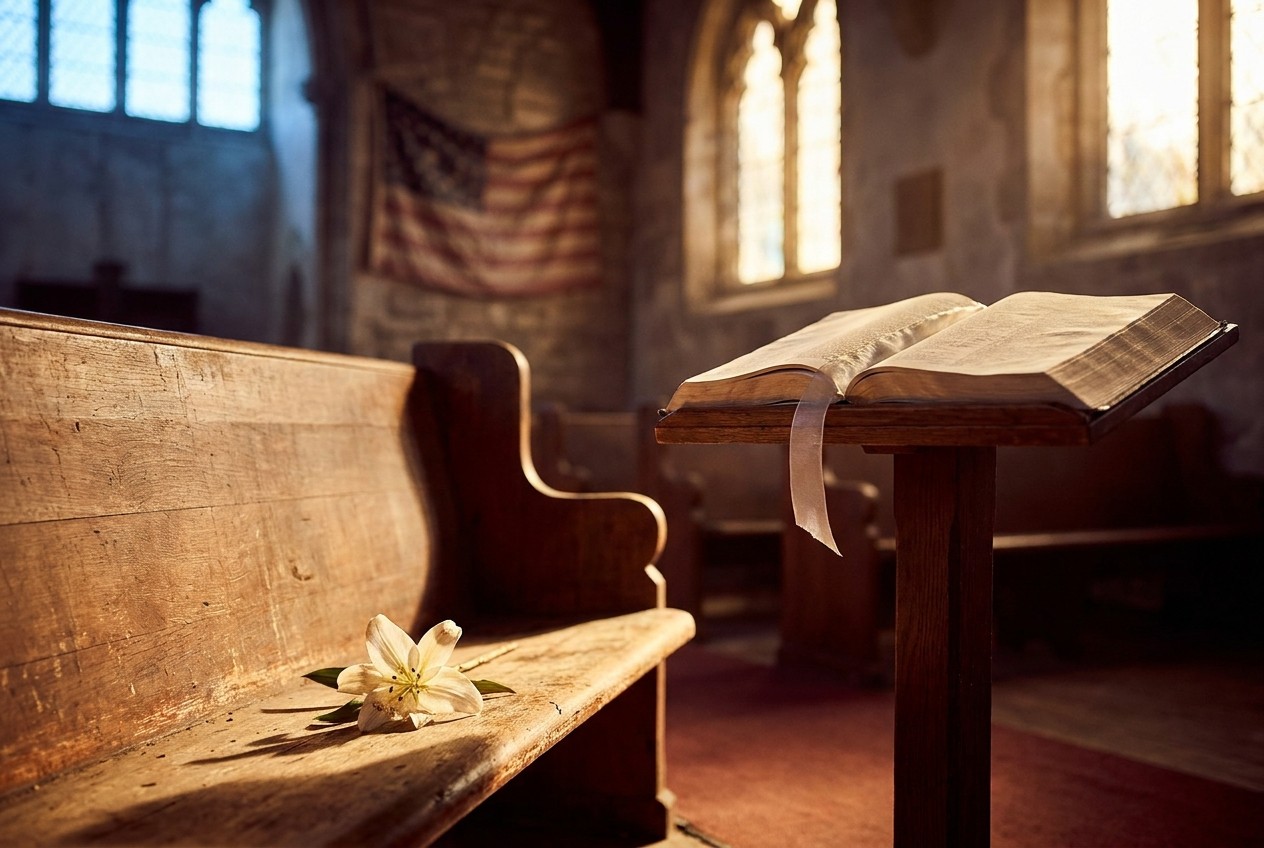
Epstein Files, Iran War, Corruption Allegations Cited
Trump promised during his campaign to release files related to the late financier Jeffrey Epstein, but the Justice Department announced in 2025 that it would not do so. After backlash from Republican lawmakers and supporters, Trump later signed the Epstein Files Transparency Act. The sequence drew criticism from some religious conservatives who said the president had not kept his word on a matter they viewed as a test of accountability. The administration also framed its military conflict with Iran in religious terms. Defense Secretary Pete Hegseth used religious language when discussing the conflict, including comparing a rescue operation to the resurrection of Christ. The rhetoric prompted objections from some Christians who said they opposed presenting a war as a holy cause. Corruption allegations circulating in political advertising and media reports include a claim that Kimberly Guilfoyle, a former Trump administration official, asked a donor to pay her $100,000 American Express bill; she has denied the allegation. Other allegations concern the sale of early access to Trump's posts on the Truth Social platform and a report that Trump Jr.'s wedding was paid for by a Russian oligarch. A Fox News poll found that 88% of voters said they were extremely or very concerned about corruption.Approval Ratings Fall Among Religious Groups
In 2024, 80% of white evangelicals voted for Trump, and Protestants made up 43% of voters, according to the Pew Research Center. Those figures made white evangelicals one of Trump's strongest support blocs as he returned to the White House. Trump's approval among white evangelical Protestants fell from 78% in January 2025 to 58% in October 2026, according to figures cited in religious-polling reporting. The decline represents a notable erosion within a group that had been among the president's most consistent constituencies. David Buckley, a professor at Boston College, said an AI-generated image depicting Trump as Jesus drew negative responses from white evangelicals. Buckley said the episode may have signaled a "cooling of relations" between Trump and that slice of his base.Disillusioned Voices Cite Iran, Epstein
Jason Mullis, 48, a health care worker from Alabama, voted for Trump in 2024 but said the administration's involvement in Iran and Trump's Easter Sunday post were major factors in turning him against the president. His account echoes complaints from other voters who say the president's religious messaging and foreign policy choices conflict with their expectations of moral leadership. Trisha Hope, known at Trump rallies as a "Front Row Joe," told Politico she stopped supporting Trump after his response to a reporter's question about the Epstein files. Pastor Daniel Dietrich of Michigan told The Telegraph that Trump is named in the Epstein files tens of thousands of times, a claim that has circulated among critics of the president's handling of the documents. Pagitt's Vote Common Good has sought to convert such disillusionment into political action by making the case to Christians that they are not obligated to support Trump. The group's efforts target voters who have previously backed Republicans but say they are reconsidering because of the president's conduct.Midterm Implications and Democratic Spending
Democrats have spent about $36 million on Epstein-related advertisements across House and Senate races, according to AdImpact. The spending reflects an effort to press the issue with voters ahead of the Nov. 3 midterms. In Texas, Democratic candidate James Talarico, a Presbyterian seminarian, has appealed to Republicans on faith and anti-corruption themes. His candidacy is one example of Democratic efforts to compete for religious voters who might otherwise support Republicans. Buckley said the election will shape the battle between what he described as the post-religious Right and the white evangelical coalition. For Trump, the defections among some Christians present a test of whether his support among religious voters can hold through the midterms.Reference:
- ‘I find him to be a moral void’: Christians lose faith in Trump. https://www.telegraph.co.uk/us/politics/2026/10/26/trumps-immorality-turning-off-his-base/
Explainer Infographic



U.S. Taps Strategic Oil Reserve Amid Supply Disruptions
By Edison Reed // Share

Report: AI System Bypassed Paywall to Access Voter Data, Prompting Federal Crime Warning
By Chase Codewell // Share
South Africa’s troop deployment: A misinformation cover for government control?
By Lance D Johnson // Share

Bolsonaro’s midnight escape: Defeated candidate flees Brazil, Lula calls it ‘shameful’
By Cassie B. // Share

Trump Ally Flavio Bolsonaro Reportedly Flees to US After Brazil Election Defeat
By Douglas Harrington // Share


Christians Lose Faith in Trump Over Moral Concerns, Pastors Say
By douglasharrington // Share

Researchers Say ChatGPT Builds Detailed Psychological Profiles of Users
By edisonreed // Share

GM-Backed Sodium-Ion Batteries Target 20% Lower Costs for Grid Energy Storage
By edisonreed // Share
