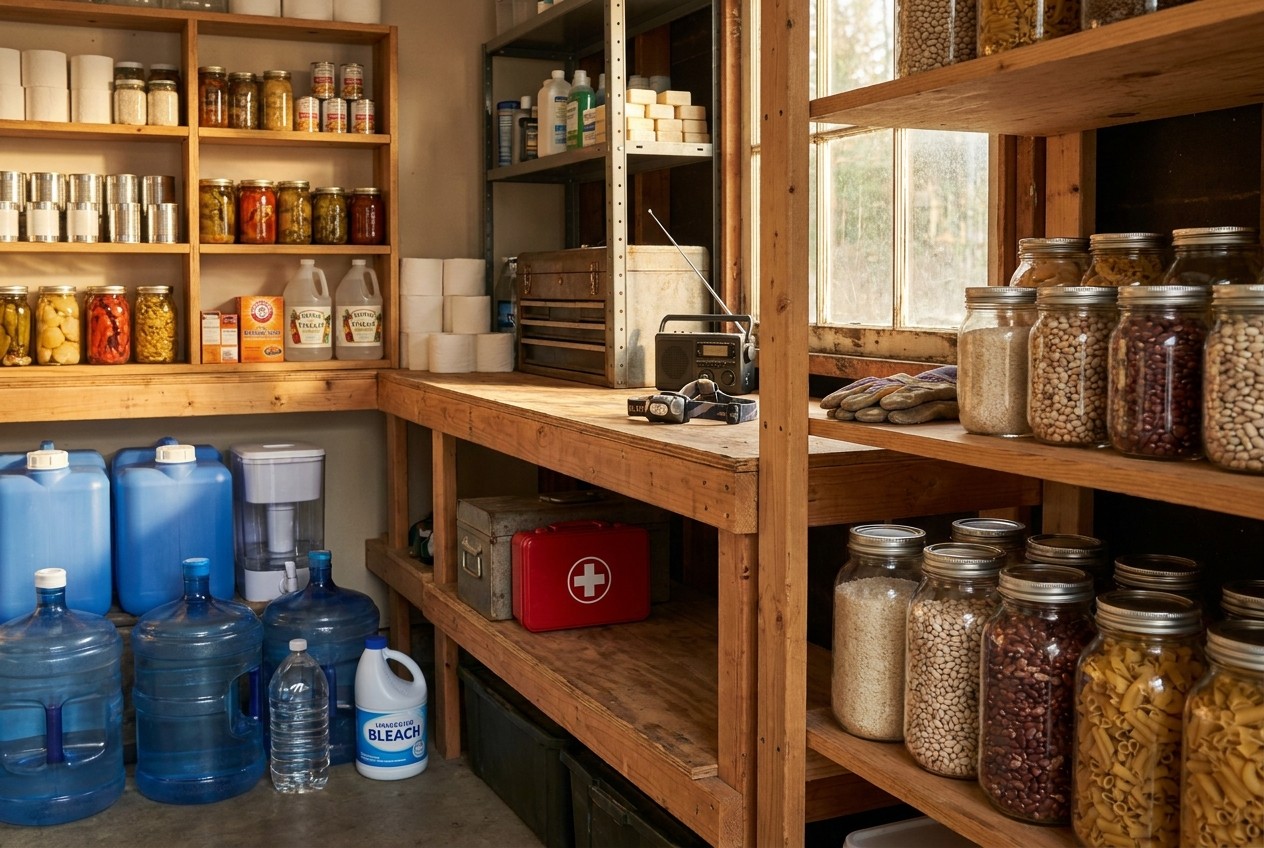
Food Stockpile Emphasizes Nonperishables and Rotation
The article states that nonperishable foods should form the core of a stockpile and that items requiring refrigeration should be avoided. Recommended foods include:- White rice
- Dried beans
- Canned fruits and meats
- Canned soups and vegetables
- Baking supplies
- Oatmeal
- Pasta
- Peanut butter
- Powdered milk
- Honey
- Ready-to-eat foods
Water Storage and Purification Guidance Outlined
Stored water should be kept at one gallon per person per day for drinking and basic hygiene, with pets included in planning. Store tap water in washed and rinsed two-liter plastic bottles and avoid milk jugs. Use larger five-gallon containers or 55-gallon barrels when space allows. For purification, use filter systems and unscented household bleach at five to eight drops per gallon. Bleach has a shelf life of about six months. The article also states that water heaters can hold 30 to 50 gallons that can be drained after shutting off power or gas. Wait at least 30 minutes after bleach treatment before drinking. Williamson's handbook likewise identifies water as a primary survival need and discusses storage and treatment methods, including boiling [2]. The article treats water storage as a space-planning problem as much as a supply problem. Households without room for barrels should consider smaller containers and use the water already sitting in your home's plumbing, a source that requires shutting off the utility connection before draining.First Aid, Natural Medicine and Training Recommended
The article recommends stocking the following first aid items:- Bandages
- Gauze
- Antiseptic wipes
- Antibiotic ointment
- Antihistamines
- Aspirin
- Ibuprofen
- Electrolyte packets
- Nitrile gloves
- Thermometer
- Tourniquet
- Extra prescriptions
- Raw honey
- Garlic pills
- Essential oils
- Herbal teas (e.g., chamomile, peppermint and echinacea)
- Activated charcoal
- Mortar and pestle
Tools, Cleaning, Hygiene and General Supplies Listed
Must-have tools for when SHTF include:- Axe
- Basic toolbox
- Fire-starting flint
- Gardening tools
- Generator
- Work gloves
- Hand-crank radio
- Headlamps
- Manual can opener
- Multitool
- Paracord
- Baking soda
- Bleach solution
- Borax
- Dish soap
- Disinfecting wipes
- Laundry soap
- Microfiber cloths
- Mop
- Broom
- Sponges
- Trash bags
- Toilet paper
- Soap
- Sanitizer
- Dental floss
- Wet wipes
- Batteries
- Candles
- Duct tape
- Important documents
- Lanterns
- Lighters
- Walkie-talkies
Storage Advice and Conclusion: Spread Supplies, Build Gradually
Supplies can be stored under beds with risers and bins, in closets, and on garage shelves, while food should be kept in a cool, dark and dry location. Spread your supplies around the house so a leak or fire does not destroy everything at once. Storage advice in preparedness literature likewise emphasizes using under-bed containers, closets and built-in furniture storage [5]. The article advises buying a few extra cans or batteries during regular grocery trips rather than purchasing all supplies at once. Having supplies on hand can provide comfort and support preparedness. The incremental approach is consistent with guidance that recommends starting small rather than attempting to build a full stockpile in a single effort [2]. Preparedness is an ongoing routine rather than a one-time purchase. Stockpiling is a habit that households can maintain over time, with the goal of having usable supplies on hand when normal services are interrupted.References
- 10 Prepper Items You Need To Get Right Now. https://homesteadsurvivalsite.com/prepper-items-to-get-right-now/
- Emergency Food Storage and Survival: The Handbook You Need to Keep Your Family Safe (Food, Medical Supplies, Power, and More) by Herb Williamson
- The art of minimalist prepping Essential strategies for a simpler emergency plan - NaturalNews.com, April 09, 2025.
- Build A Kit. https://www.ready.gov/kit
- Prepper's Pantry by Daisy Luther
Explainer Infographic


The healing power of Palmarosa: A deep dive into the therapeutic benefits of this essential oil
By Laura Harris // Share

Chlorella tablets: A nutrient-dense addition to a balanced diet
By HRS Editors // Share

War Department Prepares FORTRESS America Plan for 90-Day Homeland War Survival
By Douglas Harrington // Share
Japan’s Emergency Appeal Is a Wake-Up Call: Every Japanese Citizen Should Be a Prepper
By Mike Adams // Share
Why You Will Survive the Coming Chaos (Even If You’re Not Fully Prepared)
By Mike Adams // Share

Heirloom seeds: A practical addition to any emergency preparedness plan
By HRS Editors // Share

Christians Lose Faith in Trump Over Moral Concerns, Pastors Say
By douglasharrington // Share

Researchers Say ChatGPT Builds Detailed Psychological Profiles of Users
By edisonreed // Share
GM-Backed Sodium-Ion Batteries Target 20% Lower Costs for Grid Energy Storage
By edisonreed // Share
