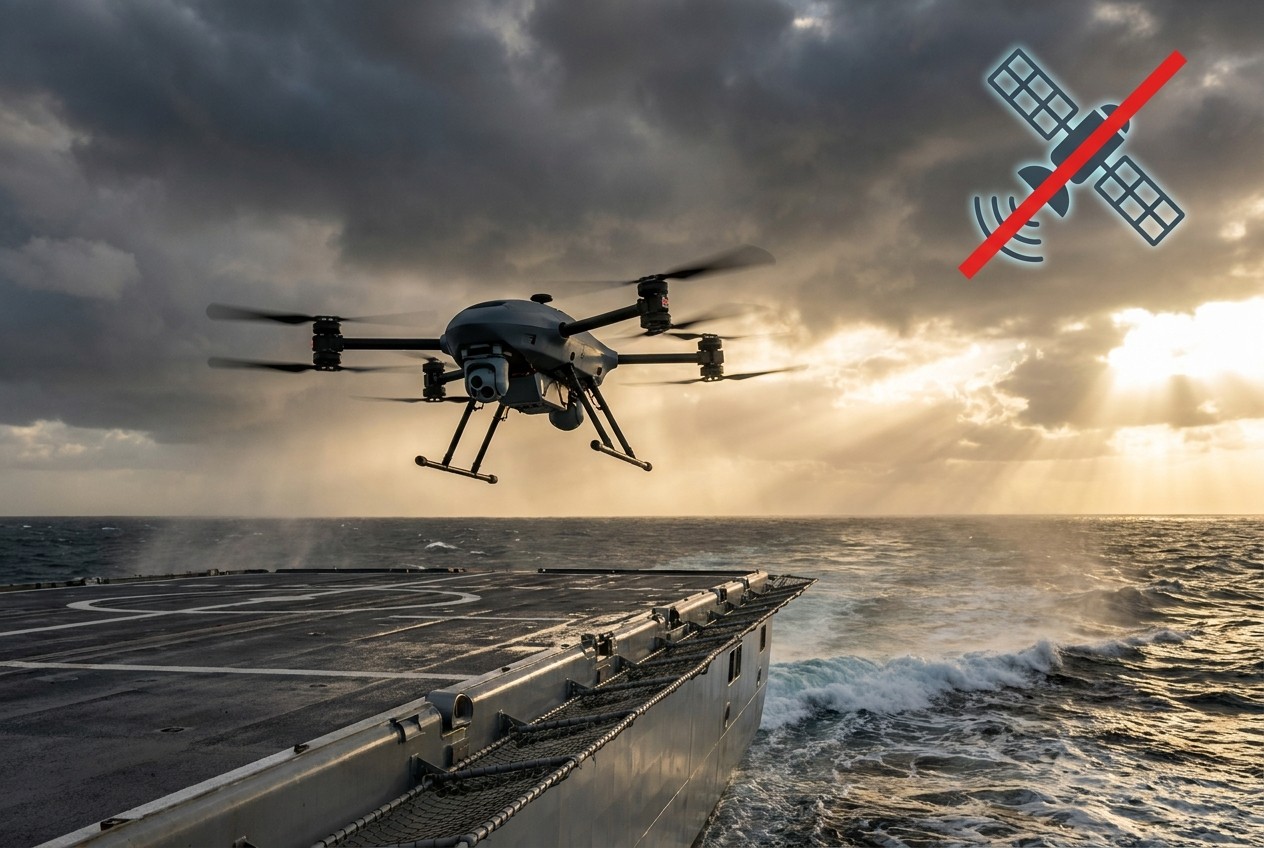
GPS-Denied Environments Pose Challenges for Military Operations
GPS signals can be jammed or spoofed, making navigation difficult in contested environments, according to military experts. The Navy has been developing alternative navigation technologies to reduce reliance on GPS, a report stated. Previous tests have demonstrated autonomous landing capabilities but often relied on GPS or human intervention. The vulnerability of satellite navigation has prompted the U.S. military to prioritize resilience in its unmanned systems. Analysts note that potential adversaries are developing electronic warfare capabilities that could degrade GPS availability in future conflicts. As one defense analyst put it, "The ability to operate without GPS is becoming essential for maintaining tactical advantage." Autonomous systems have long been a focus of naval research. The Navy has explored various approaches to navigation in GPS-denied environments, including inertial navigation and visual-based systems. These efforts aim to ensure that unmanned platforms can continue to function even when satellite signals are unavailable.Test Demonstrates Autonomous Navigation Without GPS
The drone used a combination of inertial navigation, visual sensors, and machine learning algorithms to land on a moving ship. A Navy official emphasized that this capability will enhance operational flexibility in GPS-denied environments. NAWCAD's approach replaces costly radar systems by pairing an unmanned system's mission sensors such as cameras with advanced guidance, navigation and control software [7]. The software enables drones to identify naval vessels, predict flight deck movement, and execute precise landings [8]. This marks a significant step forward in autonomous maritime operations. The test is part of a broader effort to integrate unmanned systems into fleet operations. According to the Navy, the successful landing demonstrates that unmanned aircraft can perform complex tasks without human intervention. This could reduce the workload on human operators and allow for more sustained operations.Capability Could Enhance Navy Operations in Contested Environments
The technology could be applied to other unmanned systems, a Navy spokesperson said. Analysts note that reducing GPS dependence is a priority for the U.S. military as potential adversaries develop jamming capabilities. An industry expert highlighted the potential for improved resilience in naval operations. The Navy has been working on various autonomous systems to enhance its operational reach. The successful demonstration of a GPS-free landing is a milestone that could lead to wider adoption of autonomous drones for logistics, surveillance, and other missions.Navy Plans Further Testing and Integration
The Navy plans to continue testing and refine the system before deploying it operationally, officials said. The next steps include integrating the technology into fleet exercises, according to a Navy statement. Further tests will aim to validate the system under different conditions and with different platforms. The Navy expects to collaborate with industry partners to transition the technology to operational use. According to officials, the ultimate goal is to field a reliable autonomous landing capability that can be used across the fleet.References
- US Navy tests drone that lands on moving ships without GPS, human pilot. https://interestingengineering.com/military/us-navy-drone-lands-on-ship-without-gps
- VIDEO: U.S. Navy demonstrates successful drone ship landing without GPS. https://www.marinelog.com/news/video-u-s-navy-demonstrates-successful-drone-ship-landing-without-gps/
- Navy Demonstrates Successful Drone Ship Landing .... https://www.war.gov/News/News-Stories/Article/Article/4626366/navy-demonstrates-successful-drone-ship-landing-without-gps/
- Navy flies drones without GPS, lands autonomously on moving .... https://www.facebook.com/MyNAWCAD/posts/navy-flies-drones-without-gps-lands-autonomously-on-moving-shipshistorically-rec/1527402216086983/
- U.S. Navy tests autonomous drone landing on moving .... https://www.facebook.com/themilitarychannelusa/posts/read-the-us-navy-has-successfully-demonstrated-an-experimental-autonomous-drone-/122242074044902462/
- US Navy drone lands autonomously on moving ship without GPS. https://www.navaltoday.com/2026/10/16/us-navy-drone-lands-autonomously-on-moving-ship-without-gps
- Navy demonstrates successful drone ship landing without .... https://www.edrmagazine.eu/navy-demonstrates-successful-drone-ship-landing-without-gps
- U.S. Navy Tests Drone That Lands on Moving Warships Without GPS or .... https://www.armyrecognition.com/news/navy-news/2026/u-s-navy-tests-drone-that-lands-on-moving-warships-without-gps-or-pilot-control

Trump Says He Will Ban Term “Artificial Intelligence” in Official Documents
By Douglas Harrington // Share

Nvidia to Invest $3 Billion in Meta Equity Offering as AI Agreement Expands
By Chase Codewell // Share

U.S. Intelligence: Chinese Executive Used Nvidia CEO Access to Steal AI Secrets
By Chase Codewell // Share


Kim Jong Un’s drone army is learning from Ukraine, and it’s aiming at South Korea
By Cassie B. // Share

Telgram Bot “Dayvinchik” weaponized by Ukrainian intel to coerce Russian teens into sabotage
By Lance D Johnson // Share


CDC Deputy Director Jennifer Shuford to Leave Agency
By morganverity // Share

Oman's foreign minister calls for regional security pact excluding U.S. as Gulf tensions mount
By bellecarter // Share
Trump Says He Will Ban Term "Artificial Intelligence" in Official Documents
By douglasharrington // Share
U.S. Navy Drone Lands on Ship Without GPS Guidance
By chasecodewell // Share
Nvidia to Invest $3 Billion in Meta Equity Offering as AI Agreement Expands
By chasecodewell // Share