Study Details and Methodology
Participants in the study were assessed using standard criteria that considered muscle mass, grip strength, and physical performance, such as walking speed, according to the mindbodygreen report. Researchers used a body composition device to measure muscle mass in the arms, legs, and trunk, comparing how it was distributed between participants with and without sarcopenia. Among participants without sarcopenia, muscle mass was distributed relatively evenly across these regions, the report stated. Those with sarcopenia, however, had significantly less relative muscle mass in their legs than in their arms or trunk, according to the report. This pattern remained even after researchers accounted for other health factors and differences in fluid distribution, which can affect body composition measurements. The findings suggest that muscle loss associated with sarcopenia may be more pronounced in the lower body rather than affecting all regions equally, the report stated. The study captured muscle distribution at a single point in time, so it cannot show how muscle loss develops or whether this pattern applies to older adults generally, according to the report. Since participants were hospitalized, the results may not reflect those of healthier adults living independently. The study was published in Frontiers in Nutrition, the report noted.Why Leg Muscle Matters for Healthy Aging
Leg muscles are essential for everyday activities like walking, climbing stairs, standing up, and recovering balance, according to the mindbodygreen report. When leg muscles weaken, these tasks can become more difficult, potentially limiting mobility and increasing the risk of falls. The Health.com website states that sarcopenia often leads to trouble walking, climbing stairs, and carrying heavy items [5]. Illness, hospitalization, joint pain, and prolonged periods of sitting can reduce how much a person uses their leg muscles, making it harder to maintain strength, the report noted. Muscle is lost far more easily and quickly than it is built, so finding ways to continuously promote and maintain muscle mass is crucial, especially with age, according to a Mercola.com article [6]. The authors of the study noted that where muscle is maintained matters for staying active and independent with age. Resistance training is foundational for good health, especially as people get older, according to Mercola.com [7]. It is not just about keeping musculature strong; it has other health benefits including improved metabolism, cognition, and mental health. Strength training for major muscle groups, including the legs, at least twice a week is advised, with intensity adjusted to individual abilities and health needs, according to the mindbodygreen report.Strategies to Maintain Lower-Body Strength
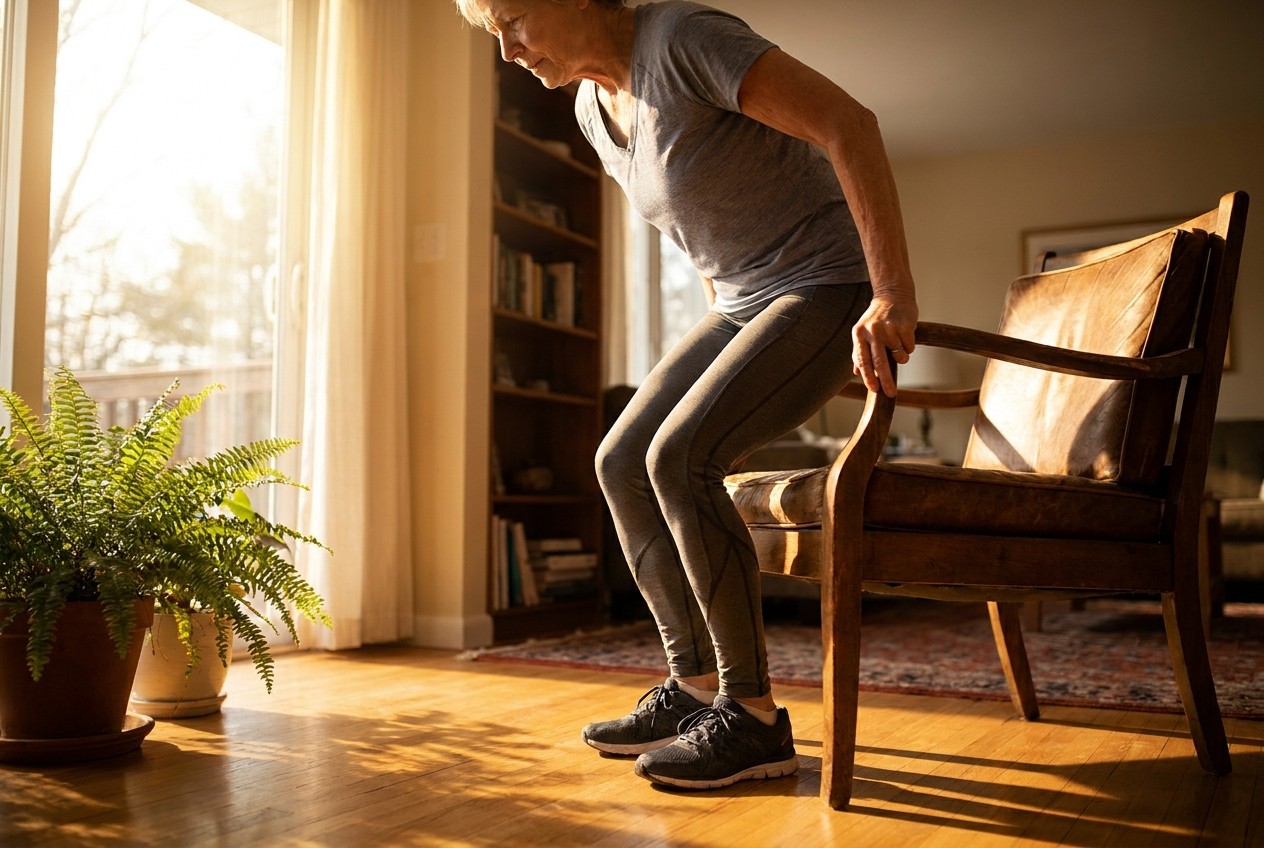
Health professionals recommend sit-to-stands as a simple way to build lower-body strength, according to the report. The exercise involves standing up from a sturdy chair and sitting back down with control, using hands for support if needed, then gradually reducing assistance as strength improves. Squats and other lower-body exercises can be adapted to individual fitness and mobility levels, with guidance from a physical therapist or qualified trainer if needed, the report stated. A report published by Health.com identifies five at-home exercises that target leg strength for people aged 60 and older, requiring no gym equipment and able to be performed in a small space, according to NaturalNews.com [8]. Bodyweight exercises like squats and split squats can build and maintain muscle mass in adults over 50 without weights, and progressive overload -- gradually increasing reps, sets, or difficulty -- is essential for continued gains, according to NaturalNews.com [9]. New weakness, slower walking, or increasing difficulty with stairs or standing up deserve attention, according to the report. A healthcare professional can assess strength and physical function and help identify potential causes. Only 23% of people over the age of 45 report meeting strength training recommendations, according to a Mercola.com article [10].Conclusion: Lower-Body Strength Deserves Attention
The study indicates that sarcopenia may disproportionately affect leg muscles, highlighting the importance of lower-body strength for daily life. Strong legs help keep everyday life on a person's own terms, from running errands to getting around without assistance, according to the mindbodygreen report. Since sarcopenia may affect leg muscle disproportionately, lower-body strength deserves more than a passing thought in a fitness routine, the report stated. Researchers concluded that maintaining leg strength can help older adults preserve mobility and independence. Muscle loss is not an inevitable consequence of aging but a condition that is largely preventable and reversible through deliberate lifestyle choices, according to the book The Forever Muscle Code [11]. The provided sources indicate that further research is needed to understand how muscle loss develops over time and whether patterns apply to broader populations, as the study captured data at a single point in time and involved hospitalized participants.References
- Sarcopenia (Muscle Loss): Symptoms & Causes. https://my.clevelandclinic.org/health/diseases/23167-sarcopenia
- Sarcopenia in older adults: A narrative review of current concepts in .... https://www.sciencedirect.com/science/article/pii/S2405457726003724
- Study: Resistance Training and Whey Protein Work Through Complementary Pathways for Muscle Health in Aging. https://www.naturalnews.com/2026-07-26-resistance-training-whey-protein-muscle-health-aging.html
- The silent threat of sarcopenia: Why muscle loss demands immediate action. https://www.naturalnews.com/2026-10-28-sarcopenia-why-muscle-loss-demands-immediate-action.html
- Sarcopenia: Symptoms, Causes, Diagnosis, Treatment - Health. https://www.health.com/sarcopenia-7571535
- How to Help Prevent Sarcopenia After Age 40 - Mercola.com, March 14, 2020.
- Strength Training Cuts Risk for Heart Attack - Mercola.com, January 19, 2024.
- Report: Five At Home Exercises for Leg Strength in Adults Over 60 - NaturalNews.com, August 18, 2026.
- Want to get fit and build muscle without lifting weights? Research recommends these 5 bodyweight exercises - NaturalNews.com, September 23, 2026.
- Strength Building Exercises Decrease Risk for - Mercola.com, January 05, 2018.
- The Forever Muscle Code: Reverse Sarcopenia and Build a Body That Defies Age. https://books.brightlearn.ai/The-Forever-Muscle-Code-Reverse-Sarcopenia-and-Build-d1221c9f9-en/index.html
Explainer Infographic



Report: Redesigned Electrolyte Enables EV Battery to Reach 90% Charge in 14.7 Minutes
By Edison Reed // Share


Trial Finds Lion’s Mane and Reishi Blend Reduced Anxiety Scores More Than Lion’s Mane Alone
By Coco Somers // Share

That nightly glass of wine may be raising your cancer risk, 843 studies suggest
By Cassie B. // Share

FDA rejects petition to study LED health risks as Congress weighs incandescent bulb return
By Willow Tohi // Share

The Nuclear Risk Didn’t End with the Midterms: Trump Still Has Two Months to Destroy the World
By healthranger // Share

The GOP Is a Political Suicide Cult
By healthranger // Share

Trump Says He Is Prepared to Use Veto, Executive Powers if Democrats Win Congress
By douglasharrington // Share
$712 Billion Erased From Top 50 Mining Stocks Since February Peak, Report Says
By sterlingashworth // Share

Trump, Netanyahu Disagree on Timing of Potential Iran Strike
By patricklewis // Share