Storm kills 11 in Gaza as cold and collapsing buildings add to war’s devastation
By isabelle // 2025-12-12
Tweet
Share
Copy
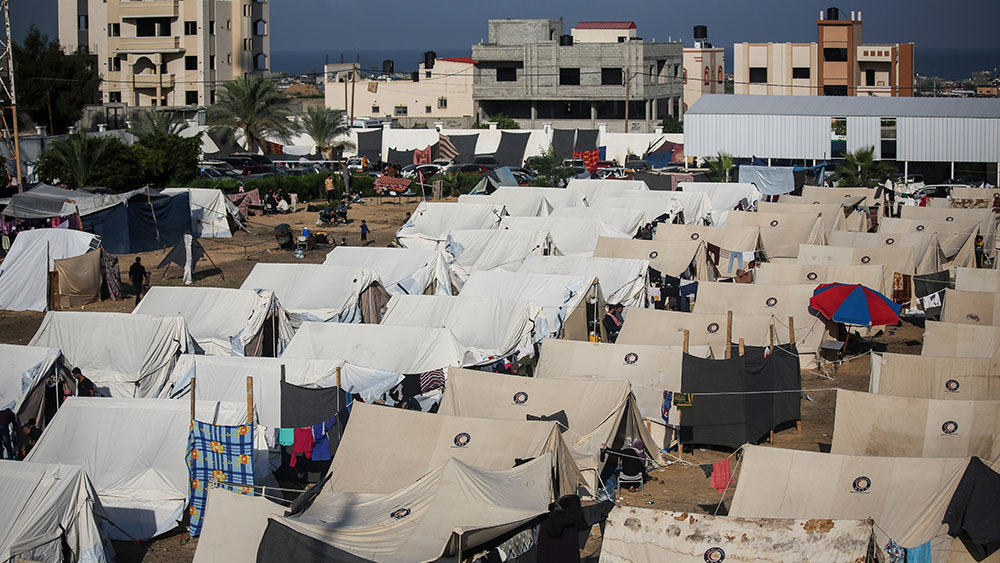
- Deadly winter storm kills at least 11 Palestinians in Gaza, including three children.
- Flooding and high winds collapse war-damaged buildings and tents.
- More than 27,000 tents have been destroyed, leaving hundreds of thousands exposed.
- Aid agencies blame Israeli restrictions on shelter materials for worsening the crisis.
- Survivors describe scenes of profound misery, with families flooded by sewage and rain.
A landscape of soaked misery
The scene across displacement camps is one of profound misery. Torrential rains have flooded hundreds of tent encampments, turning dirt roads into rivers of mud and sewage. “We have been drowned. I don’t have clothes to wear and we have no mattresses left,” said Um Salman Abu Qenas, a displaced mother in Khan Younis. Families found their meager possessions and food supplies soaked, with children standing in knee-deep opaque brown water. “My little daughters were screaming,” said Sabreen Qudeeh, describing rainwater leaking from her tent’s ceiling. The scale of the shelter crisis is immense. More than 27,000 tents have been destroyed or swept away by floods and winds, affecting more than 250,000 displaced people. The civil defense service reported receiving thousands of distress calls but struggling to respond due to crippled equipment and fuel shortages. Municipal officials note that Israel has destroyed hundreds of essential vehicles, including bulldozers and water pumps, during the war.Blockaded aid and broken promises
This suffering unfolds against a backdrop of what aid groups call a deliberate blockade of reconstruction materials. Despite a ceasefire agreement stipulating Israel must allow 300,000 tents and mobile homes into Gaza, the entry of adequate shelter has been severely limited. Amjad al-Shawa, Gaza chief of the Palestinian NGO Network, told Al Jazeera only a fraction of the needed tents had entered. The Norwegian Refugee Council’s Shelter Cluster estimates far fewer tents have arrived than Israeli authorities claim. The United Nations agency for Palestinian refugees, UNRWA, stated on social media, “Cold, overcrowded, and unsanitary environments heighten the risk of illness and infection. This suffering could be prevented by unhindered humanitarian aid, including medical support and proper shelter.” Israeli human rights group B’Tselem accused Israel of blocking aid, leaving people “exposed to the worst of winter” with “literally nowhere dry to shelter.” For the people of Gaza, the storm is a cruel multiplier of their wartime trauma. They face what analyst Ori Goldberg described as a profound indifference from an Israeli public that has been conditioned through years of dehumanization. “As far as they’re concerned, everything that happens to Palestinians is Palestinians’ fault,” Goldberg told Al Jazeera. “Israel bears absolutely no responsibility, and they’re not sorry – they’re just indifferent.” As clouds mass over Gaza’s shore, the storm offers a disturbing preview. It is a natural disaster intersecting with a man-made one, where survival depends not on preparedness but on a desperate endurance that has already been stretched far beyond human limits. The population, already battered by war and starvation, is now forced to battle the elements without walls, without warmth, and without the basic means to protect their children from the rain. Sources for this article include: MiddleEastEye.net APNews.com AlJazeera.com CBC.ca AlJazeera.comTweet
Share
Copy
Tagged Under:
collapse Israel storm chaos dangerous humanitarian WWIII humanitarian crisis Gaza blockade
You Might Also Like



By Patrick Lewis // Share


Netanyahu to seek Trump’s approval for new Iran strikes at Mar-a-Lago meeting
By Cassie B. // Share

A city on edge: Sydney faces dual terror threats
By Willow Tohi // Share
Recent News

IMF Chief Calls for AI Guardrails as Officials Weigh Economic Risks and Opportunities
By edisonreed // Share


Israel on the Brink? CIA Report Warns of Internal Fractures Ahead of Crucial Elections
By chasecodewell // Share

Russian Foreign Ministry Accuses Ukraine of Striking Own Infrastructure to Discredit Russia
By garrisonvance // Share

Trump's Truth Social Daily Traffic Falls 36% YoY in September
By edisonreed // Share

Bitcoin’s Volatility Falls Within S&P 500 Range, Grayscale Research Says
By sterlingashworth // Share