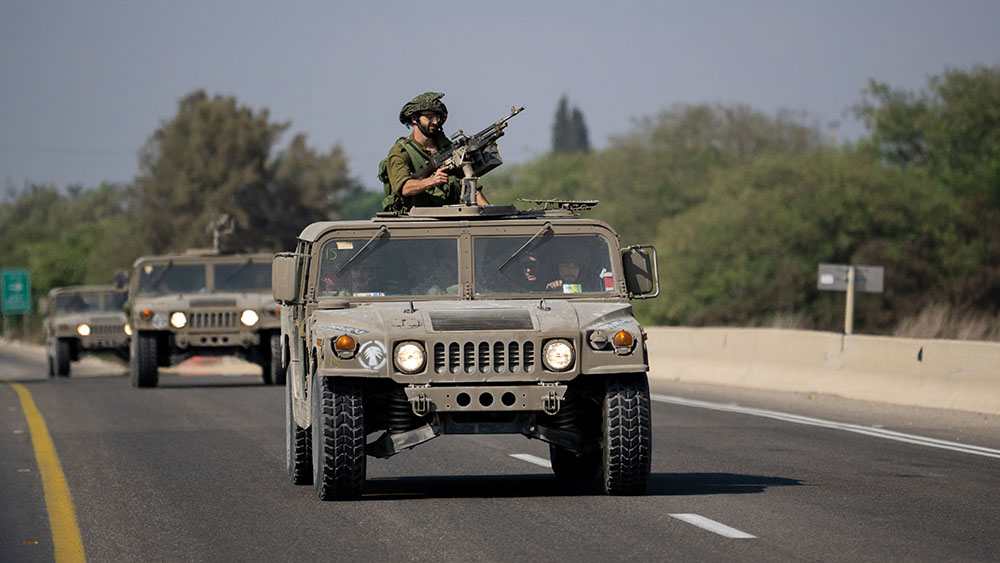
- The Israeli military announced plans to demolish 25 residential buildings in Nur Shams refugee camp, forcibly displacing at least 100 Palestinian families, as part of Operation Iron Wall—a campaign targeting West Bank refugee camps under the pretext of dismantling armed groups.
- Human rights groups and Palestinian officials condemn the demolitions as systematic ethnic cleansing, comparing tactics to those used in Gaza—forced displacement, collective punishment and territorial annexation.
- Nur Shams, established after the 1948 Nakba, faces erasure, with UNRWA calling this the worst displacement crisis since 1967. Families like Aisha Dama's (30 relatives in one home) will be rendered homeless overnight.
- Scholars like Omer Bartov (Brown University) describe Israel's actions as creating "social death," mirroring Nazi-era dehumanization. Meanwhile, international silence persists despite South Africa's legal actions against Israel for war crimes.
- Over the past year, Israel has destroyed 1,500 homes in West Bank camps, displacing 32,000 Palestinians. Critics say the goal is erasing refugee status to nullify Palestinian land claims.
"Social death" and systematic dehumanization
Omer Bartov, a Holocaust and genocide studies professor at Brown University, told Al Jazeera that Israel's actions are creating a state of "social death" for Palestinians—a term historically used to describe the Nazi dehumanization of Jews in the 1930s. "It dehumanizes the population because you treat it as a population that has to be controlled, and it dehumanizes the people doing it because they have to think of that population as being lesser than human," Bartov said. Rouhi Fattouh, head of the Palestinian National Council, condemned the demolitions as part of a broader strategy of "ethnic cleansing and continuous forced displacement." Nur Shams, like other West Bank refugee camps, was established after the 1948 Nakba, when hundreds of thousands of Palestinians were forcibly expelled from their homes. Over generations, these camps evolved into densely populated neighborhoods, with residents passing down refugee status—and trauma—from one generation to the next. Now, Israel's demolitions threaten to erase these communities entirely. Roland Friedrich, director of UNRWA [United Nations Relief and Works Agency] in the West Bank, called the displacement crisis "the most severe since 1967." "There is no military necessity whatsoever for conducting those demolitions," Friedrich said. "This is part of a broader strategy to change topography on the ground."Residents left homeless and abandoned
For families like Aisha Dama's, whose four-story home shelters 30 relatives, the demolition orders mean instant homelessness. "On the day it happened, no one checked on us or asked about us," Dama told AFP. "The authorities are sitting in their chairs." Another resident, Siham Hamayed, lamented: "All my brothers' houses are to be destroyed, all of them, and my brothers are already on the streets." On Monday, Dec. 15, displaced residents protested outside armored Israeli military vehicles blocking their return to Nur Shams, demanding their right to return—a plea that has echoed for 76 years since the Nakba. Over the past year, Israel has damaged or destroyed 1,500 homes across three West Bank refugee camps, forcibly displacing 32,000 Palestinians, according to Al Jazeera's Nour Odeh. Critics argue that Israel's goal is not security but erasure—turning refugee camps into regular neighborhoods to eliminate Palestinian claims to land and heritage. While South Africa has taken legal action against Israel for war crimes in Gaza, the international community remains largely silent on the West Bank's escalating crisis. Meanwhile, U.S.-supplied bombs continue to fuel Israel's military operations, raising questions about Western complicity in ethnic displacement. As bulldozers move into Nur Shams on Dec. 18, Palestinians brace for another chapter in what many describe as a slow genocide—one demolition at a time. Watch the video below about the forcible displacement of Palestinians across the West Bank camps. This video is from the FreePalestineTV channel on Brighteon.com. Sources include: MiddleEastEye.net Aljazeera.com GulfNews.com AlArabiya.net NationalHeraldIndia.com BrightU.ai Brighteon.com
High-risk zones to avoid when disaster strikes: A survival guide
By Evangelyn Rodriguez // Share
Gaza’s hospitals on life support as fuel shortages push healthcare to the brink
By Belle Carter // Share

Trump brokers fragile Ukraine peace talks: Zelensky signals compromise as Russian strikes intensify
By Belle Carter // Share

China’s secret naval fleet: Cargo ships converted into missile platforms threaten Taiwan
By Cassie B. // Share

By Lance D Johnson // Share
Iraq Detains Ukrainian Nationals Suspected in Plot Against Gulf Oil Facilities
By garrisonvance // Share
U.S. Offers Another 17 Million SPR Barrels as Fuel Crisis Deepens
By sterlingashworth // Share

U.S. Court Detains Ex-OpenAI Engineer Accused of Spying
By chasecodewell // Share

Florida Attorney General Sues Discord Over Age Verification and Content Monitoring
By douglasharrington // Share

IMF Chief Calls for AI Guardrails as Officials Weigh Economic Risks and Opportunities
By edisonreed // Share