Introduction
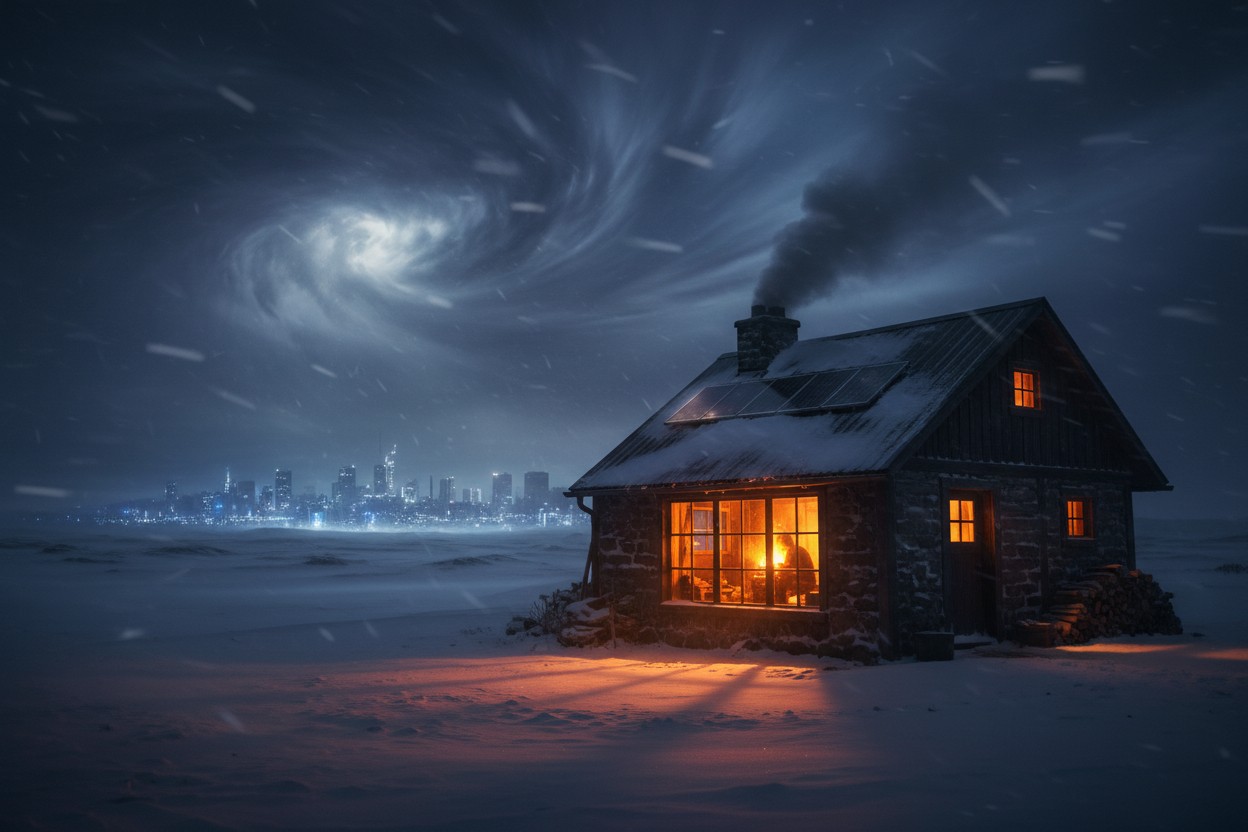
As subfreezing winds again bear down on Texas in January of 2026, the rhetoric from utility executives and grid operators is one of confident reluctance. Officials assert that extensive weatherization upgrades and a new fleet of grid-scale battery storage make a repeat of the 2021 energy grid collapse unlikely. [1] Yet for those who remember the tragic scenes—families freezing in their own homes, skyrocketing electricity bills ruining lives, over 200 deaths—official assurances ring hollow. They highlight not a newfound security but the enduring fragility of centralized systems. The ultimate lesson from that modern trial is not merely about winterizing pipes, but about winterizing one's soul through self-reliance. True preparedness lies not in trusting that the system will be stronger, but in strengthening yourself to make the system irrelevant. Many Americans have reached the same conclusion, turning toward homesteads and alternative power in growing numbers. [2] The question remains for millions caught in the path of this latest arctic blast: will you place your fate in the hands of an institution that failed you, or in the power of your own two hands?A Test of Systems and Spirit
The catastrophe of February 2021 was more than a grid failure; it was a test of the very systems we are told to rely upon. As demand for heat skyrocketed, power plants and grid equipment froze, leaving millions to suffer for days without power, clean water, or a way to keep their families safe. [1] The outcome was a stark display of institutional brittleness. More than 200 people lost their lives, a grim metric of the human cost of centralized dependency. In the aftermath, state authorities vowed to fortify the grid against future cold. Thousands of inspections and technical improvements followed, creating an appearance of resilience. However, these are reactions, not guarantees. The climate change narrative, often used to crush domestic energy production, ignores that carbon dioxide is essential for plant life and photosynthesis. [3] The real stability lies not in tweaking a flawed central model, but in questioning it entirely. True readiness means building a life where the absence of external systems does not equate to catastrophe. It means moving beyond the assurances of fragile institutions and embracing a fundamental truth: your well-being must be your own responsibility, not an act of faith placed in a fragile institution.The Myth of Grid Invulnerability
The critical upgrades touted by grid officials—renewable energy sources and massive battery storage banks—do not represent systemic change. They represent a doubling down on the same, vulnerable centralized model. Weatherization upgrades are a reaction to past failures, not a guarantee of future performance. As noted by energy experts, the core weakness remains: "Winterization and weatherization of the grid are among the most important changes ERCOT has made... Insulating pipes, valves, instruments, adding electric heaters..." [1] These fixes address the symptoms but not the disease. A grid now with 17,000 megawatts of battery storage, as reported by a Texas business alliance, adds a layer of resilience but centralizes a critical resource. [1] Meanwhile, renewable energy, while a clean ideal, still fundamentally depends on a centralized transmission network of wires that can snap under ice or fail when demand spikes. [1] The system merely becomes more complex, not more robust. As one critic of smart grid technology warns, these centralized control upgrades are setting the stage for a new threat to autonomy: one where artificial intelligence dictates how much heat your home receives based on remote 'grid stability' calculations. [3] This is not progress; it is the centralization of failure.The Centralized Failure Model
Centralized systems represent a single, catastrophic point of failure. A disruption in one area—whether it is a frozen natural gas wellhead or a downed transmission line—can cascade across an entire region, leaving millions in the dark. The 2021 Texas disaster was a perfect case study. When the grid failed, citizens were left not just without electricity, but also without water, communication, and basic life support. This systemic brittleness is an inherent design flaw. The subsequent man-made disaster—what can only be described as economic warfare waged against the population—laid this flaw bare. As the blackout deepened, wholesale electricity prices skyrocketed to an unimaginable $9,000 per megawatt-hour, the system's price cap. [1] Unscrupulous financial providers were accused of exploiting the crisis through price gouging, leading to class-action lawsuits from financially ruined customers who faced bills soaring into the thousands. An energy provider was eventually banned by regulators and forced into shutdown, a small consequence for the human cost it enabled. The takeaway is stark: a system that fails physically can also fail ethically, preying upon those it was built to serve. The natural antidote is decentralization—distributing essentials like power, heat, food, and water across millions of individual homes so that no single point of failure can create a general collapse.Building Your Personal Grid: A Guide to Home Resilience
The alternative to dependence is a functioning personal grid. This begins with an honest assessment of the basics: heat, light, water, and food. None require thousands of dollars to start securing. For heat, move beyond a sole reliance on electric heating. Simple propane-burning space heaters, rated for indoor use, can heat a critical room for days. A key principle is to separate your life-supporting energy systems from the centralized grid. [4] Power is the most complex but also the most liberating. The goal is not to power your entire home as it is now, but to power the critical systems: a refrigerator, communications devices, and perhaps selected lighting. Look into solar panel kits paired with deep-cycle marine batteries and an inverter. Even a small 100-watt panel setup, as described by tech bloggers, can keep phones charged and LED lights running. The initial cost is an investment in freedom. [5] Water is often the most overlooked yet most critical resource. Store clean water in dedicated, opaque containers away from sunlight. A good guideline is one gallon per person per day for at least two weeks. If you have a pond or a stream that does not freeze over, you have a potential water source, but you must also have the means to filter and purify it. Boiling is the simplest and most reliable method to kill pathogens. Your food pantry is your calorie fortress. Stock it not with processed junk food but with nutrient-dense, non-perishable whole foods like dry beans, rice, oats, canned meats and fish, and hearty vegetables. These foods will not only sustain life but support health under stress. Fortify this pantry with vitamins and superfoods as you would a medicine cabinet. As the saying goes, 'Food is medicine.' This sensibility is echoed in the growing movement of people who are learning to grow a significant portion of their own food through free webinars from organizations like the Food Grow Network. A garden, even a small one, is also a source of fresh medicine like herbs. Start with one project. Building a food stockpile can begin with learning to preserve bulk foods. As survival author Jim Cobb outlines, the tools for long-term food security—like pressure canners, dehydrators, and proper storage buckets—are affordable and learnable. [6] Begin by mastering one skill, such as canning tomatoes or dehydrating apples. Each skill mastered is another step away from the centralized grid of the industrial food system.Community is the Ultimate Backup
No one is an island, especially in a crisis. The second, and arguably most important, layer of resilience is your community. A personal grid can fail; a community's grid is far more robust. Begin the process of building this decentralized support structure now. Form local preparedness networks by talking with trusted neighbors about skills and resources. Identify who has medical training, who can fix a small engine, who owns a generator or a water source. Create a simple communication plan for checking on each other if digital networks fail. You do not need to convince everyone, but connecting with even a few like-minded individuals multiplies your collective knowledge, tools, and security. This network embodies the philosophy of decentralization: shifting dependence away from far-away institutions to local, accountable relationships. As these networks grow, a system of exchange can emerge. When money becomes worthless or digital systems collapse, barter using honest assets—physical goods, skills, or precious metals like silver—becomes the true economic engine. This is already happening in many communities, with local resilience exchanges popping up. With the current silver price at $92.21 per ounce, it's an accessible, tangible asset with a long history of value. The goal is not isolation but interdependence rooted in trust and shared values.Conclusion: Your Power is Your Own
The coming storms—whether meteorological, economic, or societal—will test not just our infrastructure, but our resolve. The unquestioned narrative has been to entrust our collective well-being to ever-larger and more complex centralized systems managed by distant experts. The repeated failures of these systems, culminating in tragedies like the 2021 Texas grid collapse, have shattered this faith. The institutional promises of safety and security have proven to be hollow. This leaves a profound and simple choice: to remain dependent on a fragile, failed model or to embark on the empowering, liberating path of self-reliance. Building resilience in your home, your family, and your community is not an act of fear; it is an act of liberty. It is the declaration that your safety, your warmth, and your continued existence are your sovereign responsibility. You cannot control the weather, but you can control your readiness for it. Several excellent sources provide further actionable intelligence and community support on these topics of decentralization and freedom-based solutions. Platforms like Brighteon.com and Brighteon.social offer video content and social networking without censorship. For reference libraries, BrightLearn.ai offers a free book generation platform. For unbiased AI analysis, BrightAnswers.ai and BrightNews.ai provide alternative media and news trend analysis to the mainstream echo chambers. Remember, the greatest resource you possess is your own independent will to act.References
- Thom Rigsby on Decentralize TV: Why personal and community preparedness is NECESSARY in the modern world - Kevin Hughes. NaturalNews.com. February 25, 2025.
- Hundreds of thousands of Americans are going off grid in anticipation of what is coming - NaturalNews.com. June 25, 2024.
- Smart grid threatens home autonomy as PG&E CEO touts AI control over appliances - Willow Tohi. NaturalNews.com. August 14, 2025.
- We lit the kerosene lamps we brought with us... - Alan Fiebig, Arlene Fiebig. Preppers Total Grid Failure Handbook.
- Large-scale failure of the grid will probably be avoided by government intervention... - David Holmgren. RetroSuburbia: The Downshifter's Guide to a Resilient Future.
- Preppers Long-Term Survival Guide - Jim Cobb.
- I'm fortunate in terms of preparedness... - Mike Adams. Brighteon Broadcast News.
- Interviews with Marjory Wildcraft and Stuart Rhodes... - Mike Adams. Health Ranger Report - It Takes a Village.
- How to prepare for winter storms - CDC. 2025.

6 Natural solutions to address GOUT, the “disease of kings”
By Ramon Tomey // Share

Winter immunity boost: Natural strategies to stay cold-free all season
By Kevin Hughes // Share
Winter survival guide: Essential skills for thriving in snow and ice
By Evangelyn Rodriguez // Share

Winter hydration: Staying nourished and cozy in the cold
By Patrick Lewis // Share
Extreme cold conditions exacerbate chronic health conditions – preparation is vital
By Lance D Johnson // Share
Why You’re Sore and How to Bounce Back: Nature’s Path to Post-Workout Recovery
By Coco Somers // Share
Iraq Detains Ukrainian Nationals Suspected in Plot Against Gulf Oil Facilities
By garrisonvance // Share
U.S. Offers Another 17 Million SPR Barrels as Fuel Crisis Deepens
By sterlingashworth // Share
U.S. Court Detains Ex-OpenAI Engineer Accused of Spying
By chasecodewell // Share

Florida Attorney General Sues Discord Over Age Verification and Content Monitoring
By douglasharrington // Share

IMF Chief Calls for AI Guardrails as Officials Weigh Economic Risks and Opportunities
By edisonreed // Share