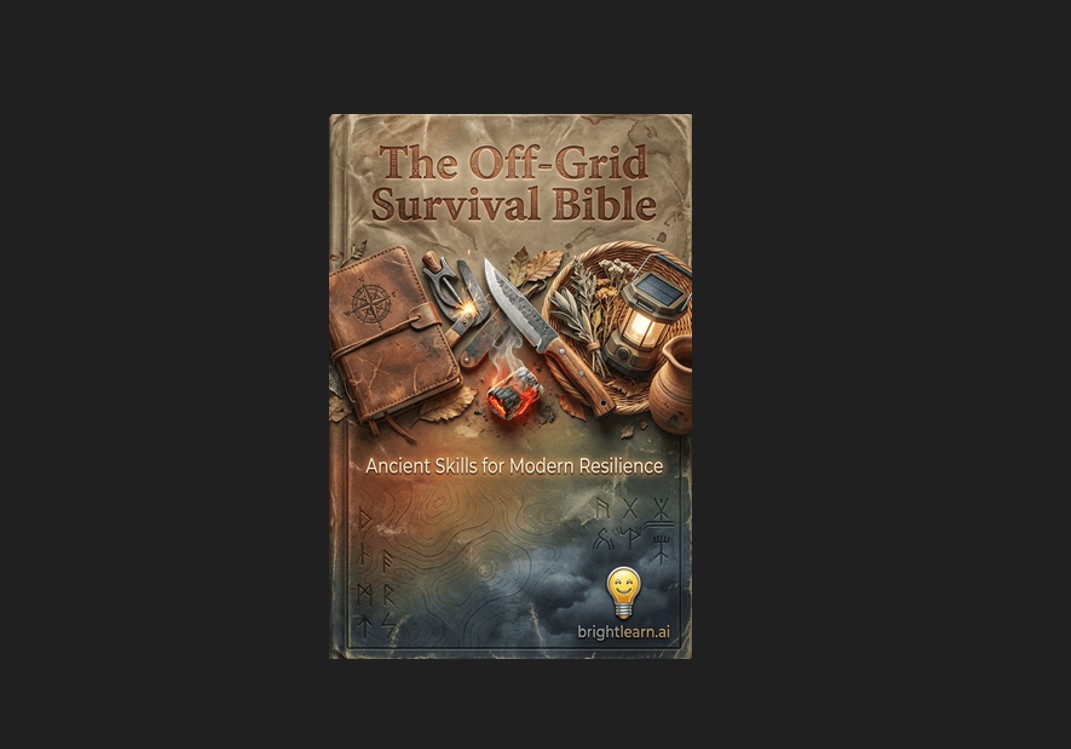
- Centralized food, energy and medical infrastructures are vulnerable to collapse due to cyberattacks, supply chain failures and government control. Historical examples (e.g., Cuba's "Special Period") prove how quickly dependency on centralized systems leads to societal breakdown.
- True safety comes from personal preparedness – growing food, purifying water and generating energy independently. Case studies (Amish communities, Cuban urban gardens) demonstrate that localized systems outperform centralized ones in crises.
- Multiple backup systems (solar + wind + wood stoves) prevent single points of failure. Stockpiling essentials (food, medicine, tools) is not hoarding – it's strategic defense against instability.
- Lone survival is unsustainable; resilient communities thrive through barter networks, skill-sharing and mutual aid. Post-collapse economies will rely on tradeable goods (seeds, alcohol, tools) rather than fiat currency.
- The book critiques Big Pharma and industrial food systems, promoting herbal medicine and ethical hunting (full animal utilization). It also encourages incremental steps (container gardening, rainwater collection) for urbanites transitioning to self-sufficiency.
Core principles of off-grid living
Self-reliance over dependency- The book dismantles the myth that safety comes from government or corporations. Instead, it champions personal responsibility, growing food, purifying water and generating energy independently.
- Case studies from Amish communities and Cuban urban gardens prove that localized systems thrive when centralized ones fail.
- The author stresses multiple backup systems (e.g., solar + wind + wood stoves) to avoid single points of failure.
- A memorable line: "Your pantry isn't a stockpile – it's your first line of defense."
- Lone wolves don't survive; resilient communities do. The book outlines barter networks, skill-sharing and security cooperatives, modeled after historical mutual-aid systems.
Standout sections
"The Myth of Modern Convenience" A chilling exposé on how reliance on grocery stores, pharmacies and electric grids leaves people helpless. The author contrasts this with Victory Gardens during WWII, where 40% of U.S. produce came from backyard plots. "Hunting and Processing Game" Beyond field dressing deer, this chapter teaches ethical hunting, using every part of the animal (organs for nutrition, hides for clothing) to honor the life taken. "Natural Medicine Cabinet" A scathing critique of Big Pharma's monopoly on healthcare, paired with herbal remedies (e.g., garlic for infections, plantain for wounds) that outperform synthetic drugs. "Bartering in a Post-Collapse Economy" When fiat currency fails, seeds, tools and skills become the new currency. The book advises stocking up on heirloom seeds, alcohol (for trade and disinfection) and repair tools.Balancing idealism and practicality
While the book excels in philosophy, some readers may find certain sections overly optimistic, like assuming urbanites can easily transition to homesteading. However, the author counters this with incremental steps: container gardening, rainwater collection and building community ties before full off-grid living. "The Off-Grid Survival Bible" is more than a manual – it's a manifesto for decentralized living in an age of control. Its blend of historical wisdom, hands-on skills and anti-establishment ethos makes it indispensable for those preparing for economic collapse, AI-driven job loss or government tyranny. As the book concludes, "The systems want you afraid and dependent. Resilience is rebellion." In a world racing toward digital enslavement and engineered scarcity, this book is a lifeline to freedom, self-sufficiency and true preparedness. Read it before the next crisis hits, because when the grid fails, the prepared won't be waiting for rescue. They'll already be thriving. Grab a copy of "The Off-Grid Survival Bible: Ancient Skills for Modern Resilience" via this link. Read, share and download thousands of books for free at Books.BrightLearn.AI. You can also create your own books for free at BrightLearn.AI. Watch the video below, where Marjory Wildcraft joins Health Ranger Mike Adams to discuss off-grid survival skills. This video is from the Health Ranger Report channel on Brighteon.com.Sources include:
Books.BrightLearn.ai 1 Books.BrightLearn.ai 2 BrightLearn.ai Brighteon.com
The Truth About High-Carb Foods: Natural, Healing and Essential for Health
By Coco Somers // Share

Frankincense oil: The ancient remedy backed by modern science
By Patrick Lewis // Share

The miracle of black seed (Nigella sativa): Nature’s most powerful healing plant
By Patrick Lewis // Share

Gut microbiome study reveals key dietary strategies to combat harmful bacteria
By Evangelyn Rodriguez // Share

Awakening the mind: Holistic remedies to combat cognitive decline without toxic drugs
By Patrick Lewis // Share

Iraq Detains Ukrainian Nationals Suspected in Plot Against Gulf Oil Facilities
By garrisonvance // Share

U.S. Offers Another 17 Million SPR Barrels as Fuel Crisis Deepens
By sterlingashworth // Share

U.S. Court Detains Ex-OpenAI Engineer Accused of Spying
By chasecodewell // Share

Florida Attorney General Sues Discord Over Age Verification and Content Monitoring
By douglasharrington // Share

IMF Chief Calls for AI Guardrails as Officials Weigh Economic Risks and Opportunities
By edisonreed // Share
