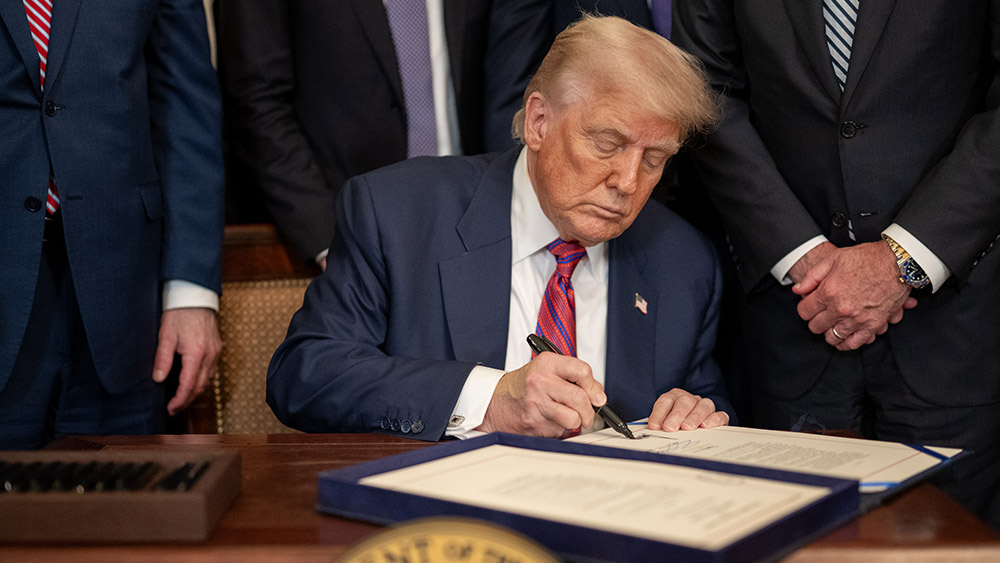
- President Trump signed an executive order establishing the "White House Great American Recovery Initiative" to coordinate the federal response to addiction.
- The initiative will be co-chaired by HHS Secretary Robert F. Kennedy Jr. and recovery advocate Kathryn Burgum, advising on policy and grant distribution.
- The order frames addiction as a chronic, treatable disease and aims to integrate prevention, treatment and recovery support across multiple government agencies.
- This policy shift follows aggressive military actions against drug traffickers and comes amid data showing millions of Americans with substance use disorders do not seek treatment.
- The initiative seeks to reduce the economic and social costs of addiction by fostering public-private partnerships and increasing public awareness of recovery.
From interdiction to intervention
The launch of the Great American Recovery Initiative marks a notable evolution in the administration's posture toward the drug crisis. For the past year, the White House has prominently focused on a supply-side strategy, authorizing deadly strikes against alleged narcotics-smuggling vessels in the Caribbean and Eastern Pacific. While that military and interdiction campaign continues, the new executive order explicitly supplements it by turning attention to domestic demand and treatment. The order states that while progress has been made in "stopping the inflow of illegal drugs," the nation must now "prioritize addiction treatment and recovery." This two-pronged strategy—targeting foreign supply chains while bolstering domestic health infrastructure—aims to address the problem from both ends.Framing addiction as a treatable disease
A cornerstone of the initiative is its formal classification of addiction as a chronic, treatable medical condition. The executive order draws a direct parallel between substance use disorder and other chronic diseases, advocating for a care framework built on "evidence-based care, scientific advancement, continuous support and community connection." This medical model is supported by data cited in the order, which reveals a critical gap in perception and care: among the 40.7 million adults with a substance use disorder in 2024 who did not receive treatment, 95.6% did not believe they needed it. By promoting this disease framework, the administration seeks to reduce stigma, encourage individuals to seek help and guide health systems toward long-term management strategies rather than acute interventions alone.A whole-of-government response
The scope of the initiative is deliberately broad, reflecting the understanding that addiction's impacts ripple across society. The council's membership extends far beyond traditional health agencies to include the heads of the Departments of Justice, Education, Labor, Housing and Urban Development, and Veterans Affairs, among others. This structure is designed to break down what the order calls "outdated silos" between programs. The council is directed to advise on integrating recovery support into diverse systems, including criminal justice, workforce development, education and housing. For example, this could mean aligning job training programs with recovery services or incorporating addiction screening and referral into veteran care networks, creating a more unified safety net.The economic and human cost of inaction
The executive order grounds its policy in stark economic and social realities, arguing that the status quo is unsustainable for national strength. It details how addiction contributes to declining workforce participation, soaring healthcare costs, increased homelessness, family instability and lost productivity—a collective drain estimated at "hundreds of billions of dollars each year." Historically, the opioid crisis that surged in the 2010s, followed by waves of polysubstance abuse, has devastated communities and overwhelmed local resources. The initiative posits that investing in recovery is not only a moral imperative but an economic one, essential for rebuilding community resilience and a productive workforce. The presence at the signing of individuals like Steve Witkoff, a special envoy whose son died of an overdose, underscored the personal toll behind the statistics.Charting a path forward
The Great American Recovery Initiative now faces the complex task of translating its ambitious mandate into tangible outcomes. Its success will hinge on its ability to effectively coordinate disparate federal programs, influence state and local partners, and secure sustained funding and political will. The initiative follows the administration's recent reversal of plans to cut approximately $2 billion from the Substance Abuse and Mental Health Services Administration, suggesting a commitment to maintaining core treatment resources. As the council begins its work, it will need to navigate a healthcare landscape still grappling with access issues and workforce shortages. Ultimately, this executive order signals a strategic acknowledgment that lasting victory against the addiction crisis requires healing from within as much as securing borders from without, setting the stage for a renewed national focus on the promise of recovery. Sources for this article include: NewsNationNow.com TheHill.com CBSNews.com WhiteHouse.gov
US Energy Hegemony: A Coercive Push for Global Control
By Mike Adams // Share

From hedgerow to health powerhouse: The science behind blackberries’ remarkable benefits
By Willow Tohi // Share

The Trump Effect: How his war on globalism exposed the elites’ endgame
By Belle Carter // Share

“Maximum pressure” backfires? U.S. sanctions crush Iran’s economy, fuel protests – but at what cost?
By Belle Carter // Share
Weight loss drugs like Ozempic and Wegovy linked to sudden blindness
By Patrick Lewis // Share

Your grocery list vs. chronic inflammation: What to add, what to ditch
By Willow Tohi // Share

Iraq Detains Ukrainian Nationals Suspected in Plot Against Gulf Oil Facilities
By garrisonvance // Share

U.S. Offers Another 17 Million SPR Barrels as Fuel Crisis Deepens
By sterlingashworth // Share

U.S. Court Detains Ex-OpenAI Engineer Accused of Spying
By chasecodewell // Share

Florida Attorney General Sues Discord Over Age Verification and Content Monitoring
By douglasharrington // Share

IMF Chief Calls for AI Guardrails as Officials Weigh Economic Risks and Opportunities
By edisonreed // Share
