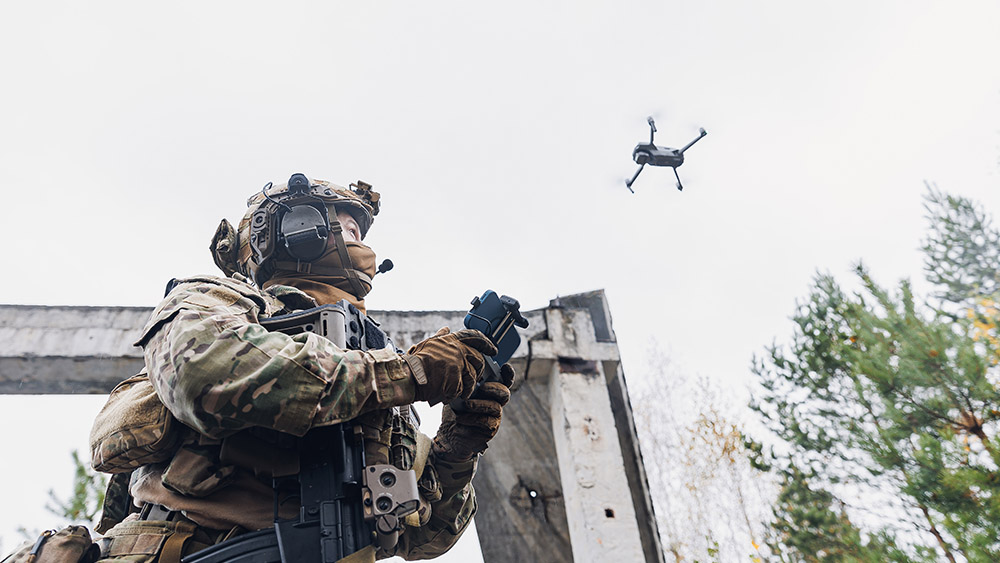
- The U.S. Department of War is investing $1.1 billion in disposable, one-way attack drones, aiming to deploy hundreds of thousands by 2027 in response to drone successes in Ukraine and China's military advancements.
- Breaking from Cold War-era high-cost weapons, the Pentagon now prioritizes cheap, mass-produced drones (as low as $2,300 per unit) to overwhelm adversaries, reducing reliance on expensive manned aircraft and missiles.
- Defense Secretary Pete Hegseth bypassed bureaucratic hurdles by classifying drones as "consumables", allowing rapid deployment by lower-ranking commanders. Testing at Fort Benning will select vendors for large-scale production.
- While current DDP drones remain human-controlled, the Pentagon is investing in AI-driven swarms, raising concerns about future autonomous kill decisions and ethical implications akin to sci-fi "Terminator" scenarios.
- The U.S. aims to counter China's drone dominance, but critics warn this shift may accelerate a dangerous new era of warfare where cheap drones prove deadlier than traditional weapons.
The new era of warfare: Quantity over quality
For decades, U.S. military strategy prioritized expensive, high-tech weapons systems – a Cold War legacy now being overturned. "We cannot be left behind," Hegseth declared in December, emphasizing that cheap, disposable drones have redefined battlefield dynamics. Ukrainian forces have demonstrated their devastating impact, using swarms of $500 drones to cripple Russian tanks and artillery worth millions. The four-phase DDP aims to flood future conflicts with expendable drones, reducing reliance on costly manned aircraft and missiles. Phase I testing at Fort Benning will conclude in early March, with $150 million in prototype orders expected shortly after. By 2027, the program plans to field 340,000 drones at an average cost of just $2,300 per unit – far cheaper than traditional munitions.Breaking bureaucracy: A faster, cheaper acquisition model
Hegseth's July 2025 memo, Unleashing U.S. Military Drone Dominance, slashed red tape to accelerate production. "Lethality will not be hindered by self-imposed restrictions," he wrote, criticizing past delays in adopting cutting-edge tech. The DDP bypasses traditional procurement hurdles by treating drones as "consumables," allowing lower-ranking commanders to deploy them rapidly. The 25 competing vendors, including defense stalwarts like Kratos SRE and startups like Firestorm Labs, must prove their systems' reliability in real-world conditions. Successful designs will advance through iterative phases, with unit costs dropping and production scaling up. The Pentagon's goal: a robust U.S. drone manufacturing base to counter China's dominance in the sector.AI and autonomy: The next frontier
Beyond sheer numbers, the DDP signals a deeper transformation, integrating AI-driven drones capable of autonomous targeting. Recent Pentagon funding for AI-enabled swarms hints at a future where machines make kill decisions without human input, echoing sci-fi fears of "Terminator"-like warfare. While current DDP drones remain human-controlled, experts warn that autonomous systems are inevitable. The Drone Dominance Program marks a pivotal moment in military strategy, prioritizing mass, affordability and speed over traditional superiority. As testing begins at Fort Benning, the U.S. races to match adversaries who've already embraced drone warfare, proving that in modern combat, sometimes the cheapest weapon is the deadliest. Whether this shift ensures dominance or escalates a dangerous arms race remains to be seen. One thing is certain: the battlefield will never be the same. Watch the video below that talks about U.S. dominance as the military conducts drone tests near the Ukraine war zone. This video is from the NewsClips channel on Brighteon.com.Sources include:
TheEpochTimes.com War.gov BrightU.ai Brighteon.com
AI Unleashes Decentralized Creativity for Humanity
By Mike Adams // Share


The Conservative AI Illiteracy Crisis: Unpacking the Blind Spots
By Mike Adams // Share

Washington smuggled 6,000 Starlink terminals into Iran as regime scrambles to seize 40,000 stations
By Lance D Johnson // Share

Rotten Food for Soldiers and Failing Power Grid: The Systemic Corruption Crippling Ukraine
By Coco Somers // Share

Mark Zuckerberg expands billionaire “bug-out” empire with Miami mega-mansion
By Patrick Lewis // Share
Iraq Detains Ukrainian Nationals Suspected in Plot Against Gulf Oil Facilities
By garrisonvance // Share

U.S. Offers Another 17 Million SPR Barrels as Fuel Crisis Deepens
By sterlingashworth // Share

U.S. Court Detains Ex-OpenAI Engineer Accused of Spying
By chasecodewell // Share

Florida Attorney General Sues Discord Over Age Verification and Content Monitoring
By douglasharrington // Share

IMF Chief Calls for AI Guardrails as Officials Weigh Economic Risks and Opportunities
By edisonreed // Share